Direct answer: Yes — a Komodo liveaboard galley can serve halal-friendly meals and accommodate most common allergies (nuts, shellfish, gluten), but this runs on advance disclosure, not a printed menu with certification stamps. The onboard kitchen is small, shared, and provisioned in Labuan Bajo before departure, so your dietary profile needs to reach the crew days before boarding, not on the first morning at sea.
Why Onboard Dining Needs a Different Standard Than a Restaurant
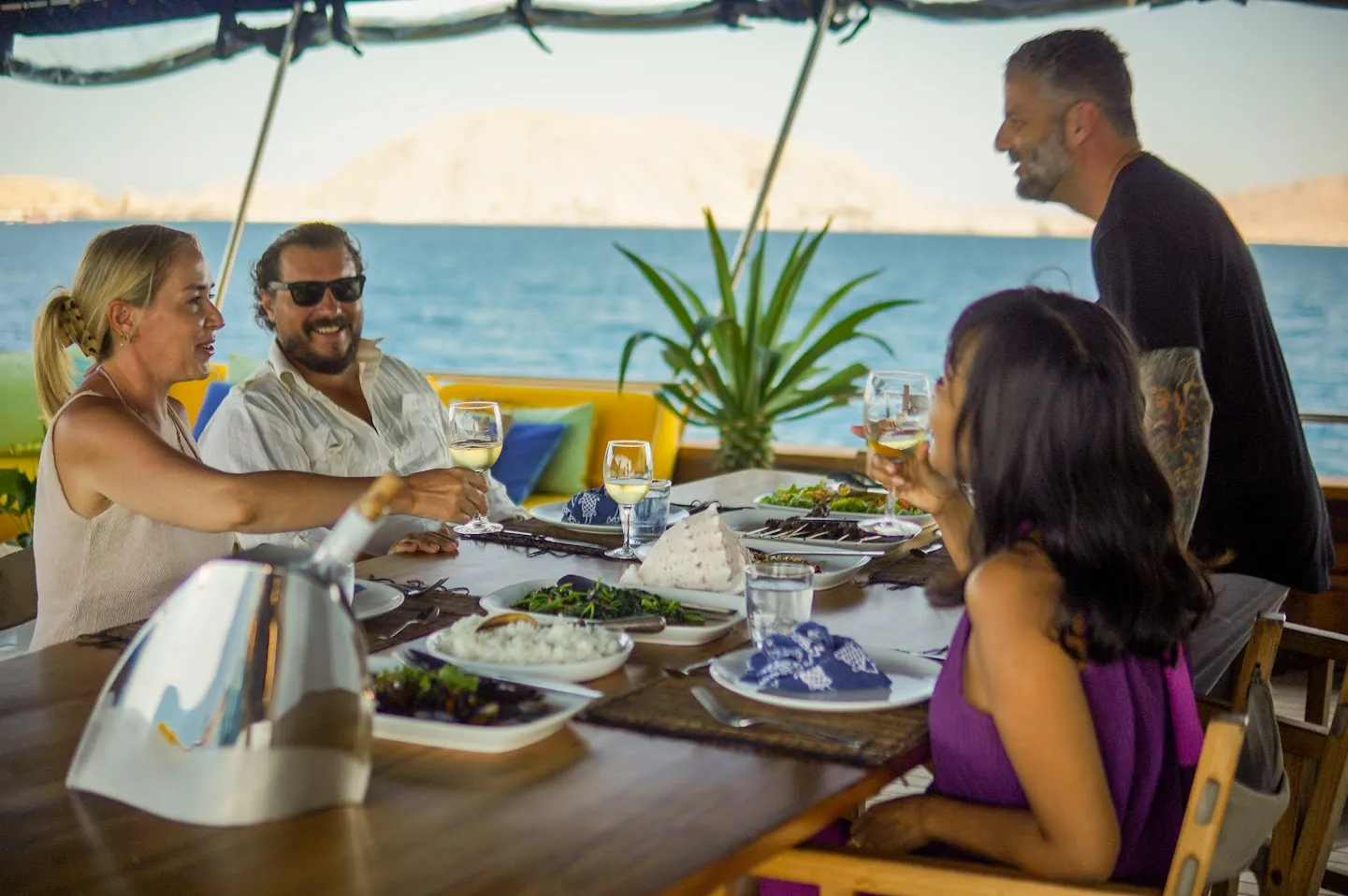
Most food posts about a komodo island liveaboard trip stop at “we cater to dietary needs” and leave it there. That line is true but incomplete, and incomplete is exactly what causes problems mid-voyage. A liveaboard galley is not a restaurant kitchen with a dedicated allergy station and a supplier on speed-dial — it is a single compact kitchen aboard a wooden phinisi yacht, provisioned once in Labuan Bajo for the full multi-day itinerary, then cooking three to four meals a day at anchor with no corner shop nearby if something is missing.
That reality is exactly why halal-friendly and allergy-safe dining works differently here than on land. It works well — but it works because the crew knows your requirements before the boat leaves the dock, not because every dietary variation is stocked “just in case.”
What “Halal-Friendly” Actually Means Onboard
We describe our galley practice as halal-friendly rather than halal-certified, and the distinction matters. Formal halal certification requires a certifying body auditing the entire supply chain — abattoir, distributor, and kitchen — with paperwork most small liveaboard operators in Labuan Bajo, including boats in the Komodo Luxury network, do not hold. What we can control, and do control, is sourcing: no pork or pork derivatives are carried onboard, meat is purchased from Muslim-owned suppliers in Labuan Bajo where available, and alcohol used in cooking (rare, and only in specific Western dishes) is flagged so it can be omitted on request. If halal certification with formal documentation is a hard requirement for your trip, tell us before booking so we can confirm exactly what a given boat and provisioning run can support that season.
How Nut, Shellfish and Other Allergies Are Handled in a Boat Galley
A small onboard kitchen cannot guarantee a completely allergen-free environment the way a dedicated allergy-safe restaurant can — shared prep surfaces, shared pans, and shared storage are the physical reality of a boat galley. What the crew can and does do is keep known allergens (peanuts, tree nuts, shellfish, shrimp paste, fish sauce) out of your specific plate, cook your portion separately when the main dish contains an allergen for other guests, and brief the chef by name on every declared allergy before the trip starts. For a severe, life-threatening allergy (anaphylaxis-level), that is a different conversation entirely — bring your own EpiPen, tell us in writing at booking, and we’ll be direct with you about the limits of a shared galley on open water, several hours from the nearest hospital in Labuan Bajo.
Gluten-Free, Vegetarian and Vegan Onboard
Gluten-free is one of the more manageable requests because Indonesian cuisine leans naturally toward rice, grilled fish, and vegetables rather than wheat-heavy dishes — the harder part is cross-contact from shared frying oil and soy sauce (which usually contains wheat), both of which the galley can substitute or isolate once flagged. Vegetarian and vegan requests are handled comfortably; Flores’s produce markets supply plenty of fresh vegetables, tofu, and tempeh, and the crew will build a full plate rather than a side-salad afterthought once they know in advance. None of these are “special menus” bolted onto a fixed plan — the galley cooks to the guest list it has for that specific sailing.
| Dietary need | How it’s handled onboard | Advance notice needed | Ease level |
|---|---|---|---|
| Halal-friendly (no pork, alcohol-free cooking) | Sourcing control + flagged dishes, not formal certification | At booking | Easy |
| Nut / peanut allergy | Separate portion, chef briefed by name | At booking, minimum 3–5 days before departure | Easy–Moderate |
| Shellfish / seafood allergy | Substituted protein, dedicated pan where possible | At booking, minimum 3–5 days before departure | Moderate (seafood-heavy menu base) |
| Gluten-free | Rice-based substitution, soy sauce swap | At booking | Easy |
| Vegetarian / vegan | Full plate built from local produce, not a side dish | At booking | Easy |
| Severe / anaphylaxis-level allergy | Case-by-case, requires direct conversation before confirming | At booking, in writing | Requires assessment — bring your own medication |
How Your Dietary Info Actually Reaches the Galley
The process is simple, but every step matters because there is no walk-in pantry once the boat is anchored off Padar or heading toward the dive sites further south:
- Disclose at booking: Dietary requirements, allergies, and halal preferences go on your booking form alongside cabin and duration selection — this is the single most important step, because provisioning happens before you land in Labuan Bajo.
- Guest Experience confirms directly: Benito Fernandez, our Guest Experience Lead, personally reviews dietary notes for every departure and follows up by WhatsApp if anything is unclear — a one-line “gluten-free” gets a clarifying question, not a guess.
- Provisioning run in Labuan Bajo: The galley shops the day before or the morning of departure, buying specifically against the confirmed guest list, not a generic stock list.
- Chef briefing before boarding: Every allergy and dietary need is communicated to the onboard chef by name before the first meal is served, so there’s no ambiguity once you’re at sea.
- Daily check-in onboard: The chef or crew will often confirm your next meal informally during the trip, especially on longer durations, so nothing gets lost across a multi-day itinerary.
Ready to sail? Dietary needs are easiest to plan for on a shorter, well-provisioned sailing — the 3D2N Komodo Liveaboard share-cabin open trip is bookable directly through Komodo Luxury Open Trip — live schedules and cabin availability. WhatsApp +62 811 3823 875 or email [email protected].
Bringing Your Own Snacks and Backup Food
Guests are welcome to bring their own snacks, and for anyone with a restrictive diet or a severe allergy, we actively recommend it as a backup rather than a replacement for onboard meals. Pack shelf-stable items — protein bars, nut-free trail mix if relevant, gluten-free crackers, instant oatmeal — since Labuan Bajo’s supermarkets carry a narrower range of specialty and imported dietary products than a traveler from a major city might expect. There is no restriction on bringing sealed, commercially packaged food aboard; just mention anything that needs refrigeration so the galley can find space for it alongside the boat’s own provisions.
A Typical Day’s Menu Onboard
To make this concrete, a standard non-restricted day on a Komodo liveaboard typically runs: early coffee and light pastries before the first dive, a full breakfast (eggs, fruit, rice or bread) after surfacing, a rice-and-protein lunch between the second and third dives — often fish, chicken, or tempeh with vegetables — afternoon snacks and fruit around sunset activities like Padar Island, and a multi-dish dinner in the evening. Every one of those courses can be adapted once your dietary profile is on file — the structure of the day doesn’t change, only what lands on your specific plate.
Why This Matters More on a Multi-Day Boat Than a Land Tour
On a land-based holiday, a bad meal is a single inconvenient dinner you can walk away from. On a liveaboard, meals are one of the few fixed, repeated touchpoints across several consecutive days at sea, alongside diving between named spots and evening downtime — get it wrong and it colors the whole trip, not just one sitting. That’s the real reason dietary intake gets treated as seriously as cabin assignment and durations like our 3-day, 2-night itinerary or longer voyages — it’s not an afterthought bolted onto booking, it’s part of the trip plan from day one. Full pricing context, including what’s covered in the cost of meals, is on our komodo liveaboard price page, and general planning questions are answered in the full FAQ hub.
Frequently Asked Questions
Is food halal-certified?
Not formally certified by an external body — we describe our galley practice as halal-friendly, meaning no pork or pork derivatives are carried onboard, meat is sourced from Muslim-owned suppliers in Labuan Bajo where available, and alcohol in cooking is flagged and can be omitted on request. If formal certification paperwork is a strict requirement for your trip, disclose that at booking so we can confirm exactly what a given season’s provisioning can support before you commit.
Nut/shellfish allergy options?
Yes — nut and shellfish allergies are common enough that the galley handles them routinely, cooking a separate portion and briefing the chef by name once the allergy is on file. A shared boat kitchen cannot guarantee a zero-cross-contact environment the way a dedicated allergy restaurant can, so for anaphylaxis-level severity, bring your own medication and flag it clearly at booking so we can be direct about what’s realistic on open water.
Gluten-free available?
Yes, and it’s one of the easier requests — Indonesian cuisine already leans on rice, grilled fish, and fresh vegetables rather than wheat, so the galley substitutes soy sauce and frying oil where needed and builds meals around naturally gluten-free staples. Disclose it at booking so the provisioning run in Labuan Bajo buys the right substitutes before departure rather than improvising mid-voyage.
Can I bring my own snacks?
Yes, guests can bring sealed, commercially packaged snacks and backup food, and we actively encourage it for anyone with a restrictive diet or severe allergy as a safety net rather than a replacement for onboard meals. Labuan Bajo’s supermarkets carry fewer specialty and imported dietary products than travelers from major cities may expect, so pack what you specifically rely on before you fly in. Just flag anything needing refrigeration so the galley can plan storage space.
How is dietary info collected?
Dietary requirements, allergies, and halal preferences are collected on your booking form alongside cabin and duration choice, then personally reviewed by our Guest Experience Lead, Benito Fernandez, who follows up by WhatsApp if anything needs clarifying. That confirmed profile drives the provisioning run in Labuan Bajo before departure and is briefed directly to the onboard chef by name before the first meal — the earlier it’s disclosed, the more the galley can actually plan around it.
We are part of the Komodo Luxury network (1,500+ verified guests across Google and TripAdvisor, TripAdvisor Travelers’ Choice 2025 and 2026 on the Komodo Luxury listing), and dietary handling is one of the quieter details that reputation is built on — not a headline feature, just something the crew gets right every sailing because guests told us what they needed in time to plan for it.
Ready to sail? Tell us your dietary needs at booking and we’ll confirm exactly what the galley can do before you fly in — the 3D2N Komodo Liveaboard share-cabin open trip is bookable directly through Komodo Luxury Open Trip — live schedules and cabin availability. WhatsApp +62 811 3823 875 or email [email protected].