Diving in Komodo for Beginners: Everything You Need to Know
Travel Journal

Diving in Komodo for Beginners: Everything You Need to Know

Ghifari April 4, 2026 21 min read

Quick Answer: Komodo offers top-tier diving for beginners with numerous certification programs, protected reef environments, and specialized dive operators trained in beginner instruction. Most beginners can dive Komodo after completing Open Water certification (3-4 days), with many liveaboard operators offering integrated certification courses in the water itself, combining classroom learning with real-world experience among pristine coral gardens and diverse marine life.

Understanding Komodo Diving for Beginners

Komodo National Park, set in the Lesser Sunda Islands of Indonesia, has emerged as one of Asia’s premier diving destinations for adventurers of all experience levels. For beginners contemplating their first underwater journey in these legendary waters, understanding what awaits you is essential to ensuring a safe, rewarding, and transformative experience. The archipelago’s reputation for extraordinary biodiversity, crystalline waters, and professional dive operations has made it the destination of choice for thousands of novice divers annually.

The waters surrounding Komodo present a unique opportunity for beginners to enter the diving world in a structured, supportive environment. Unlike many beginner-friendly destinations that compromise on marine life quality for safety, Komodo delivers both in abundance. You’ll encounter top-tier diving experiences while learning from instructors who understand the specific needs and concerns of newcomers to the sport.

The islands encompass over 1,733 square kilometers of protected marine reserve, establishing a sanctuary where coral ecosystems flourish and fish populations thrive in remarkable abundance. This protection means that as a beginner diver, you’ll be exploring environments carefully managed to balance tourism with conservation, ensuring both your safety and the preservation of these underwater treasures.

Certification Requirements for Komodo Diving

Entry-Level Certifications You’ll Need

Before descending into Komodo’s underwater realm, understanding certification requirements is paramount. The diving industry uses standardized certification levels recognized globally, with the most common being the Professional Association of Diving Instructors (PADI) system, though several other organizations like SSI, TDI, and NAUI maintain equivalent standards.

The baseline requirement for recreational diving in Komodo is Open Water certification, the foundational credential that qualifies you for dives up to 18 meters (60 feet). This certification, typically completed in three to four days, covers essential knowledge about dive theory, equipment use, safety procedures, and practical underwater skills. The classroom component teaches you about nitrogen narcosis, pressure effects, buoyancy control, and emergency procedures—critical knowledge that forms the foundation of safe diving practice.

Many visitors who arrive uncertified need not despair. Komodo’s dive operators offer integrated certification programs, often called “Discover Scuba” or “Open Water Certification” courses, which combine theoretical instruction with practical application in the actual diving environment. This immersive approach allows you to learn fundamentals while exploring real dive sites, making the learning process less abstract and more immediately rewarding.

Liveaboard-Based Certification Programs

One of Komodo’s significant advantages for beginners is the prevalence of liveaboard vessels offering comprehensive certification courses. These floating classrooms eliminate commute time and maximize your underwater learning hours. You’ll complete theory sections aboard ship, then descend to nearby dive sites for practical training exercises, gradually building confidence and competency in actual diving conditions.

The liveaboard-trip experience particularly benefits certification students because you remain in the water environment throughout your training. Rather than returning to a resort or boat between lessons, you progress naturally from one training dive to the next, allowing skills to build seamlessly and creating a continuous learning atmosphere.

Most reputable liveaboard operators employ PADI-certified instructors with extensive beginner-training experience. These professionals understand that anxiety is natural for new divers and employ patient, progressive teaching methodologies. They’ll ensure you never progress faster than your comfort level allows, and they’ll repeat skills as many times as necessary for mastery.

Beginner-Friendly Dive Sites in Komodo

Tatawa Besar: The Ideal Beginner Introduction

Tatawa Besar stands among Komodo’s most beginner-appropriate dive sites, combining fascinating marine life with manageable conditions. Located in the northern section of the national park, this site features a gently sloping reef with depths ranging from five to twenty meters, allowing you to maintain shallow profiles while exploring.

The site’s primary appeal lies in its abundance of marine life at accessible depths. Reef fish congregate in impressive numbers along the coral structures, while larger pelagics patrol the deeper blue water beyond. As a beginner, you can explore the colorful shallow reef while absorbing the sheer biodiversity of Komodo’s ecosystem. The site’s protected position means currents rarely challenge divers, making it ideal for building confidence and underwater awareness.

Visibility at Tatawa Besar typically exceeds twenty meters, allowing excellent observation of the reef ecosystem and dramatically enhancing the sense of wonder that inspires lifelong diving enthusiasm. This clarity, combined with reliable warm water temperatures (27-29 degrees Celsius year-round), creates ideal learning conditions.

Siaba Besar: Accessible Diversity

Siaba Besar presents another excellent beginner destination, offering exceptional marine life viewing with moderate current considerations. This site features a varied topography including coral gardens, sandy slopes, and deeper wall sections, allowing divers to choose appropriate depths while experiencing multiple ecosystem types.

The site’s shallow sections (5-12 meters) accommodate confident beginners, while the deeper wall beyond eighteen meters remains available for more experienced divers within your group. This flexibility means beginner and experienced divers can explore together, with each maintaining appropriate depth profiles for their certifications and comfort levels.

Siaba Besar’s reef structure supports extraordinary coral diversity and fish populations. You’ll encounter species ranging from tiny nudibranchs to large groupers, juvenile sharks, and magnificent sea turtles. The site’s morning dives typically offer the calmest conditions, making them particularly suitable for newer divers still building their environmental awareness skills.

What to Expect: The Beginner Diving Experience

Physical Sensations and Psychological Adjustment

Your first descent into Komodo’s waters will trigger sensations unlike anything experienced on land. The physical sensation of weightlessness beneath the surface—neutrally buoyant in three dimensions—requires conscious adjustment. Your training will have prepared you for this, but experiencing it remains distinct from theoretical preparation.

The pressure sensation as you descend is entirely normal. As water pressure increases, your body responds with increased pressure inside your ears and sinuses. Proper equalization (clearing pressure from your ears) prevents discomfort. Your instructor will teach and practice this essential skill repeatedly during certification, ensuring you master it before encountering real-world conditions.

Psychologically, many beginners experience a moment of mild anxiety during initial water entry and descent. This is entirely normal and expected. Professional Komodo dive operators anticipate this response and employ proven techniques to ease anxiety: gradual water entry, close instructor proximity, visual distraction through marine life observation, and positive reinforcement of successful skill execution. Within minutes of descent, most beginners report anxiety dissolving into pure wonder.

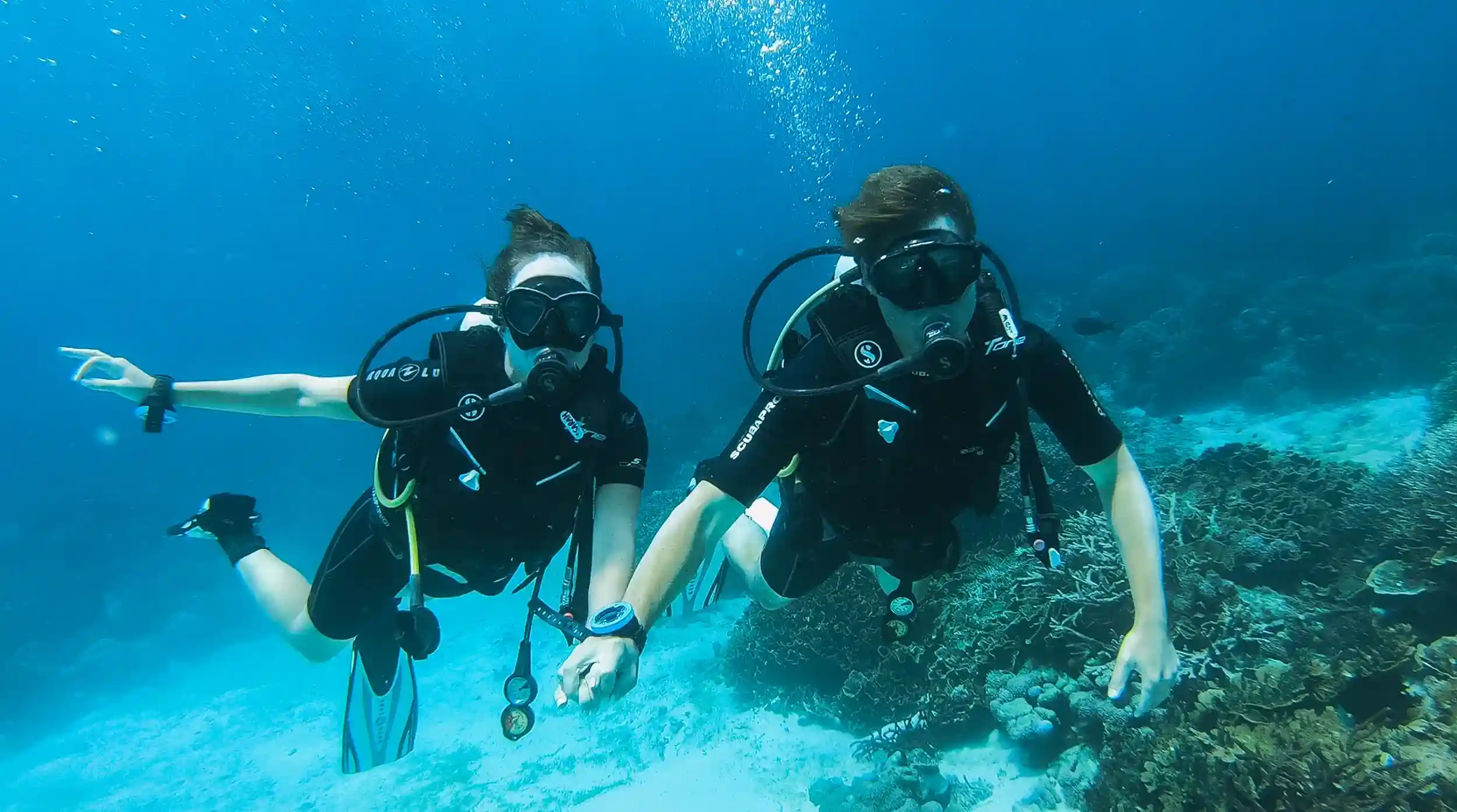
The sensory experience of Komodo diving is extraordinary. Imagine suspended weightlessness surrounded by vibrant coral formations in electric blues, deep purples, and brilliant oranges. Hundreds of fish in diverse species and sizes move around you. Sunlight penetrates from above, creating dappled patterns across the reef. The silence—broken only by your own breathing and equipment—creates a meditative state unique to underwater environments.

Duration and Depth Profiles for Beginning Divers

Standard recreational dives in Komodo typically last forty to fifty minutes underwater, though beginners often remain down for shorter durations (25-35 minutes) to ensure adequate air consumption margins and prevent fatigue. Your dive computer (provided by operators) continuously monitors depth and nitrogen loading, providing real-time guidance about remaining bottom time.

Most beginner-level dives maintain maximum depths between twelve and eighteen meters. This conservative depth range keeps nitrogen absorption minimal (reducing decompression considerations) while maximizing bottom time and allowing extended exploration of Komodo’s shallow reef zones where the most diverse and colorful marine life congregates.

Understanding Komodo’s Currents: A Critical Consideration

Tidal Currents and Their Patterns

Komodo’s position at the meeting point of major ocean currents creates some of the world’s most dramatic tidal movements. The strait between Komodo and Rinca islands experiences current velocities occasionally exceeding three knots (roughly 1.5 meters per second), creating one of the world’s most powerful tidal phenomena.

However, beginners need not fear these currents. The relationship between Komodo’s strong currents and beginner-friendly diving lies in site selection and dive planning. Experienced dive operators maintain intimate knowledge of current patterns, timing dives to coincide with slack-water periods (brief windows of minimal current) and selecting alternative sites during strong-flow periods.

Current strength varies dramatically based on the lunar cycle. During new and full moons (spring tides), currents reach maximum intensity. During quarter moons (neap tides), currents diminish significantly. Wise dive operations schedule beginner dives during neap-tide periods when currents remain manageable.

Current Techniques for Beginner Divers

Understanding basic current strategies before your Komodo diving adventure enhances safety and enjoyment. The fundamental principle is “drift diving”—allowing the current to move you along the reef while you focus on buoyancy control and observation rather than fighting against water movement.

Your dive master will position you appropriately on the reef to utilize current flow beneficially. You’ll maintain horizontal body position to reduce drag and energy expenditure. Rather than swimming against current to return to the boat, you allow the boat to follow your position, collecting you at the dive’s conclusion. This technique, properly executed, actually reduces physical exertion compared to shore-based diving.

Building current confidence occurs progressively. Early dives occur in minimal-current environments, allowing skill mastery in ideal conditions. As your competency and comfort increase, you’ll progress to sites with moderate current exposure. By the time you encounter stronger currents, you’ll possess sufficient underwater confidence and technical skill to manage them safely.

Safety Protocols and Risk Management

Operator Standards and Professional Training

Komodo’s popularity has attracted numerous dive operators, but quality varies significantly. Reputable operators maintain certifications from major diving organizations, employ rescue-trained instructors, and follow strict safety protocols including pre-dive briefings, equipment maintenance logs, emergency procedure rehearsals, and incident reporting systems.

When selecting your Komodo diving experience, prioritize operators with verifiable credentials and positive safety records. Read reviews specifically addressing safety protocols, not just marine life encounters. Inquire about instructor-to-student ratios (1:4 maximum for recreational dives), safety equipment redundancy, and emergency response procedures.

Professional operators maintain strict dive profiles, enforcing maximum depths and bottom times through dive computers. They conduct thorough equipment checks before every dive, including air supply verification, buoyancy compensation functionality testing, and regulator breathing tests. These procedures might seem repetitive, but they prevent equipment-related incidents.

Medical Fitness and Pre-Dive Considerations

Diving demands reasonable physical fitness, though you need not be an athlete. Cardiovascular health is particularly important, as diving increases heart-rate demands. Certain medical conditions contraindicate diving or require medical clearance from dive-medicine specialists.

Before beginning certification courses, honest assessment of your physical condition is essential. Respiratory conditions, cardiac issues, ear/sinus problems, or recent surgeries may require medical evaluation. Most dive operators provide medical questionnaires addressing these considerations. Never misrepresent your medical history to instructors—doing so endangers yourself and fellow divers.

Practical pre-dive preparations include remaining well-hydrated (drink plenty of water the day before and day of diving), avoiding alcohol and narcotic drugs, ensuring adequate sleep, and maintaining good overall health. Some divers experience nitrogen narcosis differently based on fatigue levels, so adequate rest improves your diving experience and safety.

Equipment: What You’ll Use and What You Might Own

Provided Equipment and Basic Systems

Komodo dive operators provide most essential equipment: tanks (aluminum cylinders containing compressed air), regulators (reducing tank pressure to breathable levels), buoyancy compensation devices (adjustable vests allowing neutral buoyancy), depth computers, and wetsuits. This provided equipment is professionally maintained and regularly serviced, ensuring reliability.

The regulator—a critical piece of equipment—requires particular attention. This device reduces the thousands of PSI (pounds per square inch) in your tank to ambient water pressure, allowing comfortable breathing. Modern regulators function reliably in Komodo’s warm water, and operators maintain strict maintenance schedules. You’ll breathe naturally from your regulator once comfortable with the initial sensation of breathing underwater.

Your buoyancy compensation device (BCD), essentially an inflatable jacket, represents the fundamental control device for diving. By adding or removing small amounts of air throughout your dive, you maintain neutral buoyancy—neither sinking nor rising. Mastering this skill separates comfortable divers from anxious ones. Your training will emphasize buoyancy control above all other skills.

Personal Equipment to Consider Owning

While operators provide complete equipment packages, many divers prefer personal ownership of certain items: mask, fins, and snorkel. These items contact your face and feet directly, and personal ownership ensures perfect fit. Mask fit is particularly important—a poorly-fitting mask leaks continuously, creating constant annoyance throughout your dive.

Computer watches (dive computers worn on the wrist) track depth and bottom time, automatically calculating nitrogen loading and safe bottom time. While operators provide computers, some divers prefer personal units ensuring familiarity. Computer ownership isn’t necessary for beginners, but becomes increasingly desirable as diving frequency increases.

Wetsuits provide both thermal protection and minor abrasion resistance. Komodo’s warm water (27-29°C) requires only thin wetsuits (3mm or even shorties), unlike cold-water destinations. Operator-provided wetsuits accommodate most body types, though some divers prefer personal wetsuits ensuring perfect fit and comfort.

Available Courses and Training Programs

PADI Open Water Certification: The Industry Standard

PADI’s Open Water Certification represents the most widely-recognized beginner diving credential globally. The course comprises three essential components: academic (classroom theory and self-study), confined-water training (practicing skills in shallow, controlled environments), and open-water training (practicing skills in actual diving conditions).

In Komodo, most operators integrate these three components into comprehensive 3-4 day programs combining classroom instruction aboard liveaboard vessels with practical training at nearby dive sites. This approach compresses the timeline while enhancing the experience—rather than completing theory and confined-water training separately, you move directly to open-water application, maintaining momentum and motivation.

The academic component covers diving physics (how pressure affects your body), physiology (nitrogen narcosis, oxygen toxicity, decompression), equipment systems (understanding your gear), and safety procedures (emergency protocols and accident prevention). Instructors present this information accessibly, with visual aids and practical demonstrations ensuring comprehension without overwhelming technical complexity.

Specialized Courses for Beginners

Beyond basic Open Water certification, numerous specialized courses enhance diving enjoyment. The Rescue Diver course teaches buddy assistance and rescue techniques. Advanced Open Water certification increases your depth limit to 40 meters. Specialty courses in underwater photography, navigation, marine identification, and specific techniques address particular interests.

For beginners specifically, Rescue Diver training might seem premature, but learning rescue fundamentals early builds peer-support competency. Many recreational divers complete basic rescue training within their first year, significantly enhancing confidence and safety awareness. As a beginner progressing through your diving journey, consider this course during your second or third diving trip.

Navigation specialty training teaches compass use and underwater route-finding, essential for divers progressing toward independent diving. Marine identification courses, focusing on fish species, reef identification, and marine behavior, transform your understanding of what you observe underwater. In Komodo specifically, specialty courses addressing drift diving and current management prove invaluable given the region’s tidal dynamics.

Choosing the Right Trip: Considerations for Beginners

Liveaboard vs. Day-Boat Experiences

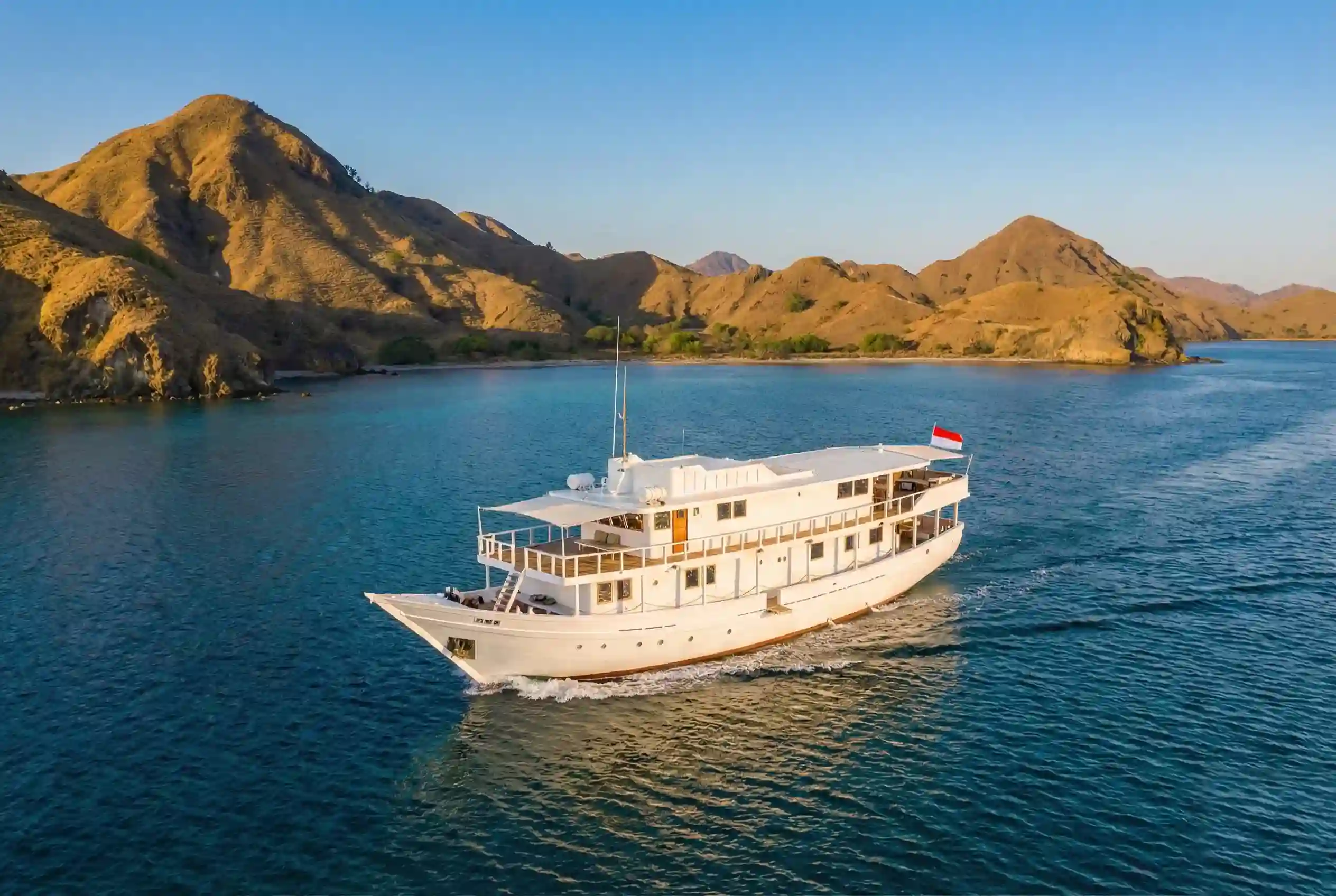
Komodo offers two primary diving platforms: shore-based operations conducting daily dives from boats returning to fixed locations each evening, and liveaboard vessels remaining at sea for entire trips (typically 3-7 days). For beginners, liveaboard experiences offer distinct advantages.

Liveaboards eliminate commute time, allowing maximum water exposure. Rather than 2-3 dives daily returning to shore between each, liveaboards typically offer 3-4 dives daily plus optional evening/night dives. You remain immersed in the diving lifestyle, with skilled crew attending to boat operations while you focus entirely on diving and learning.

The community aspect of liveaboard diving profoundly impacts beginner experiences. Surrounded by other diving enthusiasts for entire trips, you develop rapid friendships and support networks. More experienced divers provide informal mentorship. The boat crew brings decades of collective experience answering beginner questions. This environment—combining intensive learning with camaraderie—creates memories extending far beyond the diving itself.

Day-boat operations suit some beginners, particularly those anxious about extended boat time or those combining diving with other activities. However, the repeated commuting, equipment setup/breakdown cycles, and limited diving frequency make day-boat operations less ideal for intensive skill development and certification training.

Trip Duration and Beginner Progression

Most certification courses require 3-4 days for completion, making this minimum the appropriate beginning liveaboard length. However, many beginners benefit from extending to 5-7 day trips, allowing post-certification dives in increasingly challenging environments as confidence builds.

A 3-day trip covers certification basics and allows exploration of beginner-friendly sites. A 5-7 day trip includes certification, familiarization dives at moderate-difficulty sites, and exposure to more adventurous locations as you build competency. This progressive structure—rather than overwhelming you with challenging dives immediately after certification—optimizes learning and builds lasting diving confidence.

Consider also your overall vacation timeline. A 10-day Indonesia holiday might allocate 5 days to Komodo diving and 5 to other activities. A 7-day Komodo-focused trip maximizes diving and living opportunities. Your schedule, budget, and vacation days determine ideal trip length.

Seasonal Considerations for Beginner Dives

Komodo experiences two distinct seasons: dry season (April-November) and wet season (December-March). The dry season offers reliably calm conditions, excellent visibility, and minimal rainfall. The wet season brings occasional rough seas and increased cloud cover, though diving continues throughout.

For beginners, dry-season dives generally present easier conditions. Calmer seas mean gentler boat rides and more comfortable water entry. Excellent visibility maximizes marine life observation and builds confidence. However, wet-season dives remain absolutely manageable for certified beginners, and seasonal plankton blooms during wet months attract larger marine life concentrations.

Your certification timeline should coordinate with favorable seasonal windows. Completing certification during dry season (April-November) ensures optimal learning conditions. However, don’t let seasonal considerations delay your Komodo adventure indefinitely—even wet-season diving provides top-tier experiences for properly trained and prepared divers.

Building Confidence as a New Diver

Progressive Skill Development and Comfort Building

Diving confidence builds progressively through repeated successful experiences. Your certification course will teach fundamental skills in controlled progressions, starting with stationary skills in extremely shallow water and progressing to dynamic navigation in deeper environments. This structured progression—while sometimes seeming slow to eager beginners—maximizes safety and sustainable confidence development.

After certification, resist the temptation to immediately attempt challenging dives. Instead, complete 5-10 additional comfortable dives at familiar dive sites before progressing to more adventurous locations. Each dive builds muscle memory, underwater awareness, and psychological comfort. By your tenth dive, you’ll operate underwater with unconscious competence—executing essential skills without deliberate thought.

Many beginning divers benefit from buddy systems connecting them with more experienced divers. During your liveaboard trip, your dive master might suggest pairing with an experienced diver for a particular dive. This arrangement provides real-time guidance and psychological support during more challenging dives. Good buddies enhance safety and accelerate confidence building.

Addressing Common Beginner Anxieties

Virtually all beginning divers experience some anxiety about underwater environments. Common concerns include fear of deep water, claustrophobia about enclosed equipment, anxiety about running out of air, or fear of marine life encounters. These concerns are legitimate, normal, and entirely manageable through proper training and support.

Breathing anxiety represents the most common beginner concern. Many people naturally hold their breath in water, making the transition to conscious underwater breathing psychologically challenging. Your instructor will address this repeatedly, demonstrating breathing safety and practicing until conscious, relaxed underwater breathing becomes automatic.

Marine life anxiety, while prevalent, is typically displaced by real-world observation. Most Komodo marine life actively avoids divers, finding humans generally uninteresting. The fish and other creatures you observe are absorbed in feeding, reproduction, and territorial behaviors—not hunting divers. Education about actual marine behavior patterns replaces anxiety with appreciation.

Essential Beginner Checklist for Komodo Diving

Before departing for your Komodo adventure, ensure you’ve addressed these essentials: obtain certification (or book certification course with your operator), pack adequate sunscreen and lip balm (sun exposure underwater is significant), verify your passport’s validity (minimum 6 months), obtain travel insurance covering diving activities, confirm your operator’s safety credentials and certifications, and arrange appropriate payment methods accepted by your chosen operator.

Additionally, plan to arrive at your diving location well-rested and hydrated. Allow time for gradual acclimatization if arriving from significantly different altitudes. Pack any personal medications in original, labeled containers. Consider bringing personal snorkeling gear if you prefer specific mask fit. Arrange any necessary dive computer purchases or rentals.

Most importantly, approach your Komodo diving adventure with realistic expectations and genuine enthusiasm. You’re not expecting to become an expert diver in one trip—you’re beginning an exciting journey that will unfold across decades of future dives. Each dive builds upon previous experience, creating compounding returns on your investment in training and certification.

Getting Started: Next Steps for Your Komodo Diving Dream

Your first step depends on your current certification status. If uncertified, research liveaboard operators offering integrated certification courses, reviewing their instructor credentials, safety records, and student reviews. If already certified, book your preferred liveaboard trip selecting operators specializing in beginner-friendly sites and progressive skill development.

Contact your selected operator with any questions about your experience level, medical concerns, or specific interests. Reputable operators employ experienced staff dedicated to ensuring beginner divers feel safe, supported, and wonderfully entertained throughout their Komodo diving journey.

The underwater world of Komodo awaits—a realm of extraordinary beauty, profound peace, and transformative experience. Your journey begins with a single breath underwater.

Frequently Asked Questions About Komodo Diving for Beginners

Do I need to be certified before diving in Komodo?

Recreational diving in Komodo technically requires Open Water certification or equivalent. However, many operators offer integrated certification courses combining training with actual diving experiences, allowing you to earn certification while exploring Komodo’s waters. These 3-4 day programs streamline the learning process while maximizing immersion in the actual diving environment. If you’re uncertified, book a liveaboard trip including certification, which efficiently combines training and adventure.

How deep will I dive as a beginner?

Most beginner dives in Komodo maintain depths between 5-18 meters, though your certification limits depend on your specific course. Open Water certification allows dives to 18 meters, while Advanced Open Water extends to 40 meters. Most beginner-friendly Komodo dive sites feature excellent marine life at shallow depths (8-15 meters), allowing extended bottom times and safe nitrogen loading. Your dive master customizes each dive’s depth profile based on your comfort and certification level.

What happens if I panic underwater?

Panic, while uncommon with proper training, is addressed extensively during certification. Your instructor teaches controlled breathing techniques and emergency procedures preventing panic. Additionally, you’ll never dive alone—your buddy and dive master remain in close proximity, providing immediate support if anxiety arises. If you experience significant anxiety, you simply surface (a controlled, normal process for trained divers), refocus, and decide whether to continue. Modern dive training emphasizes decision-making authority—you’re never forced to continue a dive if uncomfortable.

What marine life should I be concerned about in Komodo?

Komodo’s marine life actively avoids human interaction. Sharks, while present, show virtually no interest in divers and flee before close encounters. Venomous fish like stone fish and sea urchins are avoided through attentiveness and proper finning technique. The greatest risk comes from environmental factors (strong currents, deep water) rather than aggressive marine life. Your dive training emphasizes environmental awareness and proper procedures, addressing legitimate concerns while maintaining perspective about actual Komodo risks.

How much will my certification course cost?

Open Water certification through Komodo liveaboards typically ranges from $400-800 USD, depending on operator, course length, and included amenities. This covers instruction, course materials, certification fees, and accommodation during your training. Compare this to shore-based certification ($300-500) plus hotel costs (often $50-150 nightly), and liveaboard certification frequently proves more economical while providing superior experience through intensive immersion.

What’s the water temperature in Komodo, and will I be cold?

Komodo’s water maintains approximately 27-29°C (81-84°F) year-round—warm enough that many experienced divers require minimal protection. Beginners typically wear thin 3mm wetsuits providing thermal protection and abrasion resistance without overheating. Most operators provide wetsuits, though some divers prefer personal equipment ensuring perfect fit. The water feels pleasantly warm to most beginners, particularly after the initial adjustment to water temperature during entry.

Can I dive if I have a medical condition like asthma or heart issues?

Certain medical conditions contraindicate diving or require specialist clearance. Respiratory conditions (asthma, COPD), cardiac issues, uncontrolled diabetes, and recent surgeries warrant medical evaluation before diving. Operators provide medical questionnaires ensuring you honestly disclose health information. Your personal physician should confirm your diving safety if any medical uncertainties exist. Never misrepresent medical history to instructors—doing so endangers yourself and fellow divers while invalidating your certification.

What’s included in typical Komodo liveaboard packages for beginners?

Most beginner-oriented liveaboard packages include accommodation, meals, non-alcoholic beverages, diving (3-4 dives daily), equipment (tanks, regulators, wetsuits, BCDs), dive guides/instructors, and certification (if pursuing). Typically excluded are alcoholic beverages, personal equipment purchases, tips for crew, and travel insurance. Review package details carefully with your operator to confirm included amenities and identify any surprise costs, ensuring transparent budgeting for your entire Komodo diving adventure.