
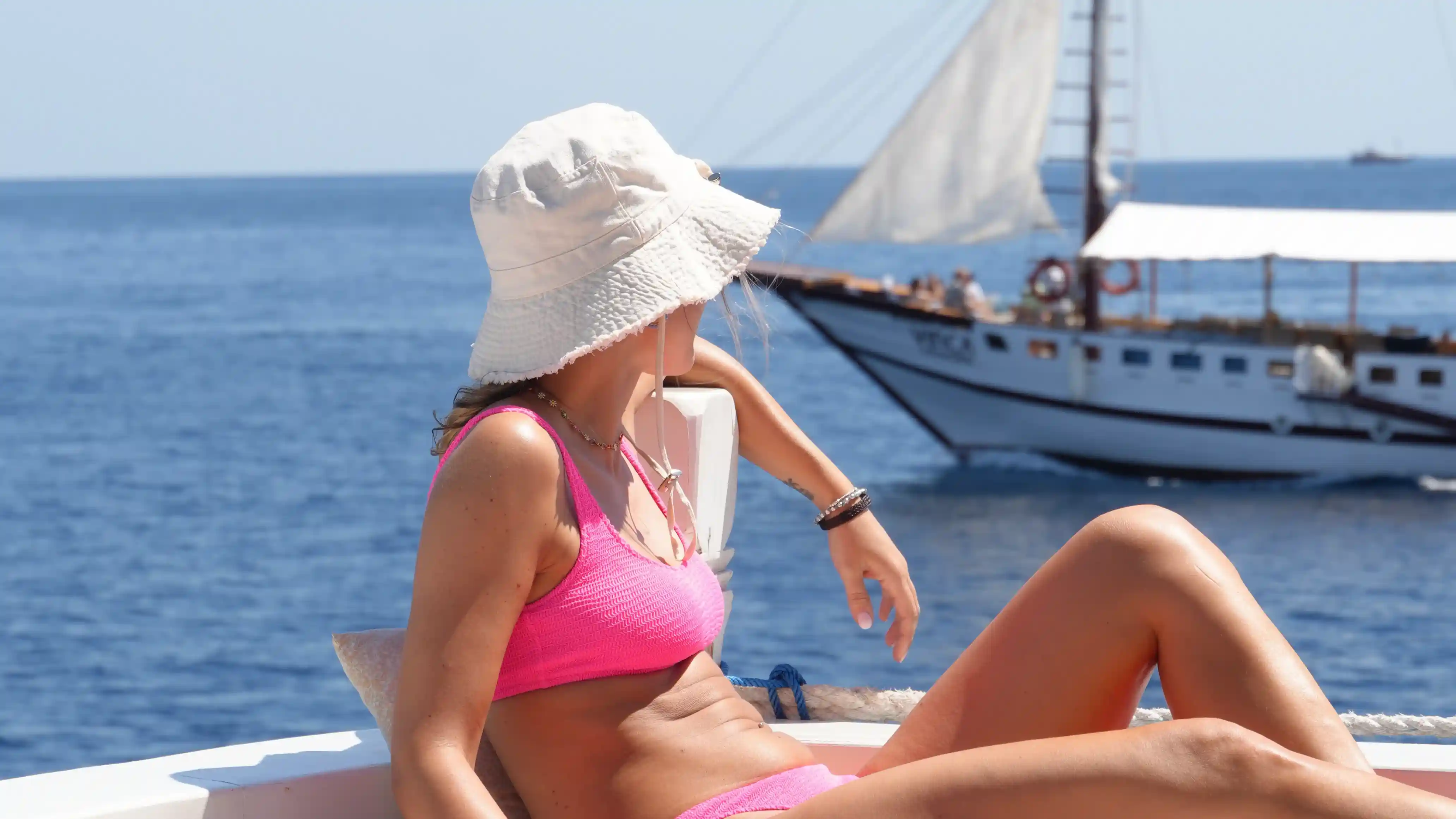
Yes, a Komodo liveaboard is safe for solo female travelers when you book a licensed operator with mixed-gender crew, a private or lockable cabin option, and a documented night-watch routine. Ask about cabin locks, crew-to-guest ratio, and shore-side emergency contacts before you pay a deposit — not after you board.
Why Solo Women Keep Choosing a Komodo Liveaboard
Every season, more solo female divers and sailors show up at Labuan Bajo’s harbor with one bag, one booking confirmation, and a reasonable amount of nerves. That’s normal — stepping onto a boat you’ve never seen, run by a crew you’ve never met, to sail for several days through Komodo island liveaboard is a bigger leap than checking into a hotel. The good news: liveaboard travel in this park is one of the more controlled environments in Indonesian tourism. Boats are licensed, itineraries are filed, dive guides carry certifications, and the small-group format (typically 10–20 guests on a shared open trip) means you’re rarely more than a few meters from another traveler or crew member at any point in the day.
The risk profile for a solo woman on a well-run komodo liveaboard is less about the open ocean and more about the same things that matter on any group trip: who has access to your cabin, how the crew is structured, and what happens if something goes wrong at 2 a.m. rather than at 2 p.m. This guide covers all three, plus the specific questions to ask before you book.
Cabin Privacy: What to Ask Before You Book
Cabin setup is the single biggest safety variable on a share-cabin open trip, and it’s also the easiest to fix with the right questions upfront.
| Question to ask the operator | Why it matters |
|---|---|
| Is cabin assignment same-gender only for shared cabins? | Most reputable operators default to same-gender bunking unless you’re traveling as a couple or family — confirm this is policy, not a courtesy. |
| Does the cabin door lock from the inside? | A lockable door (even a simple hook-and-eye) is standard on Mutiara Phinisi-class boats; older converted fishing boats sometimes lack it. |
| Is a private cabin available as a paid upgrade? | Most operators, including our own fleet, offer a single-supplement private cabin — worth the extra cost if privacy matters more than budget. |
| Are bathrooms shared or ensuite? | Shared bathrooms mean more foot traffic near your cabin at night; ensuite reduces that. |
| Who has a master key to cabins? | Usually the cruise director only, for emergencies — ask this explicitly rather than assuming. |
If you’d rather skip the negotiation entirely, our solo traveler’s guide to Komodo liveaboard covers the single-supplement policy, typical price difference between shared and private cabins, and which boats in our fleet default to same-gender bunking without you having to ask.
Crew Structure and Ratios: What “Well-Run” Looks Like
A mixed-gender crew changes the texture of a trip noticeably. On our own boats, Dive Operations Lead Maria Ngganggus — a PADI Divemaster, SSI Dive Guide, and EFR Instructor with a decade in Komodo’s waters — runs the pre-trip safety briefing that many solo women tell us they specifically look for: a female voice explaining cabin rules, dive protocol, and who to find if anything feels off, before the anchor even lifts.
Beyond gender mix, ask about the guide-to-guest ratio for diving (a ratio tighter than 1:4 underwater is a good sign of attentive supervision) and whether the crew includes at least one member with a wilderness first-aid or EFR certification. A trained, briefed crew is the difference between a minor mishap being handled calmly and it becoming a genuine problem three hours from the nearest port.
Night Hours Aboard: The Protocol That Matters Most
Daytime on a liveaboard is busy and social — diving, briefings, meals, sunset viewing at spots like Padar Island. Night hours are quieter, and that’s exactly when solo travelers ask the most questions. A well-run boat has a predictable rhythm after dark:
- Dinner service ends, deck lights stay on. Common areas remain lit until the last guest turns in — no boat should go fully dark while guests are still socializing.
- Cruise director does a headcount. On multi-night trips, a soft headcount or cabin check confirms everyone is aboard before the anchor watch begins.
- One crew member stays on anchor watch. This is standard maritime practice, not just for guest safety — it covers weather, anchor drag, and any late-night needs.
- Cabin doors lock, deck lighting dims but doesn’t cut out. A completely dark deck is a red flag; low ambient lighting near cabin corridors should stay on through the night.
- Early risers are briefed the night before. If a sunrise trek or early dive is planned, the wake-up protocol is announced at dinner, not sprung on guests at 4 a.m.
- Any guest can flag the cruise director directly. A functioning boat makes it obvious who’s in charge after hours — usually the same person from the morning briefing, reachable at any point in the night.
If an operator can’t describe this rhythm clearly when you ask, that’s worth noting before you commit a deposit.
Traveling solo and want a trip built around these questions from the start? The 3D2N Komodo Liveaboard share-cabin open trip is bookable directly through Komodo Luxury Open Trip — live schedules and cabin availability. WhatsApp +62 811 3823 875 or email [email protected].
Emergency Contact Protocol: Set It Up Before You Sail
Komodo National Park sits several hours by boat from Labuan Bajo’s port at the outer edges of a typical itinerary, so the emergency plan needs to exist before you’re at sea, not after. Before booking, confirm the operator can answer three things clearly: who is the designated shore-side contact during your trip, how guests reach that contact if the onboard crew’s own communication is limited, and what the escalation chain looks like if a medical or safety issue arises. Reputable operators register a next-of-kin or emergency contact for every solo guest at check-in — make sure yours is on file, not just assumed.
Solo-Friendly Boat Checklist
Use this as a quick pre-booking filter when comparing operators for a komodo liveaboard trip:
| Feature | Why solo women prioritize it |
|---|---|
| Private cabin upgrade available | Removes the cabin-assignment variable entirely |
| Mixed-gender crew, female dive guide on staff | More comfortable briefings and cabin-adjacent interactions |
| Documented night-watch routine | Predictability after dark reduces anxiety significantly |
| Small group size (10–20 guests) | Easier to build familiarity with fellow travelers by day two |
| Transparent emergency contact process | You know exactly who to call and how, before problems occur |
| Recent, verifiable guest reviews from other solo women | Firsthand accounts beat marketing copy every time |
For the full price breakdown across cabin types and trip lengths, see our Komodo liveaboard price guide, and for a shorter first trip, the 3D2N Komodo liveaboard itinerary is the most common starting point for solo travelers testing the waters, literally, before committing to a longer voyage.
Frequently Asked Questions
Is it safe for solo women?
Generally yes, on a licensed operator with a briefed, mixed-gender crew and a clear night-watch routine. The small-group format of most Komodo open trips means you’re rarely isolated, and reputable boats run the same safety briefing for every guest regardless of who’s traveling alone. The variables that matter most are cabin setup and crew transparency — vet both before booking rather than assuming they’re standard.
Private cabin option?
Most operators, including our own fleet, offer a private cabin as a paid single-supplement upgrade on share-cabin open trips. Pricing varies by boat class and trip length, so confirm availability and cost at the time of booking rather than assuming it’s guaranteed on every departure date — private cabins on popular sailings can sell out weeks ahead.
Crew ratio?
Look for a guide-to-guest ratio tighter than 1:4 for diving activities, plus at least one crew member holding a wilderness or emergency first-aid certification such as EFR. Onboard hospitality and deck crew numbers vary by boat size, but a well-run open trip typically runs 4–6 crew for a group of 10–20 guests, including a dedicated cruise director.
Emergency contact protocol?
Confirm before departure who your operator’s designated shore-side contact is, how that contact stays reachable across a multi-day sailing, and that your own next-of-kin details are on file. A functioning protocol names a specific person and a specific communication method — vague answers here are worth pressing further before you book.
Best boats for solo women?
Prioritize boats offering a private-cabin upgrade, a mixed-gender crew with a female dive guide on staff, and transparent answers to the safety questions above over boats chosen purely on price. Our solo traveler’s guide to Komodo liveaboard lists which vessels in our fleet are most commonly booked by solo women and why, based on cabin configuration and crew makeup.
Ready to sail? The 3D2N Komodo Liveaboard share-cabin open trip is bookable directly through Komodo Luxury Open Trip — live schedules and cabin availability. WhatsApp +62 811 3823 875 or email [email protected].