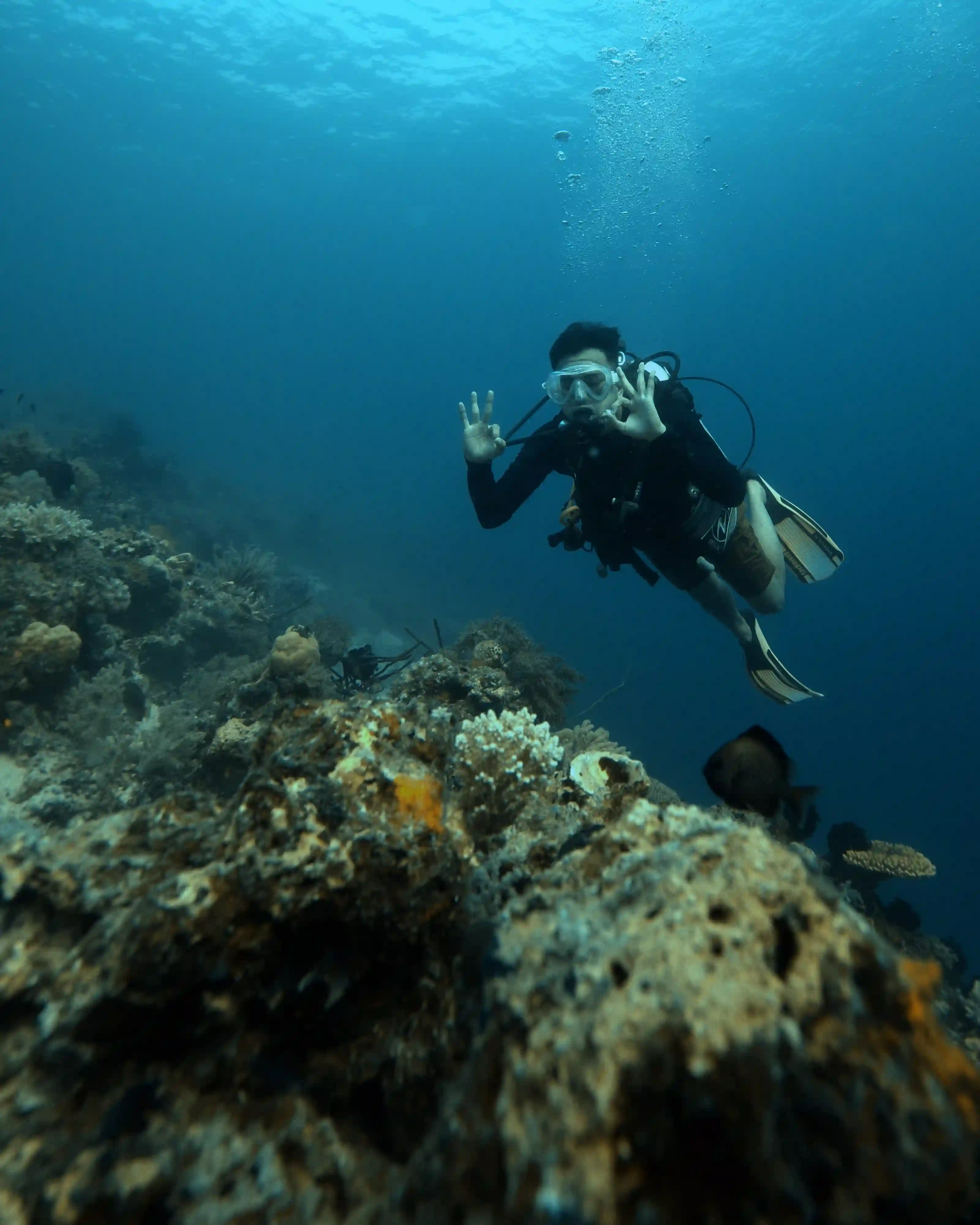
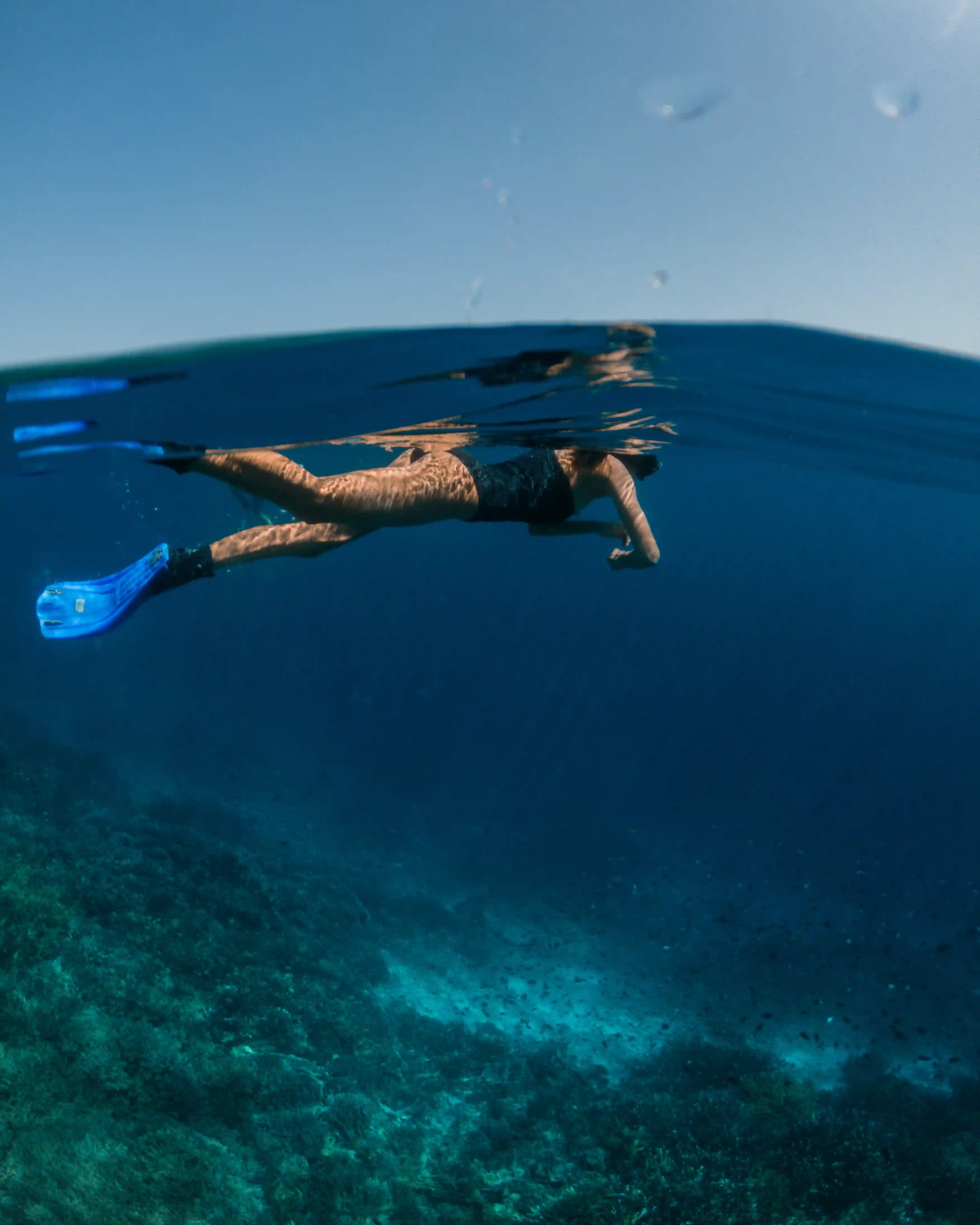
Diver exploring a coral reef in Komodo National Park
Marine Life

Marine Life of Komodo — Complete Underwater Biodiversity Guide

Quick Answer: Komodo’s marine ecosystem is extraordinarily biodiverse—manta rays, reef sharks, sea turtles, napoleon wrasse, and vast coral gardens support thousands of species. Converging ocean currents concentrate this abundance, making big-animal and macro encounters a near-certainty on properly planned diving and liveaboard expeditions.

Where Ocean Currents Concentrate Life

Three currents converge over Komodo—the Indonesian Throughflow, Indian Ocean monsoon currents, and local eddies—driving nutrient-rich upwelling that feeds plankton, pelagics, and filter feeders like manta rays.

Reefs host rare and endemic species, current-swept channels draw sharks and rays, and sheltered pockets shelter macro life like nudibranchs and seahorses—diversity that rivals much larger dive destinations.

Knowing what to expect by season sharpens site selection, and our experienced guides know species distribution and behavior in detail.

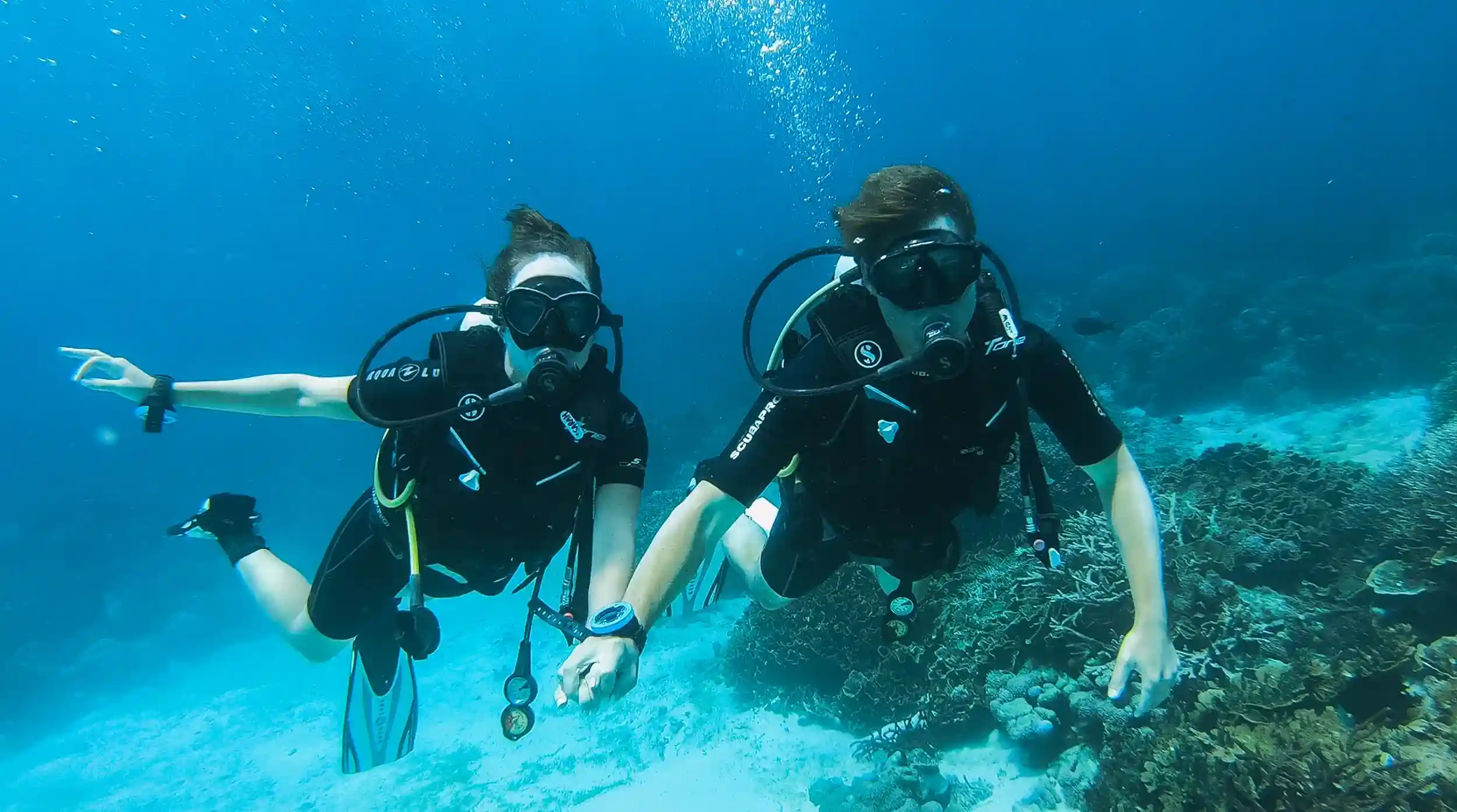
Divers over a coral reef in Komodo National Park

Megafauna You’re Likely to Meet

Manta Rays

Wingspans reach 6–7 meters, yet these gentle giants filter-feed on plankton—their presence signals a productive, healthy reef. Numbers peak June–August; never touch or chase a feeding manta.

Reef Sharks

Whitetip and blacktip reef sharks (with occasional grey reef sharks) patrol nearly every dive site—wary apex predators, not the aggressive stereotype, and a sign of a healthy reef.

Sea Turtles

Green and hawksbill turtles feed on seagrass and algae year-round, often resting in reef caves—patient, respectful observation is the rule.

Reef Fish, Predators & Passing Giants

Reef Fish & Napoleon Wrasse

Fusiliers and trevally sweep past in schools, parrotfish graze coral into sand, and the humphead (Napoleon) wrasse—up to 2 meters long—is an inquisitive, threatened reef icon.

Barracuda, Trevally & Pelagic Visitors

Giant trevally and great barracuda hunt the currents, while spinner dolphins, eagle rays, and passing tuna add unpredictable open-water highlights.

Coral Gardens & Macro Life

Soft Coral Gardens

Hard corals build the reef structure while soft corals sway with the current for an ever-shifting landscape—though some areas show bleaching stress worth watching.

Macro Life

Nudibranchs, seahorses, pipefish, mantis shrimp, octopi, and cleaner shrimp reward a slow, close look—Komodo’s macro diversity can fill an entire dive.

When & How to See Komodo’s Marine Life

Dry Season (May–September)

  • Strong currents fuel peak productivity—manta season runs June–August with near-guaranteed sightings, visibility hits 20–30m, and fish schools are at their largest

Wet Season (November–March)

  • Currents ease and mantas thin out, but visibility often improves further and sea turtles grow more active—April and October shoulder months split the difference

Responsible Wildlife Viewing

  • No touching or chasing, reef-safe sunscreen, and proper mooring protect the animals—our crew also donates to research and monitors reef health year-round

Frequently Asked Questions About Komodo Marine Life

Divers exploring a coral reef in Komodo National Park

Komodo’s reefs deliver world-class marine life on every dive.