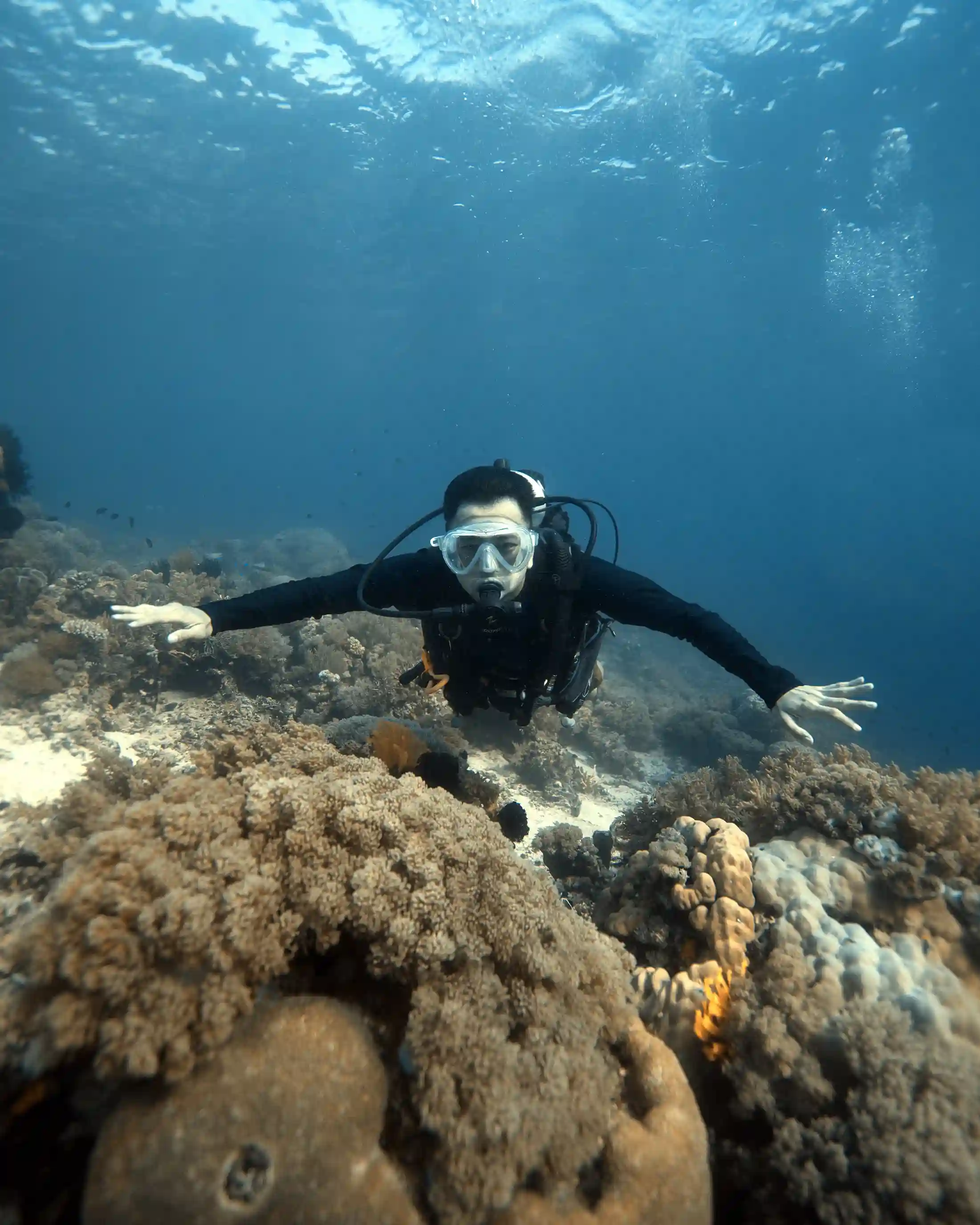
PADI or SSI Open Water is the technical minimum to dive anywhere in Komodo National Park, but it isn’t the practical minimum. Sites like Castle Rock, Crystal Rock, and Batu Bolong run 4–6 knot drift currents that call for Advanced Open Water certification and genuine current experience. Open Water divers can still join — dive guides simply route them to gentler sites like Manta Alley and Torpedo Alley instead.
Why Certification Level Actually Matters Here
Komodo Island Liveaboard is a specialist liveaboard operator in the Komodo Luxury network, based in Labuan Bajo, curating stay-aboard phinisi expeditions (1–11 nights) across Komodo National Park — world-class diving, snorkeling, Padar & Pink Beach, Komodo dragon trekking. Most of the diving happens in genuine current, not the gentle drift you’ll find on a reef in Bali or the Gilis, which is exactly why certification and logbook honesty matter more here than at almost any other Indonesian dive destination.
This isn’t a sales gate. It’s a safety filter. A diver who overstates their comfort in current on the pre-trip form doesn’t just risk their own dive — they slow the group down, force a guide to babysit instead of lead, and in a worst case, need an assisted ascent in exactly the kind of water where that’s hardest to do safely. Every itinerary we run, as part of the Komodo Luxury network (1,500+ verified guests across Google and TripAdvisor, TripAdvisor Travelers’ Choice 2025 and 2026 on the Komodo Luxury listing), starts with an honest conversation about certification level and logged dives before we confirm which sites go on your plan.
Open Water vs Advanced Open Water: What’s Actually Required
There’s no single park-wide rule that bars Open Water divers from Komodo. What changes site to site is which currents are survivable on an Open Water skill set versus which ones genuinely need Advanced training — negative entries, drift technique, and the judgment to bail out of a dive that’s running faster than briefed.
| Certification level | Sites typically accessible | What’s expected of you |
|---|---|---|
| Open Water (no current experience) | Manta Alley, Torpedo Alley, sheltered central reefs, most snorkel-friendly bays | Comfortable in mild-to-moderate current with guide supervision |
| Open Water + logged current dives | Cannibal Rock, calmer profiles at Batu Bolong on slack-current days | Demonstrated buoyancy control, comfortable with surge and moderate drift |
| Advanced Open Water + drift specialty (or equivalent experience) | Castle Rock, Crystal Rock, Cauldron/Shotgun, Golden Passage, Batu Bolong on a strong-current day | Negative entry technique, drift diving competence, current comfort at 4–6 knots |
Note that Advanced Open Water the certification card and “advanced-level diving experience” aren’t automatically the same thing. We’d rather dive with an Open Water diver who has 60 honest current dives logged than an Advanced-certified diver whose four checkout dives were all in calm water — and our dive guides are trained to ask questions that surface the difference during the pre-dive briefing, not after you’re in the water.
How Many Logged Dives Do You Actually Need?
There’s no official Komodo National Park regulation setting a minimum logged-dive count — this is an operator judgment call, and it varies boat to boat. Here’s what we, and most reputable Komodo liveaboards, actually look for before slotting a diver into the demanding North Komodo current sites:
- Under 20 logged dives: Expect to be guided toward Manta Alley, Torpedo Alley, and sheltered central sites for most of the trip, with Castle Rock or Crystal Rock offered only if conditions are unusually calm and a guide can dive alongside you one-on-one.
- 20–50 logged dives, including some drift or current experience: Most of the itinerary opens up, including Cannibal Rock and moderate-current windows at Batu Bolong. Castle Rock and Crystal Rock remain a guide’s judgment call on the day.
- 50+ logged dives with recent current diving in the last 12–24 months: Full itinerary access, including North Komodo’s strongest drift sites, assuming your certification card matches (Advanced Open Water or equivalent).
- Recency matters as much as the total count. 200 logged dives from a decade ago, all in a swimming-pool-calm house reef, tells a dive guide less than 15 dives logged in the past year with real current exposure.
Be honest on the pre-trip dive questionnaire. Guides adjust the day’s site list based on what you report, and an inflated logbook just means a harder conversation mid-trip when a site turns out to be over your comfort level.
Which Komodo Dive Sites Actually Demand Advanced Certification
The clearest way to think about this is North versus South. North Komodo’s signature dive sites around Gili Lawa are current-driven by design — you’re often dropped for a drift, not swimming a static reef. Castle Rock is the sharpest example: an offshore pinnacle where currents commonly run 4–6 knots, entries are frequently negative (descending immediately on entry rather than gathering at the surface), and the payoff — grey reef sharks, schooling trevally, dense pelagic action — is exactly why it’s worth the skill requirement.
| Site | Region | Typical current | Minimum recommended |
|---|---|---|---|
| Castle Rock | North (Gili Lawa) | 4–6 knots, often negative entry | Advanced Open Water + drift experience |
| Crystal Rock | North (Gili Lawa) | 4–6 knots | Advanced Open Water + drift experience |
| Cauldron / Shotgun | North (Gili Lawa channel) | Fast channel drift | Advanced Open Water, drift-dive comfort |
| Golden Passage | North (Gili Lawa channel) | Strong channel current | Advanced Open Water, drift-dive comfort |
| Batu Bolong | Central Komodo | Strong, sometimes downward current | Advanced strongly recommended |
| Cannibal Rock | South (Nusa Kode) | Moderate, more manageable than outer pinnacles | Advanced or experienced Open Water |
| Manta Alley | South Komodo | Shallow with surge | Open Water, with guide supervision |
| Torpedo Alley | South (Nusa Kode) | Low-to-moderate, good buoyancy needed | Open Water |
South Komodo’s rhythm is different from the north — the water is cooler and more nutrient-rich, which is exactly what draws mantas and the macro life at Cannibal Rock, and currents there tend to be more forgiving than the outer North Komodo pinnacles, though never assume “forgiving” means “no current at all.”
Can Beginners Still Dive Komodo?
Yes — and this is one of the more misunderstood things about booking a komodo liveaboard. An Open Water certification with limited logged dives doesn’t lock you out of the trip; it changes which sites your guide puts you on. Manta Alley routinely hosts Open Water divers with mantas cruising overhead in shallow, well-supervised conditions, and Torpedo Alley’s low-to-moderate current makes it approachable for less experienced divers too, day or night.
What we won’t do is put an under-prepared diver into Castle Rock’s 4–6 knot drift just because it’s on the itinerary. Our dive guides brief every site the morning of, check sea state and forecast current strength, and reshuffle the day’s plan when conditions or diver comfort don’t line up — that flexibility is part of why itinerary planning matters more than a fixed site list published months in advance.
Discover Scuba Diving: If You’re Not Certified At All
If you have zero certification and want to try diving without committing to a full Open Water course before the trip, Discover Scuba Diving (DSD) is the standard entry point most Komodo operators, including us, can arrange. It’s a supervised, one-on-one or small-group introductory dive in shallow, calm water — not the North Komodo current sites — led by a certified instructor who stays within arm’s reach the entire time.
DSD isn’t a substitute for certification if you want to dive Castle Rock or Batu Bolong on this trip or a future one, but it’s a legitimate way to find out whether diving is for you before investing in a multi-day Open Water course. Ask about DSD availability when you book — it needs to be planned into the itinerary in advance, not requested on day one.
Not sure which certification tier fits the trip you want? Our private charter itineraries are matched to your certification level, logged dive count, and comfort with current — dive guides brief every site before you’re in the water. WhatsApp +62 811 3823 875 or email [email protected] to talk through your diving itinerary before you book.
How We Match Your Certification to the Itinerary
The process is the same whether you’re booking a share-cabin spot or a full private charter — we’d rather ask the right questions before departure than discover a mismatch at the dive deck:
- Pre-trip dive questionnaire. Certification level, agency (PADI/SSI/other), total logged dives, and how recently you’ve dived in current — not just ever, but in the last 12–24 months.
- Guide review before boarding. Our Dive Operations Lead and the assigned dive guide review every diver’s profile and flag anyone who may need a check-out dive or a gentler first day.
- Day-one check dive in moderate conditions. Before any North Komodo current site goes on the plan, guides observe buoyancy, trim, and how you handle real current — not just what the logbook says.
- Site list adjusts daily. Weather, tide tables, and observed diver comfort reshuffle which sites are realistic each morning — a published itinerary is a strong intention, not a rigid contract.
- Guides stay with less-experienced divers. On mixed-certification trips, guide-to-diver ratios tighten for anyone still building current confidence, rather than splitting the group and hoping for the best.
If you’re weighing a shorter trip to test your comfort level before committing to a longer expedition, our 3D2N itinerary covers a representative mix of current and calm-water sites without the full commitment of a week aboard. And if certification questions are just one of several things you’re sorting out before booking, our Komodo liveaboard price guide and FAQ hub cover what’s included, gear rental, and the rest of the pre-trip checklist in one place.
Frequently Asked Questions
Is Open Water enough?
Technically yes — Open Water is the legal minimum to dive anywhere in Komodo National Park, and it’s enough for sites like Manta Alley and Torpedo Alley under guide supervision. It is not enough, on its own, for Castle Rock, Crystal Rock, Golden Passage, or a strong-current day at Batu Bolong, where 4–6 knot drifts and negative entries call for Advanced Open Water certification or clearly demonstrated current experience.
How many logged dives needed?
There’s no official park rule, but most reputable operators, including us, look for at least 20–50 logged dives with some current or drift experience before opening up North Komodo’s strongest sites, and 50+ with recent current diving for the full itinerary. Recency matters as much as total count — 15 current dives in the past year outweighs 200 dives logged a decade ago in calm water.
Do currents require Advanced cert?
For Castle Rock, Crystal Rock, Cauldron/Shotgun, Golden Passage, and Batu Bolong on a strong-current day, yes — these sites run 4–6 knot drifts with frequent negative entries, and Advanced Open Water (plus real drift experience) is what our guides expect before adding them to your itinerary. South Komodo sites like Manta Alley and Torpedo Alley are generally more forgiving.
Can beginners still dive Komodo?
Yes. Open Water divers with limited logbooks are routed to gentler sites — Manta Alley’s shallow manta stations and Torpedo Alley’s low-to-moderate current are both approachable for beginners under supervision. Guides reshuffle the daily site list based on diver comfort and sea conditions rather than forcing everyone onto the same fixed plan regardless of experience.
Discover Scuba option?
Yes — Discover Scuba Diving is available for guests with zero certification who want a supervised introductory dive in shallow, calm water, led one-on-one or in a small group by a certified instructor. It needs to be arranged in advance so it can be built into the itinerary, and it’s not a substitute for full certification if you want to dive Komodo’s current sites on this trip.
Ready to dive Komodo at the level that actually matches your logbook? Our private charter itineraries and diving-site selection start with your certification and current comfort, matched site-by-site by our dive team on every komodo island liveaboard departure. WhatsApp +62 811 3823 875 or email [email protected].