
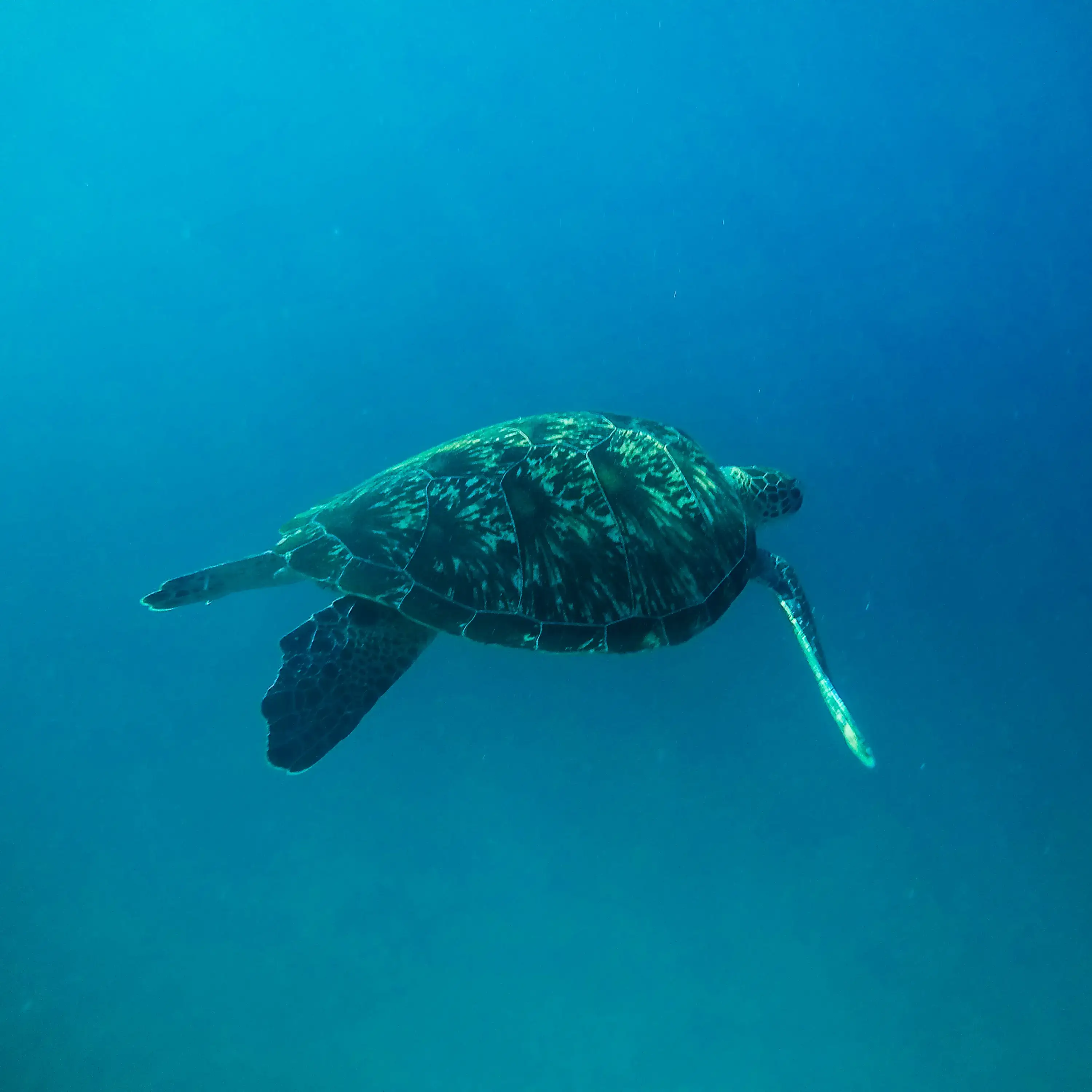
Marine conservation on a Komodo liveaboard means diving inside a working marine protected area — reduced-plastic operations onboard, dive guides trained to spot and log reef health, and park fees that help fund ranger patrols. Guests can join informal citizen-science reef checks, request an eco-briefing, and dive sites like Manta Point and Castle Rock with a genuinely lighter footprint.
Why Marine Conservation Matters on a Komodo Liveaboard
Komodo National Park is a UNESCO World Heritage Site sitting inside the Coral Triangle, the global epicenter of marine biodiversity — more hard coral and reef fish species pass through these waters than almost anywhere else on the planet. That density is exactly what draws divers to Manta Alley, Cannibal Rock, and Torpedo Alley in the first place, and it is also what makes the park genuinely fragile: strong currents that build spectacular drift dives also carry drifting plastic, and the same warm-water upwelling that feeds manta feeding stations makes reefs sensitive to bleaching stress during marine heatwave years.
For a specialist komodo liveaboard operator, conservation isn’t a marketing add-on — it’s the same water we sail every week, dive after dive, season after season. What we do onboard, and what we ask guests to do alongside us, has a direct and measurable effect on whether the reefs we’re diving in 2027 still look the way they did in 2020.
How Komodo Island Liveaboard Reduces Its Footprint Onboard
Reduced-Plastic Operations Onboard
Every guest is issued a reusable water bottle at the start of the trip, refilled from onboard filtration rather than single-use bottled water — the single biggest plastic-volume reduction available on a multi-day charter. Galley operations lean on bulk provisioning over individually wrapped snacks where possible, and all waste is sorted onboard and hauled back to Labuan Bajo for proper disposal rather than anywhere near the park itself. None of this is glamorous, but it’s the unglamorous daily discipline that actually keeps plastic out of dive sites like Manta Point and the beaches around Pink Beach.
Citizen Science and Reef-Health Observation
Dive guides brief every dive with basic reef-health observation in mind — noticing bleaching, coral damage from anchor drag or fin contact, and unusual marine debris, then logging what they see. Guests who dive regularly and want to contribute more formally are encouraged to bring an independent citizen-science certification (Reef Check-style survey training is the most widely recognized in Indonesia) — our crew can help fold that observation work into your dive plan, though the survey methodology itself sits with the certifying organization, not with us.
Sailing Inside a Marine Protected Area — What That Means for Guests
Komodo National Park operates as a marine protected area under Indonesian park authority (Balai Taman Nasional Komodo, BTNK), which is why booking now runs exclusively through the SiORA online system rather than walk-in permits. That same authority sets the rules our crew follows every day: no anchoring directly on coral where a mooring buoy is available, no touching or standing on reef structure, and a ranger-enforced trekking system on land (roughly one ranger per five visitors) that mirrors the same protective logic underwater. Conservation fees collected at entry are reinvested in ranger patrols and park management, though we treat the exact fee breakdown between agencies as something to confirm at booking rather than a number we’ll publish with false precision.
| Practice | What It Looks Like Onboard | Why It Matters |
|---|---|---|
| Reusable water bottles | Issued to every guest, refilled from onboard filtration | Removes hundreds of single-use bottles per trip from the waste stream |
| Waste sorted and hauled out | All trip waste returned to Labuan Bajo, not disposed of near the park | Keeps plastic and organic waste out of protected reef water |
| Mooring buoy anchoring | Crew use fixed moorings at dive sites where available instead of dropping anchor on reef | Prevents anchor-drag damage to slow-growing hard coral |
| Reef-health briefings | Dive guides note bleaching, damage, and debris on every dive log | Builds a running picture of site condition over time |
| Ranger-enforced trekking ratio | Roughly 1 ranger per 5 visitors on Komodo and Rinca treks | Limits wildlife disturbance and keeps trekking within park capacity |
How Guests Can Get Involved During Their Trip
You don’t need a marine biology background to contribute — most of what matters is attentiveness and a willingness to follow a few simple habits across your days onboard.
- Attend the pre-dive briefing fully, every time. Reef etiquette (no touching, no standing, fins clear of coral) is covered here, and it’s the single biggest factor in whether a dive site stays intact for the next boat.
- Use your issued reusable bottle from day one. Skip requesting bottled water even when it’s available — the crew will always have filtered water on hand.
- Report anything unusual to your dive guide after the dive. Bleached coral, fishing debris, or an injured animal — a quick note at the surface interval helps build the site-condition picture the crew tracks trip to trip.
- Ask about current reef-survey opportunities when you book. Availability shifts by season and by which certified surveyors happen to be onboard that week, so this is worth raising directly with your cruise consultant rather than assuming a fixed program.
- Photograph responsibly. No standing on coral for a shot, no chasing manta rays or turtles for a closer angle — the best underwater photography at sites like Castle Rock comes from patience, not proximity.
- Pack out what you pack in. Anything brought onboard in packaging — sunscreen bottles, snack wrappers, batteries — leaves with you or goes into the sorted waste system, never over the side.
Want to dive it yourself? The 3D2N Komodo Liveaboard share-cabin open trip is bookable directly through Komodo Luxury Open Trip — live schedules and cabin availability. WhatsApp +62 811 3823 875 or email [email protected].
Reef Recovery and Coral Restoration in Komodo National Park
Coral restoration work does exist inside the park, most visibly through nursery structures (frame or “spider” style coral transplant sites) supported by BTNK and partner conservation NGOs at select locations. These are working research and recovery projects rather than tourist attractions, so access and involvement vary by season and by which organizations are active in the park at any given time — if hands-on restoration work is a priority for your trip, tell your cruise consultant when you book so they can check what’s currently running rather than promising a fixed itinerary stop.
What every guest can rely on regardless of season is the baseline: reefs at sites like Castle Rock and around Padar Island are protected by park regulation whether or not a specific restoration project is active that week, and the day-to-day operating habits above — no anchor damage, no touching, waste hauled out — are what keep those reefs recoverable in the first place. Restoration only works if the baseline damage isn’t being added back faster than nurseries can grow. If you’re building an itinerary around reef health specifically, our dive sites guide and the wider Komodo National Park destinations overview are good starting points for comparing site condition across the park.
Frequently Asked Questions
How can I help conservation?
Start with the basics that make the biggest difference: use your issued reusable water bottle, follow reef-touch etiquette at every briefing, and report anything unusual (bleaching, debris, injured wildlife) to your dive guide. If you want to go further, bring an existing citizen-science or reef-survey certification and ask your cruise consultant ahead of booking whether a survey opportunity is running on your dates.
Is there a reef survey program?
Reef-health observation is built into every dive briefing and dive guide’s daily log as standard practice, but a formal, guaranteed citizen-science survey program is not something we promise on every departure — availability depends on season and which certified surveyors happen to be onboard. Ask specifically when you book if structured reef-survey participation matters to your trip.
What’s the marine protected area status?
Komodo National Park is a UNESCO World Heritage Site and a formally protected marine and terrestrial reserve managed by the park authority (BTNK), which is why all entry — diving, trekking, and anchoring — now runs through the SiORA online permit system rather than walk-in booking. Conservation fees collected at entry help fund ranger patrols and park management, though we treat detailed fee-agency breakdowns as something to confirm directly at booking.
Plastic policy onboard?
Every guest receives a reusable water bottle refilled from onboard filtration instead of single-use bottled water, and all trip waste is sorted onboard and hauled back to Labuan Bajo for proper disposal rather than left near the park. It’s a simple, unglamorous system, but it’s the single largest plastic-reduction step available on a multi-day liveaboard.
Coral restoration projects?
Coral nursery and transplant projects do operate inside the park at select sites, supported by the park authority and partner conservation organizations, but they’re active research sites rather than fixed tourist stops — access varies by season. If restoration work is a priority for your trip, raise it when you book so your cruise consultant can check current site activity rather than assume a fixed itinerary.
Ready to sail? The 3D2N Komodo Liveaboard share-cabin open trip is bookable directly through Komodo Luxury Open Trip — live schedules and cabin availability. WhatsApp +62 811 3823 875 or email [email protected]. For pricing across trip lengths, see our Komodo liveaboard price guide, and for more trip-planning questions, browse our full FAQ hub or the 3D2N itinerary most first-time guests start with.