Wae Rebo is not part of Komodo National Park — it’s a Manggarai mountain village roughly 3–4 hours inland from Labuan Bajo, reached by a steep 2–3 hour forest trek. It’s a genuinely rewarding cultural detour, but it belongs before or after your cruise as a separate land add-on, not as a stop on your komodo liveaboard route.
What Wae Rebo Actually Is
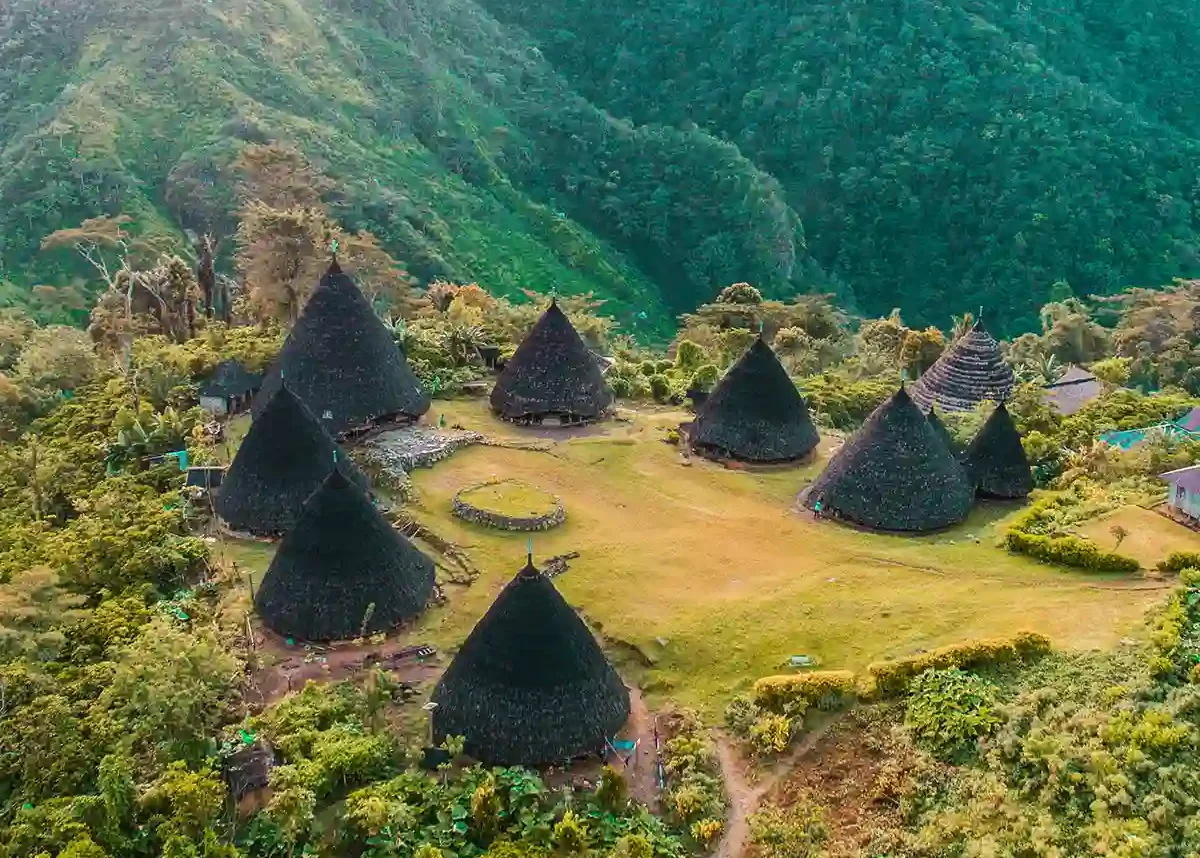
Wae Rebo is a traditional Manggarai village set in the highlands of West Flores, known for its cluster of cone-shaped thatched-roof houses called Mbaru Niang. The village has drawn international attention for its architecture and its effort to preserve a centuries-old way of building, living, and hosting guests, and it’s often mentioned in the same breath as UNESCO cultural heritage recognition — travelers should confirm the exact designation with a local guide, since award details are sometimes reported inconsistently online. What matters for trip planning is simpler: Wae Rebo sits at altitude, deep in forested mountains, a world away from the sea.
That’s precisely why it keeps coming up in komodo island liveaboard planning threads. Travelers see photographs of the conical houses next to photographs of Padar Island or pink-sand beaches and assume both are part of the same national park experience. They aren’t, and conflating the two is the single most common planning mistake we see from first-time guests building a Flores itinerary around a liveaboard.
Is Wae Rebo Inside Komodo National Park?
No. Komodo National Park is a marine and island reserve — Komodo, Rinca, Padar, and the surrounding dive sites and beaches your liveaboard actually sails to. Wae Rebo is an inland cultural village in the Manggarai highlands, administratively and geographically separate from the park boundary. There’s no marine park entry fee involved in visiting Wae Rebo, no ranger-escorted trekking requirement like the dragon treks on Komodo and Rinca, and no boat access — you reach it entirely by road and on foot.
This distinction matters for two reasons. First, it changes what you should expect to see: Wae Rebo is about architecture, hospitality, and mountain scenery, not dragons, coral reefs, or the marine wildlife your liveaboard is built around. Second, it changes the logistics entirely — a Wae Rebo visit cannot be folded into a day at sea. It requires its own overland transfer and its own trekking day, planned around your cruise rather than inside it.
Where Wae Rebo Sits Relative to Your Cruise
| Aspect | Wae Rebo Trek | Komodo Liveaboard |
|---|---|---|
| Location | Inland mountains, West Manggarai, Flores | Islands and seas inside Komodo National Park |
| Inside Komodo National Park? | No — a separate land destination | Yes |
| Typical time commitment | 1–2 days round trip (transfer + trek + overnight) | 3–11 nights depending on itinerary |
| Physical demand | High — 2–3 hour uphill forest trek at altitude | Low to moderate — mostly boat-based, with optional hikes, snorkeling, and diving |
| Best booked | Before or after your cruise, as a standalone add-on | As your main Komodo trip |
If you’re weighing a longer marine itinerary instead of a land detour, our destinations guide covers the islands, beaches, and viewpoints your komodo liveaboard route is more likely to include, and our dive sites guide lays out where the diving and snorkeling actually happens.
How Do You Get to Wae Rebo?
The route starts and ends in Labuan Bajo, and it’s an overland trip from start to finish. Confirm exact timings with your driver or a local trekking operator before you commit — road conditions and trailhead logistics shift year to year, so treat the outline below as a planning framework rather than a fixed schedule for 2027.
- Start from Labuan Bajo. Most visitors base their Wae Rebo trip around the same town where their liveaboard departs or arrives, since it’s the only practical staging point.
- Drive roughly 3–4 hours to Denge village. This is the trailhead settlement at the base of the mountain, typically reached by private car or a shared shuttle arranged through a guide or hotel.
- Trek approximately 2–3 hours uphill. The path climbs through forest for several kilometers to reach Wae Rebo’s elevation — this is the physically demanding part of the day, and it’s not recommended for anyone with significant mobility limitations or unmanaged health conditions.
- Overnight in a homestay inside the village. Guests typically sleep inside one of the traditional Mbaru Niang houses, sharing space with a local family — this is usually the highlight of the visit, not a logistical afterthought.
- Trek back down and transfer to Labuan Bajo the next day. Build a buffer into your schedule; forest trails after rain can slow the descent.
Because the round trip realistically eats a day and a half to two full days, it needs to sit outside your cruise dates rather than compete with them.
Weighing a land detour against more time on the water? The 3D2N Komodo Liveaboard share-cabin open trip is bookable directly through Komodo Luxury Open Trip — live schedules and cabin availability. WhatsApp +62 811 3823 875 or email [email protected].
Is the Trek Actually Worth It?
For the right traveler, yes — and for others, honestly, no. Wae Rebo rewards people who value slow, immersive cultural experiences: an evening in a centuries-old thatched house, a meal cooked by your host family, mountain silence instead of engine noise. It’s not a place to “tick off” on a rushed schedule, and it’s not designed around quick photo stops. If your priority is maximizing dive time or beach days inside Komodo National Park, the two days Wae Rebo requires are almost certainly better spent extending your liveaboard itinerary instead — our pricing guide breaks down what an extra day or two aboard typically costs versus a standalone land excursion.
Where it earns its place is for travelers building a longer Flores trip who want genuine cultural contrast to a marine-focused cruise — divers who’ve done Komodo before and want a different kind of highlight, honeymooners extending their trip by a few days, or anyone who finds the idea of a night inside a traditional highland house more compelling than another beach afternoon. It is physically demanding and time-expensive, so go in with realistic expectations rather than treating it as a quick add-on.
How to Combine Wae Rebo With a Komodo Liveaboard
The cleanest way to combine both is to treat them as two separate trip segments joined by Labuan Bajo:
- Wae Rebo before your cruise. Arrive in Labuan Bajo a few days early, complete the trek and overnight, return to town, rest one night, then board your liveaboard on schedule and fresh.
- Wae Rebo after your cruise. Disembark, spend a recovery night in town, then head to Denge for the trek before flying home — a good option if you’d rather ease into the physical demands of hiking after several relaxed days at sea.
- Avoid squeezing it between cruise days. Liveaboard departures run on fixed permits and routes; a mid-cruise detour to an inland village isn’t logistically possible once you’re aboard.
If your cruise is a shorter 3D2N Komodo liveaboard itinerary, adding Wae Rebo before or after is more realistic time-wise than pairing it with a longer 6- or 7-night voyage, simply because you have more flexible days left in your Flores trip overall. Whichever order you choose, tell your liveaboard operator your full itinerary in advance so airport transfers and port timing line up correctly on both ends.
How Many Days Should You Set Aside?
Budget a minimum of two full days outside your liveaboard dates: one day for the drive to Denge and the uphill trek plus overnight, and one day for the descent and transfer back to Labuan Bajo. Add a buffer night in town before or after if your flight schedule is tight, since forest trail conditions and shared transport timing aren’t always precise. Travelers who try to compress the whole round trip into a single day typically arrive exhausted and miss the point of an overnight stay in the village entirely — for more general trip-planning answers like this one, our FAQ hub covers the logistics questions that come up most often.
Frequently Asked Questions
Is Wae Rebo inside the park?
No. Wae Rebo is an inland cultural village in the Manggarai highlands of Flores, entirely separate from Komodo National Park’s marine and island boundary. There’s no park entry fee, ranger escort, or boat access involved — it’s reached by road and on foot, and it should be planned as a standalone land excursion rather than a stop on your liveaboard route.
How do I get there?
From Labuan Bajo, it’s roughly a 3–4 hour drive to Denge village, the trailhead settlement, followed by a 2–3 hour uphill forest trek to reach Wae Rebo itself. Most travelers arrange a private car or shared shuttle through a local guide or their hotel. Confirm current road and trail conditions before you go, since they can shift seasonally.
Is it worth the trek?
For travelers who value slow cultural immersion — an overnight in a traditional thatched house, a home-cooked meal, mountain quiet — yes, it’s a genuinely memorable detour. If your priority is maximizing time diving or exploring Komodo National Park itself, the two days it requires are often better spent extending your liveaboard days instead.
Can I combine it with my cruise?
Yes, but as a separate segment before or after your liveaboard, not during it. Liveaboard departures run on fixed permits and marine routes, so a mid-cruise detour to an inland village isn’t logistically possible. Add Wae Rebo a few days before boarding or a few days after disembarking, with a rest night in Labuan Bajo on either side.
How many days needed?
Set aside a minimum of two full days outside your cruise dates: one for the drive and uphill trek plus overnight in the village, and one for the descent and transfer back to Labuan Bajo. Add a buffer night in town if your onward flight schedule is tight, since shared transport and trail timing aren’t always exact.
Ready to sail? The 3D2N Komodo Liveaboard share-cabin open trip is bookable directly through Komodo Luxury Open Trip — live schedules and cabin availability. WhatsApp +62 811 3823 875 or email [email protected].