
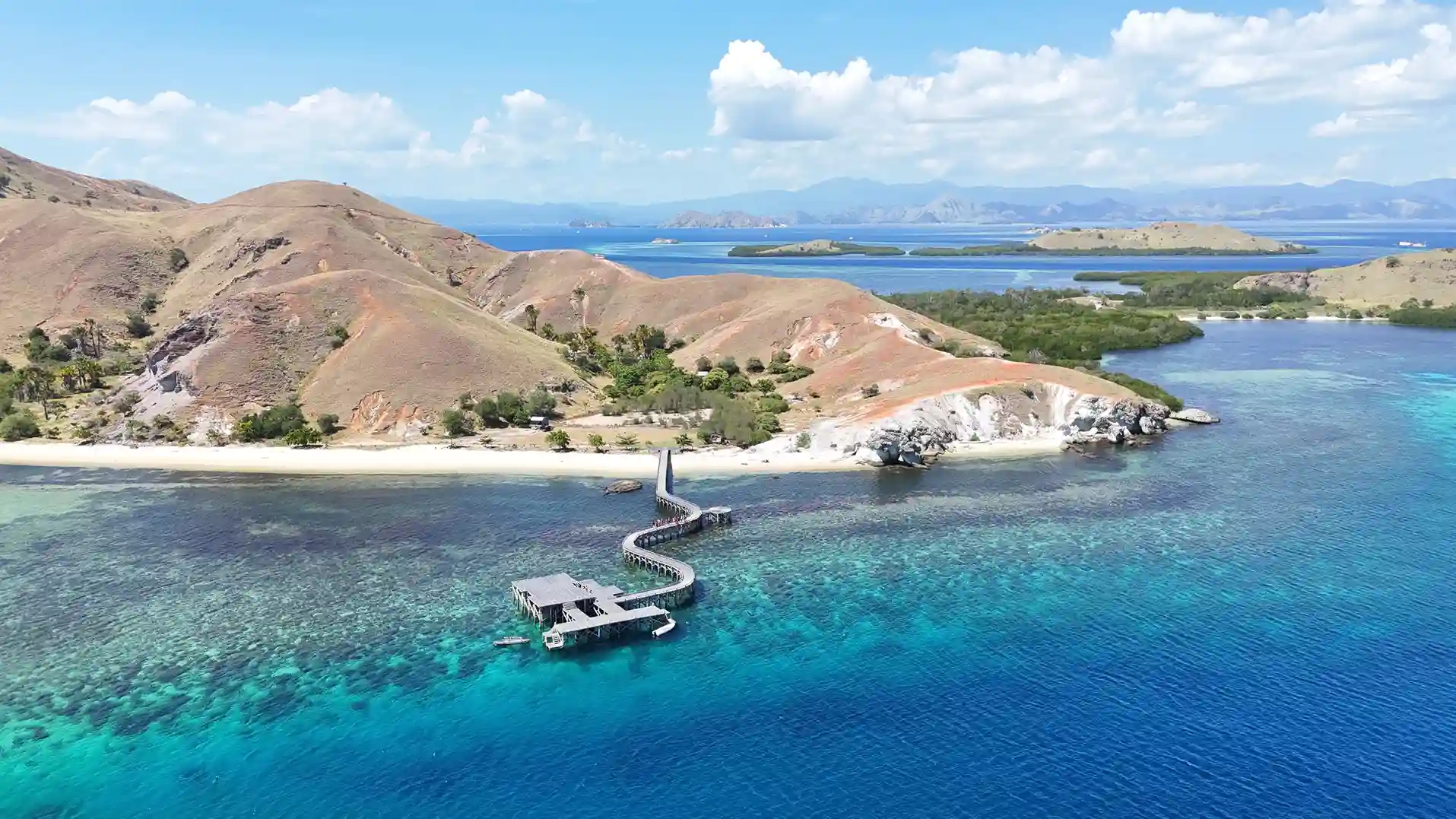
Sebayur Reef, Siaba Besar, and Manta Point sit within a short sail of one another in central Komodo National Park, which is why they’re almost always dived as a single loop. Most komodo liveaboard itineraries string all three together in one day — a beginner-friendly coral garden, a resident-turtle cleaning site, and a manta feeding station — before the boat repositions south or north for the next leg.
Why These Three Sites Get Grouped Together
Anchor the three sites on a chart of Komodo National Park and the logic is obvious: Sebayur Island, Siaba Besar, and the central Manta Point cleaning station form a rough triangle a couple of hours’ sail from Labuan Bajo, well inside the calmer central water mass. None of the three require the strong-current experience that Castle Rock or the southern Manta Alley demand, which is exactly why operators default to this loop for mixed-level groups, Discover Scuba divers, and check-out dives at the start of a longer trip.
Geography aside, each site does a different job. Sebayur is the warm-up. Siaba Besar is the guaranteed wildlife encounter. Manta Point is the headline act — and the one site on this loop where timing and conditions actually matter.
To see where this central triangle sits among the park’s other anchorages, the island-by-island Komodo destinations guide maps each stop — from Kelor and Kanawa to Sangeang Api — against the routes that visit them.
Meet the Three Dive Sites
Sebayur Reef — The Coral Garden Warm-Up
Sebayur Reef sits just off a small island of the same name and is built around a sloping coral garden that runs from roughly 5m down to 18m. Current is usually mild to moderate, visibility typically sits in the 10–20m range depending on tide, and the topography is forgiving enough that it’s a standard first dive of a trip or a check-out dive for anyone whose last dive was a while ago. Expect healthy hard coral cover, reef fish in volume, the occasional reef shark cruising the drop-off, and enough small stuff on the sand patches to keep macro shooters busy between the bigger sights on this loop.
Siaba Besar — The Turtle Cleaning Station
Siaba Besar is a sandy-bottomed seagrass slope that’s become one of the most reliable green-turtle sites in the park — divers who do a single dive here on almost any given day come up having seen at least two or three turtles grazing or resting on the grass. Depth is shallow and easy, generally 5–15m, current is gentle, and the flat sandy terrain means good buoyancy control is really the only skill this site asks for. It’s frequently used as a second or third dive of the day precisely because it lets the group decompress a little after a current-exposed site elsewhere in the park.
Manta Point — Where the Mantas Feed
The central Manta Point is a shallow cleaning and feeding station, typically dived in the 5–12m range with occasional excursions deeper along the sand. Reef manta rays gather here to feed on plankton and stop at cleaning stations worked by wrasse and other cleaner fish — behaviour tied to the plankton-driven monsoon pattern that peaks across the central park roughly November through February, distinct from the upwelling-driven manta season further south around Manta Alley. Current can build quickly once the tide turns, so this is the one stop on the loop where a dive guide’s read of the water matters most. Sightings aren’t guaranteed on any single dive — check current conditions and season with your operator before setting expectations.
Central Loop at a Glance
| Dive Site | Avg. Depth | Current | Best For | Manta Likelihood |
|---|---|---|---|---|
| Sebayur Reef | 5–18m | Mild–moderate | Check-out dives, beginners, reef fish | Rare |
| Siaba Besar | 5–15m | Gentle | Turtles, easy macro, recovery dive | Rare |
| Manta Point | 5–12m | Moderate, can build fast | Manta encounters, cleaning-station behaviour | Seasonal (Nov–Feb strongest) |
A Typical Day on the Central Loop
On a 3D2N komodo liveaboard trip or a longer itinerary, the central loop usually runs in this order:
- 06:30–07:30 — Sebayur Reef. First dive of the day, used to shake off the rust and confirm everyone’s weighting and buoyancy before the harder sites.
- 08:30 — Breakfast on the sundeck while the boat repositions toward Siaba.
- 09:30–10:30 — Siaba Besar. Turtle dive, low current, good for underwater photographers who want steady subjects.
- 12:00 — Lunch and a surface interval while the crew checks tide tables for Manta Point.
- 14:00–15:00 — Manta Point. Afternoon slot timed around slack or building tide, guide briefing on manta etiquette (distance, no touching, no flash near cleaning stations).
- Late afternoon — Sail to the next anchorage, whether that’s a night dive site, Kalong Island for the bat-colony flight at dusk, or the next morning’s location further along the itinerary.
Want to dive all three without racing a day-trip clock? The 3D2N Komodo Liveaboard share-cabin open trip is bookable directly through Komodo Luxury Open Trip — live schedules and cabin availability. WhatsApp +62 811 3823 875 or email [email protected].
Day Trip or Liveaboard? Which Fits This Loop
Because all three sites sit close to Labuan Bajo, a fast day-trip speedboat can technically reach the central loop and back in a single day. The trade-off is timing: day trips are booked to a fixed return slot, so if the tide pushes Manta Point’s best window later than planned, the operator either cuts a dive short or skips a site entirely. A liveaboard removes that pressure — the boat is already anchored in the area overnight, so the crew can shift the loop’s order around the tide instead of around a ferry schedule back to port.
There’s also a crowd factor. Day-trip boats from Labuan Bajo tend to converge on Manta Point and Siaba Besar mid-morning to early afternoon, the same window most day operators favor. Liveaboard groups on komodo liveaboard itineraries can often shift dive times earlier or later to dodge the peak traffic, which matters more at a shallow, current-sensitive site like Manta Point than it does at deeper, less crowded sites elsewhere in the park.
For a first Komodo trip built specifically around beginner-friendly sites and consistent wildlife, the central loop pairs naturally with a short liveaboard itinerary rather than a rushed day trip — a 3D2N itinerary fits it comfortably alongside the park’s northern and southern highlights.
Frequently Asked Questions
Can I dive all three in one day?
Yes — Sebayur Reef, Siaba Besar, and Manta Point are close enough together that a standard day covers all three as first, second, and third (or afternoon) dives. The limiting factor isn’t distance, it’s tide: Manta Point’s current builds through the day, so operators usually schedule it for whichever window the tide tables favor rather than dead last by default. On a liveaboard this is easy to rearrange; on a fixed-return day trip it’s harder to adjust once the schedule is set.
Which is best for beginners?
Sebayur Reef and Siaba Besar are both suitable for newer divers — gentle current, shallow depth, and forgiving terrain. Manta Point is still approachable for an Open Water diver on a calm day, but current can pick up quickly, so it’s worth telling your dive guide your experience level before the briefing so they can judge whether conditions that day are right for you.
Which has the most manta sightings?
Manta Point is the manta site on this loop — Sebayur and Siaba Besar are turtle-and-reef-fish dives, not manta sites, though an occasional manta passing through isn’t unheard of. Sightings at Manta Point are strongest during the central park’s plankton-driven season, roughly November through February; outside that window mantas are still possible but far less reliable, so check current conditions with your operator before booking around a manta guarantee.
What’s the typical day order?
Most itineraries run Sebayur first thing in the morning as a warm-up, Siaba Besar mid-morning as an easy second dive, and Manta Point in the early-to-mid afternoon once the crew has read the tide. That order isn’t fixed — a good dive guide will reshuffle it if the tide favors a different window for Manta Point, which is one advantage of being on a liveaboard rather than a day boat locked to a return time.
Which duration covers this loop best?
A 3D2N komodo liveaboard itinerary comfortably fits the central loop alongside one or two other park highlights, since all three sites sit close together and don’t require a long sail day on either side. Longer itineraries (4D3N and up) simply give the crew more flexibility to time Manta Point around the best tide window rather than fitting it into a single fixed afternoon slot.
Ready to sail the central loop? The 3D2N Komodo Liveaboard share-cabin open trip is bookable directly through Komodo Luxury Open Trip — live schedules and cabin availability. WhatsApp +62 811 3823 875 or email [email protected]. Komodo Island Liveaboard is part of the Komodo Luxury network (1,500+ verified guests across Google and TripAdvisor, TripAdvisor Travelers’ Choice 2025 and 2026 on the Komodo Luxury listing), with nearly four decades of combined team experience running this exact loop.