
Budget roughly 5-10% of your total trip cost, or about $10-15 USD per guest per day, for the crew tip pool on a Komodo liveaboard — cash (IDR or USD) handed over at the end of the voyage is standard, split among the captain, dive guides, chef, and deckhands. Bank transfer is occasionally possible if arranged with your operator in advance, but cash remains the norm fleet-wide.
Who You’re Actually Tipping: Crew Roles on a Komodo Liveaboard
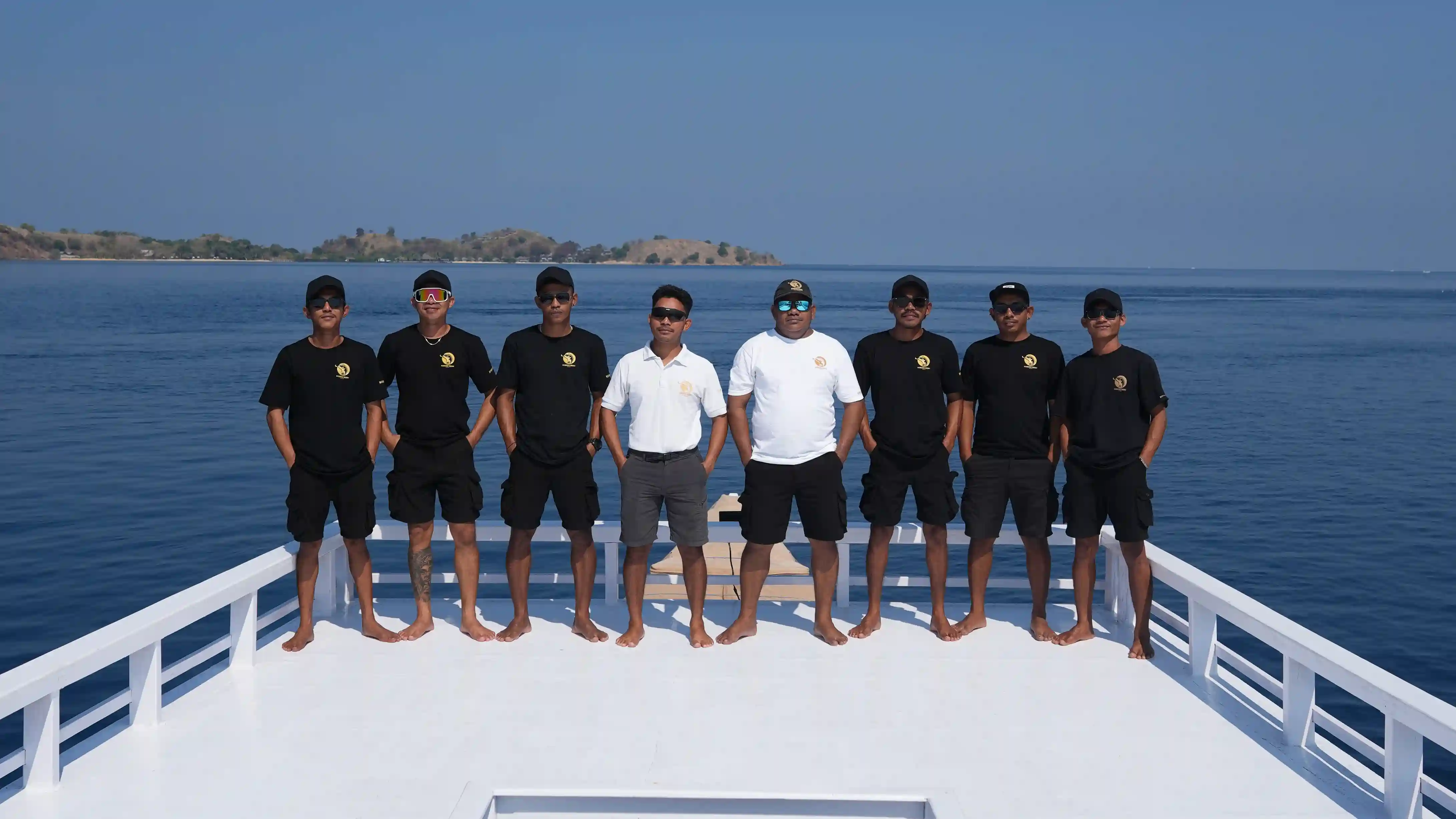
Before you can budget a tip, it helps to know who’s actually working your trip. A typical komodo island liveaboard runs with a small, tightly coordinated crew, most of them from Labuan Bajo or elsewhere in Flores, and most of the boat’s day-to-day comfort — hot coffee appearing before you’ve asked, a dive guide spotting a pygmy seahorse before you do, fresh linen every morning — comes down to this team rather than any single “service charge” line item.
- Captain and boat crew — navigation, anchoring, safety, and running the vessel itself. Often the most senior and longest-tenured members aboard.
- Dive guides / snorkel guides — briefings, in-water leadership, spotting marine life, and keeping the group together in Komodo’s sometimes brisk currents.
- Chef and galley crew — three meals a day plus snacks, usually working the smallest, hottest space on the boat.
- Deckhands and cabin stewards — cabin cleaning, gear rinsing, table service, and the dozens of small logistics that keep a multi-day voyage running smoothly.
On most vessels these roles overlap — a deckhand might also be a dive guide, or the captain might double as a safety diver — so tips are almost always pooled and split by the crew themselves rather than allocated person-by-person by guests.
How Much to Tip Crew on a Komodo Liveaboard, by Trip Length
There’s no single fixed number published fleet-wide, and any operator who quotes you an exact mandatory figure should be treated with a little skepticism — tipping in Indonesia’s liveaboard industry is customary, not compulsory. Heading into 2027, the widely used industry guideline remains $10-15 USD per guest per day (or roughly 5-10% of your total trip cost), and that benchmark gives a sensible starting point for budgeting before you sail.
| Duration | Suggested Tip Pool (per guest) | Notes |
|---|---|---|
| 3D2N (2 nights) | ~$25-40 USD | Most common format for first-timers — see current rates on our komodo liveaboard price guide |
| 4D3N-5D4N | ~$40-70 USD | More sea days generally means more crew hours to acknowledge |
| 7D6N+ | ~$70-110+ USD | Longer expeditions often run a slightly larger onboard team |
Treat these as a general guideline rather than a strict rule — group size, how much diving vs. leisure time you did, and your own budget all reasonably factor in. If in doubt, ask your booking contact for current guidance before you fly out; it varies slightly by vessel and season.
How Tipping Actually Works Onboard: Step by Step
- Day 1, boarding. Nothing to do here — tipping isn’t discussed or expected at the start of the voyage. Just settle in and get to know the crew.
- Throughout the trip. Many guests set aside a small daily amount mentally (or literally, in an envelope) rather than trying to calculate everything on the last night.
- Final evening or final morning. This is when tipping typically happens — either at the last dinner onboard or just before disembarkation, whichever your itinerary’s rhythm suggests.
- Hand the pooled amount to the cruise leader or captain, or ask your crew directly who collects and distributes it — most boats have one designated point person specifically so guests aren’t awkwardly guessing.
- Crew split the pool themselves, usually weighted by role and seniority, rather than guests trying to divide individual envelopes among ten-plus crew members.
- Disembarkation. A short, genuine thank-you goes a long way — many crew remember guests by warmth more than by the exact tip amount.
Cash or Bank Transfer — Which Do Crew Actually Prefer?
Cash is overwhelmingly the norm on Komodo liveaboards, and for good reason: crew are often paid in cash themselves, boats don’t carry card machines, and pooled tips need to be split and carried home the same day the trip ends — a bank transfer sitting in someone’s account doesn’t work the same way for a crew splitting cash on the spot. Bring small-denomination Indonesian Rupiah if possible, since crew making change for a single large USD note mid-disembarkation is an awkward way to end a great trip. USD in reasonably clean, newer bills is usually accepted too, though exchange-rate rounding means IDR is simpler for everyone.
If you’d genuinely rather not carry cash for the whole trip, ask at booking whether a transfer to the operator’s office can be arranged in advance and routed to the crew afterward — some operators can accommodate this, but it needs to be set up before you sail, not requested dockside on the last morning.
Local Etiquette: Respecting Your Flores Crew’s Culture
Most crew working Komodo liveaboards are Manggarai or otherwise from Flores, and a handful of small courtesies go a long way toward a warm trip for everyone aboard, not just you.
- A simple greeting matters. “Selamat pagi” (good morning) or “terima kasih” (thank you) costs nothing and is genuinely appreciated — crew notice guests who make the effort.
- Ask before photographing crew individually. Group boat photos are fine; a close-up portrait of a specific crew member is nicer with a quick nod-and-ask first.
- Modest dress at ranger stations and villages. Once you step off the boat onto Komodo, Rinca, or a local village stop, cover shoulders and knees out of respect — the boat deck itself is far more relaxed.
- Use your right hand when handing something to crew or accepting food, following general Indonesian etiquette — it’s a small habit that reads as respectful without anyone needing to explain it.
- Patience with English. Dive guides and senior crew are typically fluent; younger deckhands and galley staff may have more limited English. A little patience (and a smile) closes that gap fast.
Shoes, Alcohol, and Other Onboard House Rules
Beyond tipping, a handful of practical house rules cover most of what first-timers ask about before boarding.
Shoes on deck
Most Komodo liveaboards ask guests to remove shoes before stepping onto the main deck, especially on boats with teak or varnished wood — sand, salt, and hard soles wear down decking fast, and bare feet or the boat’s own sandals are simply more comfortable at sea anyway. Deck shoes are usually left in a rack near the boarding point; cabin areas are typically barefoot-only as well.
Alcohol onboard
Policies vary by vessel, so confirm with your specific operator before assuming either way. On boats that do allow alcohol, moderation is the expectation — you’re sharing a small vessel with early dive briefings and a crew responsible for everyone’s safety, so a heavy night before a 7 a.m. entry isn’t fair to the group. Many crew are practicing Muslims, so keeping drinking low-key and respectful on shared deck space (rather than boisterous) is simply good manners. Alcohol is never appropriate immediately before diving or snorkeling, regardless of a boat’s general policy.
Ready to plan your own trip? The 3D2N Komodo Liveaboard share-cabin open trip is bookable directly through Komodo Luxury Open Trip — live schedules and cabin availability. WhatsApp +62 811 3823 875 or email [email protected].
Common Etiquette Mistakes First-Timers Make
- Assuming tipping is included in the trip price. It almost never is — crew gratuities are a separate, customary add-on across the industry, not a built-in service charge.
- Waiting until the last five minutes to sort out cash. Exchanging money or breaking large bills is much easier a day or two before disembarkation than during the scramble of the final morning.
- Tipping individual crew members separately. This can create awkward imbalances between roles — pooling through the designated collection point is fairer to everyone on the team, including crew who work hard behind the scenes and rarely interact directly with guests.
- Forgetting the galley and deckhands. Dive guides tend to get remembered because they’re the most visible; the chef quietly running three meals a day out of a tiny galley is just as core to the trip.
- Over-apologizing for cultural mistakes. If you get an etiquette point wrong — wrong hand, forgot to remove shoes once — crew are used to first-time guests and genuinely don’t expect perfection. A brief acknowledgment and moving on is more natural than a long apology.
Frequently Asked Questions
How much should I tip?
A widely used industry guideline is roughly $10-15 USD per guest per day, or about 5-10% of your total trip cost, pooled and split among the crew. For a 3D2N voyage that typically works out to around $25-40 USD per guest; longer trips scale up accordingly. There’s no fixed mandatory figure — treat it as a customary guideline and confirm current expectations with your operator at booking.
Cash or transfer?
Cash is standard and strongly preferred — crew pool and split tips on the spot at the end of the voyage, and boats don’t carry card machines. Bring small-denomination Indonesian Rupiah where possible; reasonably clean USD notes are usually accepted too. Bank transfer is occasionally possible but must be arranged with your operator well in advance, not requested on the last morning.
Etiquette with local crew?
Simple courtesies go furthest: greet crew with “selamat pagi” or “terima kasih,” ask before photographing anyone individually, use your right hand when handing over items, and dress modestly once you step off the boat at ranger stations or villages. Most crew are Manggarai or otherwise from Flores, and guests who make a small effort with these customs are consistently remembered warmly.
Shoes on/off rules?
Yes — most liveaboards ask guests to remove shoes before stepping onto the main deck and cabin areas, particularly on boats with teak or varnished wood decking. Shoes are typically left in a rack near the boarding point, and boat sandals or bare feet are the norm once aboard. It’s a practical rule as much as a courtesy one — hard soles wear down decking fast.
Alcohol etiquette onboard?
Policies vary by vessel, so confirm with your operator beforehand. Where alcohol is permitted, moderation is expected — early dive briefings and shared deck space make a low-key approach the respectful norm, and many crew are practicing Muslims, so keeping things quiet rather than boisterous is good manners. Alcohol is never appropriate immediately before diving or snorkeling, on any boat’s policy.
For more first-timer planning answers, browse the full FAQ hub, check current rates on the komodo liveaboard price guide, or read about the crew standards behind every voyage on our crew credentials and safety standards page. Ready to book your own 3D2N open trip? WhatsApp +62 811 3823 875 or email [email protected] — the Komodo Island Liveaboard team will confirm current availability for your dates.