
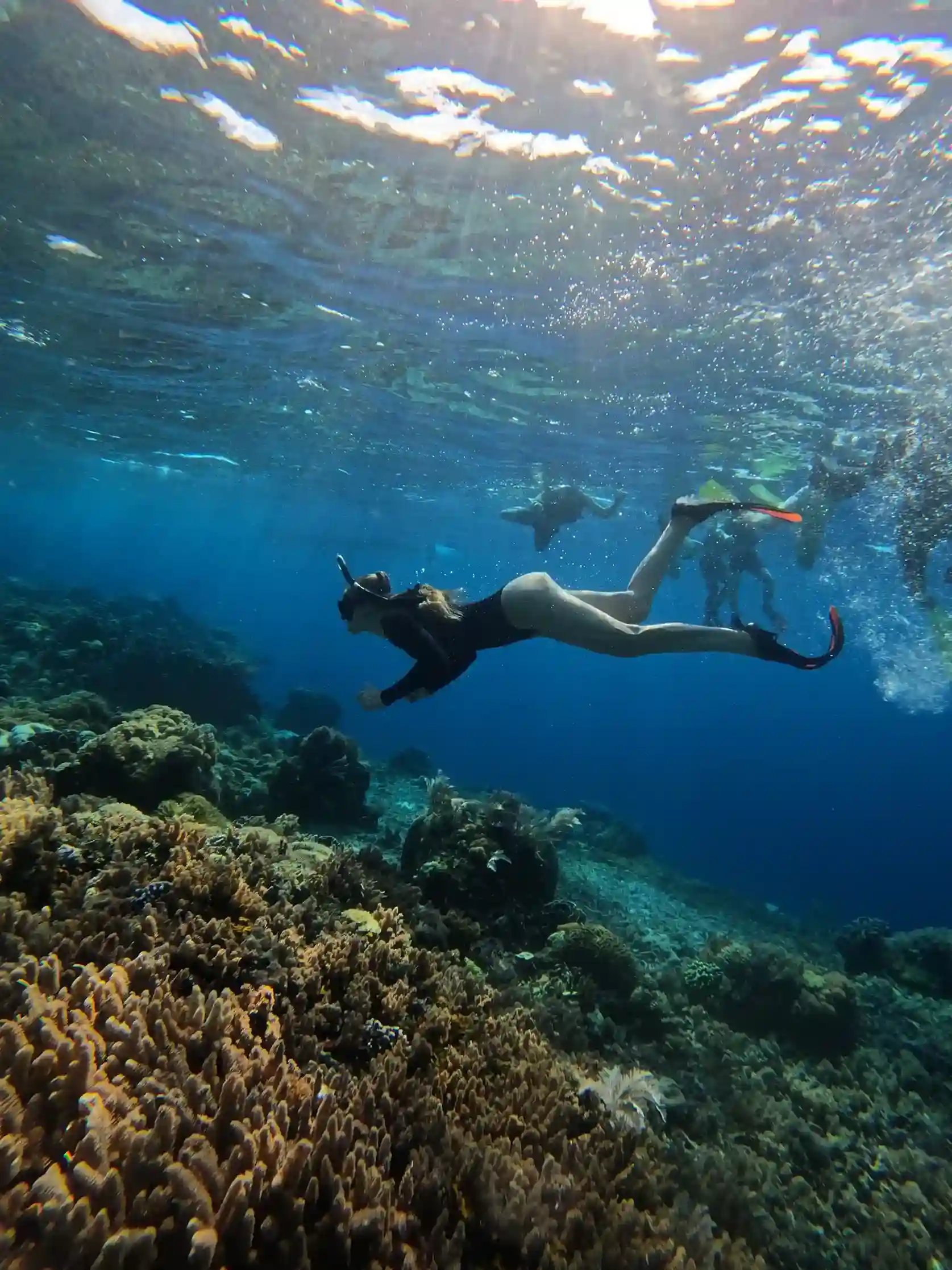
Komodo and Raja Ampat are Indonesia’s two flagship liveaboard diving regions, but they reward different skill sets. Komodo is current-driven — thermoclines, drift dives, and pelagic action around Castle Rock and the South Loop — while Raja Ampat trades current intensity for the world’s highest reef biodiversity and calmer, macro-friendly diving.
Both regions sit inside the Coral Triangle and both belong on a serious diver’s list. But if you’re planning a 2027 trip and can only pick one — or you’re trying to work out whether you can fit both into a single itinerary — the decision comes down to four technical factors: current, visibility, certification level, and logistics. This guide compares them from a diver’s perspective, not a sales brochure’s, and every claim below is written the way we’d brief it to a guest on a komodo island liveaboard before they book.
Two Different Diving Philosophies: Current vs Biodiversity
Komodo National Park sits in a narrows between the Flores Sea and the Indian Ocean, and that geography is the whole story. Tidal exchange through the strait creates some of the most dynamic current systems in Indonesian diving — downwellings that pull you deep without warning, upwellings that push cold, nutrient-rich water up from below, and standing currents strong enough that reef hooks and negative entries are standard technique at sites like Castle Rock. This is what makes Komodo a “big animal” destination: the same current that challenges divers also concentrates plankton and baitfish, which is why grey reef sharks, dogtooth tuna, and manta rays stack up at current-swept pinnacles.
Raja Ampat, by contrast, is built around a maze of islands, lagoons, and channels in the Dampier Strait and Misool regions. Current still matters — a handful of sites (Cape Kri, Blue Magic) are genuinely current-fed — but the overall profile is calmer, shallower on average, and far more forgiving. What Raja Ampat trades away in adrenaline it makes up for in sheer species density: it’s widely regarded as the most biodiverse reef system on the planet, with soft coral walls, pygmy seahorses, wobbegong sharks, and mandarinfish that reward slow, macro-focused diving rather than drift technique.
Visibility & Water Conditions
Visibility and water temperature are where the two regions diverge most sharply, and they change by zone within Komodo itself — not just between the two destinations.
| Factor | Komodo — North & Central | Komodo — South Loop | Raja Ampat |
|---|---|---|---|
| Typical visibility | 25–30m, generally stable | Often lower and greener — nutrient-rich upwelling water feeds the big animal action | Usually clear in the dry season; can drop noticeably during heavy rain |
| Water temperature | Warm, only mild thermoclines | Noticeably cooler with sharp thermoclines — a 5mm wetsuit or hooded vest is worth packing | Warm year-round; a 3mm suit is usually enough |
| Current intensity | Moderate, predictable drift | Strong and can shift fast — downwellings and upwellings are common at sites like Manta Alley | Mild to moderate at most sites, stronger at a few named current points |
| Best diving season | April–October | October–December | Conditions are generally reported as calmest and driest October–April — always verify current-year timing before booking |
The practical takeaway: if you dive Komodo’s full dive site range on one trip, you’ll feel the difference between the north loop and the south loop within the same week. Raja Ampat’s conditions are more uniform across its dive sites, which is part of why it’s an easier destination to plan around for less experienced divers.
Marine Life: Big Animals vs Reef Biodiversity
If your dive log is chasing “big and fast,” Komodo wins. The manta cleaning stations in the south, combined with reef sharks, eagle rays, and the occasional mola mola sighting in the cooler months, make it one of the best pelagic-encounter regions in Southeast Asia. Cannibal Rock-style muck sites add a macro layer on top of that, so a single Komodo itinerary can genuinely cover both ends of the spectrum in one week.
Raja Ampat’s strength is density and diversity rather than size. Reef surveys there have recorded fish counts per dive site that outpace almost anywhere else on Earth, and the soft coral cover on walls like those around Misool is some of the healthiest left in the Coral Triangle. Macro photographers chasing pygmy seahorses, ghost pipefish, and rare nudibranchs will generally find more variety per dive in Raja Ampat than in Komodo — though Komodo’s Cannibal Rock-type sites hold their own for critter density.
Certification & Experience Level Needed
This is the factor most comparison articles skip, and it’s the one that actually determines whether your trip is enjoyable or stressful.
- Komodo North & Central: comfortable for Open Water divers with a reasonable number of logged dives — currents are present but manageable with a briefed drift technique.
- Komodo South Loop (Manta Alley, Cannibal Rock, Torpedo Alley): Advanced Open Water or equivalent experience is strongly recommended. Current can build quickly, thermoclines add cold-water stress, and negative entries are routine.
- Raja Ampat — most sites: suitable for Open Water divers with moderate experience; buoyancy control matters more than current skill because you’re often working close to fragile coral.
- Raja Ampat — Cape Kri, Blue Magic: current can be strong enough that guides will want to see solid drift-diving experience before booking you onto these sites.
Neither region is a “beginner destination” in the resort-diving sense — both are liveaboard trips where you’re diving multiple times a day, often in current, far from a dive shop. But Raja Ampat’s average dive is technically easier than Komodo’s South Loop.
Cost & Logistics Comparison
Cost differences between the two regions come down to logistics more than the diving itself. Labuan Bajo has direct flights from Bali and Jakarta, which keeps Komodo trips relatively simple to bolt onto a broader Indonesia itinerary — see our full Komodo liveaboard price breakdown for what’s typically included at each trip length. Raja Ampat requires flying into Sorong (usually via Jakarta or Makassar) and then a boat or ferry connection to Waisai, which adds a day of travel on each end and generally pushes the total trip cost higher for a comparable number of dive days.
Trip length matters too. A short 3D2N Komodo trip can realistically cover both the north loop’s manta and dragon-adjacent islands and a taste of the south loop’s currents, because the dive sites sit relatively close together. Raja Ampat’s dive sites are more spread out across the Dampier Strait and Misool, so operators there typically recommend a minimum of 6–8 days to justify the flight logistics and see a representative slice of the region.
How to Plan a Combined Komodo + Raja Ampat Trip
There’s no direct liveaboard route between the two regions — you’ll always be booking two separate boats connected by domestic flights. If you want to dive both in one trip, here’s the realistic sequence:
- Start in Komodo. Fly into Labuan Bajo and complete your Komodo liveaboard first — 4 to 7 days is enough to cover both the north loop and a taste of the south loop’s currents.
- Build in a buffer day. Disembark in Labuan Bajo with at least one full day before your onward flight, in case of weather delays — common on both legs of this route.
- Fly Labuan Bajo → Jakarta or Bali → Sorong. There’s currently no direct flight between Labuan Bajo and Sorong, so expect one transit.
- Connect to Waisai. From Sorong, most Raja Ampat liveaboards arrange a boat or ferry transfer to Waisai, where your second trip begins.
- Budget 10–14 days minimum for the full combination if you don’t want either leg to feel rushed — 5–7 days per region plus a full travel day between them.
Ready to dive Komodo? Whether you want the 3D2N share-cabin open trip or a private charter built around a specific dive itinerary — south loop currents, manta season, or night dives — it’s bookable directly through Komodo Luxury Open Trip — live schedules and cabin availability. WhatsApp +62 811 3823 875 or email [email protected].
Which Region Fits Your Diving Goals?
Neither destination is objectively “better” — they suit different divers and different trip goals.
- Choose Komodo if: you want strong-current drift diving, big pelagic encounters (mantas, sharks), a mix of world-class diving with surface highlights like Padar Island, and a shorter, simpler flight connection from Bali or Jakarta.
- Choose Raja Ampat if: you’re prioritizing macro photography, reef biodiversity, calmer conditions, and you have the extra travel days to justify the Sorong connection.
- Choose both if: you have 10+ days and want the fullest possible picture of Indonesian diving — start with a komodo liveaboard to build current confidence, then move to Raja Ampat for the biodiversity payoff.
Frequently Asked Questions
Which has better visibility?
It depends on the zone. Komodo’s north and central sites typically run a stable 25–30m, which is as good as anywhere in Indonesia. Komodo’s south loop is often greener and lower-visibility because the same nutrient-rich upwelling that feeds the manta and shark action also reduces clarity. Raja Ampat is generally clear in the dry season but can drop with heavy rain — treat both regions’ visibility as season-dependent rather than fixed.
Which is cheaper?
Komodo trips are usually more budget-friendly overall, mainly because Labuan Bajo has direct flights from Bali and Jakarta, keeping travel costs and trip length down. Raja Ampat requires a Sorong connection plus a boat transfer to Waisai, which adds both time and cost. Trip-for-trip, a short Komodo itinerary is typically the lower-cost way to experience world-class Indonesian liveaboard diving — see our price breakdown for specifics.
Can I do both in one trip?
Yes, but plan for at least 10–14 days total. There’s no direct liveaboard or flight route linking the two regions — you’ll fly Labuan Bajo to Sorong via Jakarta or Bali, then transfer by boat to Waisai. Most divers who combine both start in Komodo, since its flight connections are simpler, then continue on to Raja Ampat for the second leg of the trip.
Which for beginners?
Raja Ampat’s average dive site is more forgiving for less experienced divers, since current is present but generally milder outside of a few named points. Komodo’s north and central sites are also manageable for Open Water divers, but the south loop (Manta Alley, Cannibal Rock, Torpedo Alley) is genuinely current-intensive and better suited to Advanced Open Water divers or those with solid drift-diving experience.
Best season for each?
Komodo’s north and central sites are best April–October, while the south loop — including manta season — peaks October–December. Raja Ampat is generally reported as calmest and driest between October and April, though this shifts year to year, so it’s worth confirming current conditions with your operator before locking in dates. Because the two regions’ peak windows overlap differently, season is one more reason a combined trip needs careful sequencing.
Planning your Komodo dive trip? Our team can build a private charter around your certification level and preferred dive sites, or you can join the 3D2N share-cabin open trip — both are bookable directly through Komodo Luxury Open Trip — live schedules and cabin availability. WhatsApp +62 811 3823 875 or email [email protected].
Divers choosing between routes may want to see how the various Komodo boats differ in cabins, dive access and sailing schedules. See an overview of Komodo diving boats and routes.