
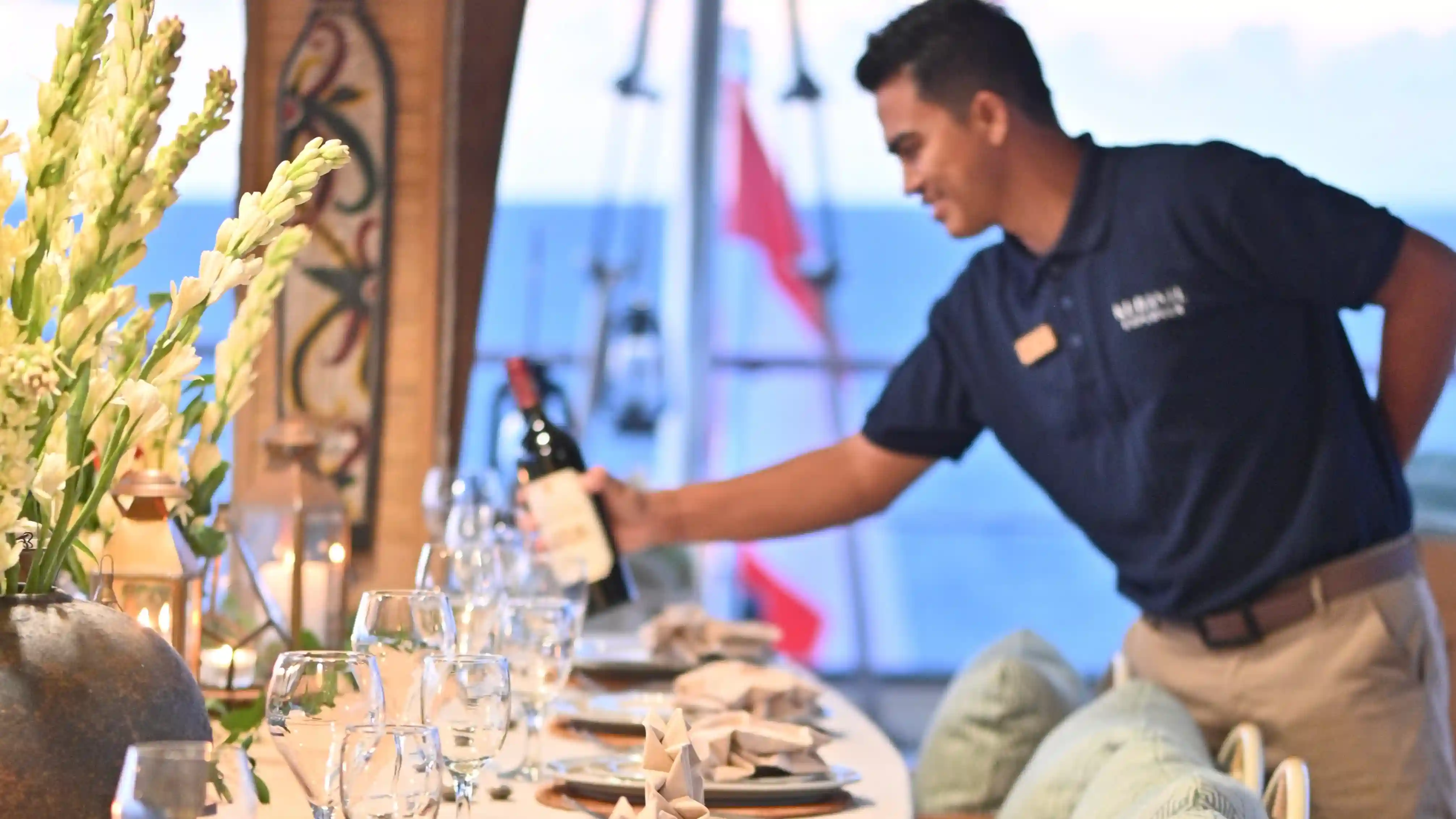
A typical day on a Komodo liveaboard runs roughly 6:00 AM to 9:30 PM — early wake-up call, coffee on deck, three guided dives or snorkel sessions spaced through the morning and afternoon, three full meals plus snacks, a land excursion or sunset stop, and free time in between. No two boats run identically, but the rhythm is remarkably consistent fleet-wide.
Why the Daily Rhythm Matters More Than the Itinerary
Most first-timers researching a komodo liveaboard focus entirely on which islands and dive sites are included, and understandably so — but the actual day-to-day rhythm is what determines whether the trip feels relaxed or exhausting. Komodo National Park’s currents are strongest around midday tide changes, so dive schedules are built around slack water rather than convenience, which is why mornings start earlier here than on a lot of leisure diving itineraries elsewhere in Indonesia. Once you understand the shape of a typical day, the rest of the trip planning gets a lot easier — you’ll know exactly when to expect downtime, when meals happen, and when the boat goes quiet for the night.
This breakdown reflects a standard 2027 sailing schedule used across most 3D2N and 4D3N itineraries. Longer voyages simply repeat this rhythm across more sea days, with a wider mix of dive sites and destinations worked in.
Hour-by-Hour: A Typical Day Aboard
| Time | Activity |
|---|---|
| 6:00 AM | Wake-up call, light coffee/tea on deck |
| 6:30 AM | Dive briefing for the first dive of the day |
| 7:00 AM | Dive 1 (or snorkel session for non-divers) |
| 8:15 AM | Full breakfast after surfacing |
| 9:30 AM | Surface interval / relax on deck, boat repositions |
| 10:30 AM | Dive briefing + Dive 2 |
| 12:00 PM | Lunch |
| 1:00 PM | Free time, siesta, or land excursion (Komodo/Rinca trek, Padar hike) |
| 3:00 PM | Dive briefing + Dive 3 (or snorkel/beach stop) |
| 4:30 PM | Afternoon snack and tea |
| 5:30 PM | Sunset viewing, often from a hilltop or open deck |
| 7:00 PM | Dinner |
| 8:00 PM | Optional night dive, games, or storytelling on deck |
| 9:30 PM | Boat quiets down for the night |
Exact timing shifts a little depending on which dive sites are on the day’s route and how far the boat needs to sail between anchorages, but this sequence — wake, dive, eat, rest, dive, eat, land stop, dive, eat, sleep — repeats almost every day of the voyage.
Early Morning: Before the Sun Is Fully Up
The wake-up call comes early because Komodo’s best visibility and calmest conditions at sites like Castle Rock tend to fall in the first hour or two after sunrise, before the tide shifts stir up current. Coffee, tea, and light biscuits are usually laid out on deck before the dive briefing, since a full breakfast before a 7 AM dive isn’t ideal for most people. The crew will already be prepping tanks and checking gear while guests are still finding their sea legs — by the time the briefing starts, everything is dialed in.
Mid-Morning: Dive One and Breakfast
The first dive of the day is often the best one — cooler water, fewer other boats at the mooring, and marine life that’s more active before the heat sets in. Non-divers typically snorkel the same site from the surface with a dedicated guide, seeing much of the same reef life without the depth. Breakfast follows straight after, and it’s substantial: eggs, tropical fruit, toast, and usually a hot local dish, timed for a group that’s just burned real energy in open water.
Midday: Surface Interval, Second Dive, and Lunch
The gap between Dive 1 and Dive 2 exists for a real physiological reason, not just convenience — divers need a surface interval to off-gas nitrogen safely before descending again, typically an hour or more depending on depth and dive computer readings. This window doubles as social time: guests compare photos, nap in the shade, or just watch the boat reposition toward the next site. Lunch lands around midday, usually a rice-based Indonesian spread with grilled fish or chicken, fresh vegetables, and fruit.
Afternoon: Land Excursions or a Third Dive
Afternoons are where itineraries diverge most. On days built around Komodo or Rinca Island, this slot is when the ranger-guided dragon trek happens — trekking independently is not permitted anywhere in the park, so a certified ranger leads every group. On dive-heavy days, it’s a third submersion instead, often at a site chosen for photography or macro life rather than current-heavy drift diving. Either way, this stretch usually includes real free time — a chance to read on the sun deck, swim off the back of the boat, or simply do nothing for an hour, which surprises a lot of first-timers who expected a packed schedule.
Ready to see this rhythm for yourself? The 3D2N Komodo Liveaboard share-cabin open trip is bookable directly through Komodo Luxury Open Trip — live schedules and cabin availability. WhatsApp +62 811 3823 875 or email [email protected].
Golden Hour and Evening: Where the Trip Slows Down
Late afternoon on a Komodo liveaboard is built around light. Boats will often time their route so guests are watching sunset from somewhere memorable — the ridge above Padar Island, the pink sand at Pink Beach, or simply the open deck as the boat sails between anchorages. This is consistently the most-photographed hour of the trip, and crews generally know it — expect a snack and tea served up top around this time, with no rush to head back down for dinner.
Dinner is the main social meal of the day, usually more elaborate than lunch, with the whole group and often several crew members gathered around a shared table. Conversation tends to loop back to the day’s dives — what everyone saw at Manta Point or wherever the boat anchored, plans for tomorrow, and the inevitable comparing of underwater photos on someone’s phone.
Night: Optional Night Dives and Quiet Hours
Not every night includes a scheduled dive, but when it’s offered, night diving in Komodo reveals a genuinely different reef — bioluminescence, hunting octopus, and critters that stay hidden by day. It’s entirely optional and usually a small subset of the group participates while others relax on deck instead. Once dinner wraps and any night dive is done, the boat settles quickly; most guests are back in their cabins well before 10 PM, partly from a full day in sun and saltwater and partly because the next wake-up call isn’t far off.
What Surprises First-Timers Most About the Daily Schedule
- How early it actually starts. A 6 AM wake-up sounds intense on paper but feels natural once you’re living the schedule — the early light and calm water make the first dive worth it.
- How much genuine free time there is. Despite three dives and a land excursion, most days include an hour or two of true downtime with nothing scheduled.
- How food-focused the day is. Between three full meals and an afternoon snack, hunger is rarely an issue — crews plan meals around the physical demands of diving.
- How quiet the boat gets at night. There’s no onboard nightlife to speak of; most guests are asleep early and up again before dawn.
If you’re weighing whether this pace suits you against a shorter option, it’s worth comparing durations directly — a 3D2N trip compresses this rhythm into two nights, while longer voyages simply repeat it across more days and a wider spread of destinations.
Frequently Asked Questions
What time do dives start?
The first dive briefing is typically around 6:30 AM, with divers in the water by 7:00 AM — timed to catch calmer conditions and better visibility before midday currents pick up at sites like Castle Rock. A second dive usually follows late morning, and a third in the afternoon or as a night dive. Exact timing shifts slightly by boat and route, but early starts are standard across the fleet.
When are meals served?
Breakfast follows the first dive, around 8:15 AM; lunch lands near midday after the second dive; dinner is served in the early evening, around 7:00 PM, after sunset viewing. An afternoon snack and tea are also typical around 4:30 PM. Meals are timed around the dive schedule rather than fixed clock hours, so expect small day-to-day variation.
Free time activities?
Between dives and during the early afternoon, guests typically read on the sun deck, nap, swim off the boat, photograph the scenery, or simply relax with no fixed activity. Free time usually totals an hour or two most days, more on itineraries with fewer land excursions. It’s genuinely unscheduled — nothing is compulsory during these windows.
Night routine?
After dinner, boats occasionally offer an optional night dive for guests who want to see Komodo’s reefs after dark; others relax on deck or head to their cabins. Most guests are settled in by around 9:30 PM given the early wake-up ahead, and the boat goes quiet quickly once dinner service ends.
Wake-up call time?
Wake-up is typically 6:00 AM, followed by coffee or tea on deck and a dive briefing around 6:30 AM. This early start is built around catching the calmest water and best visibility of the day, not an arbitrary schedule choice — it’s consistent across nearly every Komodo liveaboard itinerary.
Curious how this rhythm compares across trip lengths? Check current options on our komodo liveaboard price guide, browse the full FAQ hub, or explore the destinations woven into a typical itinerary. Ready to experience a day like this yourself aboard a komodo island liveaboard? WhatsApp +62 811 3823 875 or email [email protected] — the team will confirm current sailing dates for your preferred duration.