
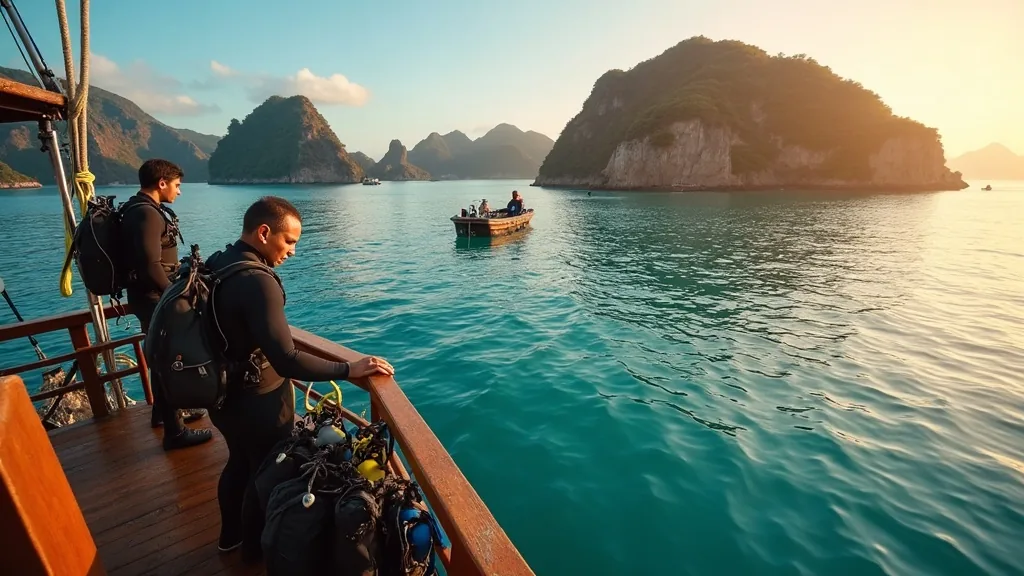
A Komodo liveaboard is a multi-day dive or sailing trip departing from Labuan Bajo that sleeps you on board between sites. Most guest questions come down to six things: certification level, season, trip length, what is actually included, how strong the currents are, and how much cash you need on hand.
Last updated: August 16, 2026
These are the 25 questions our dive desk and crew field week after week, grouped the way people plan a trip. Where a topic deserves a full page, we link to it rather than pad the answer.
Quick answers, if you read nothing else:
- Certification: Open Water minimum; Advanced plus drift experience for the signature sites.
- Season: April to November is settled weather. Mantas year-round, strongest in the south in wetter months.
- Length: 3D2N is the realistic minimum for divers; four to six nights opens up the itinerary.
- Connectivity: Assume no usable internet once you clear the Labuan Bajo headlands.
- Cash: Bring rupiah for park fees, nitrox, drinks and tips — card facilities on board are the exception.
Conditions note, August 2026: A magnitude 7.7 earthquake struck on 15 August 2026, roughly 200 km north-east of Labuan Bajo. Sailing reopened the same day under Maklumat 05/MP-VIII/2026 and Komodo National Park was not closed. Conditions have held normal so far and departures are running to schedule.
What should you settle before you book?
Do I need to be a certified diver to join a Komodo liveaboard?
Not to be on the boat — plenty of guests snorkel, trek and sail without ever putting on a tank. To join the dive program you need at least Open Water, and most operators want Advanced Open Water before clearing you for the current-driven northern sites. If you are newly certified, start with our guidance for first-time liveaboard divers.
When is the best time of year for a Komodo liveaboard?
April through November is the dry window with the calmest crossings and most reliable visibility. December to March brings more rain and wind, but also plankton-rich water that pulls mantas into the southern sites in numbers. There is no dead month in Komodo, only trade-offs — the month-by-month season guide lays them out.
How many days do I actually need?
Three days and two nights is the shortest trip that delivers real diving rather than a shuttle run. Four to five nights lets the boat work the northern sites properly and add Padar and Komodo Island landings. Six nights and up is what it takes to reach the colder southern sites. Compare the shapes in our liveaboard packages overview.
How much does a Komodo liveaboard cost?
The spread is wide: shared-cabin open trips on simple wooden boats sit at the accessible end, mid-range phinisi with en-suite cabins in the middle, private charters at the top. Cabin type, trip length and whether the boat runs a full dive program move the figure more than anything else. Current ranges by boat class are on the Komodo liveaboard price page.
How far in advance should I book?
For July to September, Christmas and Chinese New Year, six to nine months ahead is normal — the better boats sell out in blocks. Shoulder months are usually workable at two to three months. Private charters need the longest lead time, because you are booking a whole vessel and its crew rather than a bunk.
Where do Komodo liveaboards depart from?
Almost all of them leave Labuan Bajo harbour on the western tip of Flores, with Komodo Airport ten minutes from the pier via Denpasar or Jakarta. Arrive a day early: a missed connection is the single most common reason people lose a departure. Route and timing detail sits on our departures from Labuan Bajo page.
What is life on board actually like?
What are the cabins like?
Three broad tiers: shared or bunk cabins with communal bathrooms on budget open trips, air-conditioned twins and doubles with en-suite bathrooms on mid-range phinisi, and master cabins with picture windows on premium boats. Cabins are compact by hotel standards on every vessel — this is a working boat. Traditional builds are described on Komodo Luxury’s phinisi page.
Is there Wi-Fi on a Komodo liveaboard?
Plan for none. A handful of newer boats carry satellite internet and share it in limited windows, but most rely on mobile signal, which fades within an hour of leaving Labuan Bajo and returns only in patches near Gili Lawa. Download maps, books and boarding passes before you sail, and warn people at home you will be offline.
Is there power on board for cameras and laptops?
Generally yes, at 220V through Indonesian type C and F sockets, though supply is sometimes limited to generator hours rather than running around the clock. Cabin sockets are few and camera crews compete for them. Bring a multi-socket strip, a power bank and spare batteries instead of assuming you can top up whenever you like.
What is the food like?
Three cooked meals a day plus between-dive snacks, served buffet style — Indonesian dishes alongside simple Western options, fresh fish, rice, fruit and endless tea and coffee. Boats provision in Labuan Bajo and cannot resupply mid-trip, so anything unusual must be flagged at booking. What is and is not covered sits on the inclusions page.
Will I get seasick?
Some guests do, usually on longer overnight crossings rather than at anchor — the runs south and the windy stretch of August catch most people. Take medication the night before rather than once you feel unwell, choose a lower midship cabin if you are prone, and stay on deck watching the horizon instead of lying down below.
Is tipping expected, and how is it handled?
Tipping is customary in Indonesian liveaboard diving but never compulsory. The standard practice is a single envelope handed to the captain or cruise director on the last evening, then pooled across crew, guides and galley. Most guests budget a modest daily amount per person and bring it in rupiah cash, since card facilities on board are rare.
How does the diving actually work?
How many dives do you get per day?
Three day dives is the standard rhythm on a dedicated dive boat, with an optional dusk or night dive on some evenings. Travel days at each end reduce that, so a three-day trip typically yields six to eight dives while a six-night trip can push past twenty. Dive count is dictated by tide windows, not by how early you get up.
Is nitrox available?
Many Komodo liveaboards carry a nitrox membrane or compressor, and it is worth taking on repetitive multi-day diving because it extends no-decompression time on the deeper northern pinnacles. You need an enriched air certification to use it, and it is almost always charged as a supplement rather than bundled. Confirm availability at booking — not every boat has it.
Do I need to bring my own dive gear?
Full rental sets are available on essentially every dive boat, so you can travel light. We do recommend bringing your own mask, computer and exposure suit: fit matters most on the pieces that touch you, and a computer you read fluently is safer in current. Check what is bundled versus charged on the inclusions page.
How strong are the currents in Komodo?
Strong, and that is precisely why the marine life is there — flow between the Flores Sea and Indian Ocean funnels nutrients through narrow channels. Castle Rock, Crystal Rock and the Shotgun run genuine drift with downcurrent potential, while sheltered bays stay calm. Guides plan every dive around tide tables and will move a site rather than force it; profiles are in our Komodo dive sites hub.
Can I bring an underwater camera?
Yes, and Komodo rewards it — wide angle for the pinnacles and manta stations, macro for Wainilu and the muck sites. Boats provide dedicated camera rinse tanks and a charging table, and larger rigs are normally handed down to the tender by crew rather than carried down the ladder. In current, tell your guide you are shooting so they can position you upstream.
Is there a check dive, and how much experience do guides expect?
Yes — the first dive of almost every trip is a check dive at a sheltered site such as Siaba or Sebayur, where guides assess buoyancy, weighting and air consumption. That dive determines which sites you are cleared for later in the week. As a rough guide, 20 to 30 logged dives with some drift experience makes the signature northern sites comfortable rather than stressful.
Which practical details catch people out?
What is the baggage allowance flying into Labuan Bajo?
Domestic flights to Komodo Airport use smaller jets and turboprops, and free checked allowance typically runs between 10 and 20 kg depending on carrier and fare class. Dive gear pushes most divers over, so budget excess baggage as a normal line item. Soft duffel bags are far easier to stow in a cabin than hard cases.
How much cash should I bring on board?
More than you expect, in Indonesian rupiah. Park fees, nitrox supplements, gear rental, soft drinks and crew tips are commonly settled in cash on board, and card terminals are rare because there is no signal to run them. Withdraw in Labuan Bajo before boarding — there are no ATMs once you sail.
What park fees do I have to pay?
Komodo National Park charges entrance, ranger, trekking and conservation components, often quoted separately from the trip itself, at rates that differ for weekdays, weekends and public holidays. Ask your operator in writing whether fees are included or payable on board — this is the most common billing surprise, and it is broken down on our park fees and permits page.
Do I need dive insurance?
We treat it as non-negotiable, and many operators require proof before your first dive. You want a policy explicitly covering recreational scuba, hyperbaric treatment and emergency evacuation, because the nearest recompression chamber is in Denpasar, Bali — a flight away, not a drive. DAN and comparable dive-specific insurers are the usual choice; crew procedures sit under crew and safety standards.
Can solo travellers join a Komodo liveaboard?
Easily. Open trips are built around individual bookings, and solo guests are normally paired in a twin cabin with a same-gender diver at no extra charge. If you would rather not share, most boats offer a single-occupancy supplement. Scheduled departures with mixed guest groups are listed on Komodo Luxury’s open trip schedule.
Can children join a Komodo liveaboard?
Yes, with caveats. Junior Open Water starts at ten with depth limits, and non-diving children can snorkel, trek and kayak provided the boat carries enough crew to supervise. Some dive-focused boats set a minimum age of twelve or fifteen, and private charters are the flexible option for mixed-age families. Age policies by boat type are in our family liveaboard guide.
Can the galley handle dietary requirements?
Vegetarian, vegan, gluten-free, halal, pescatarian and common allergies are routinely accommodated when flagged at booking rather than on boarding day. Boats provision entirely in Labuan Bajo and cannot restock at sea, so late notice genuinely limits what the cook can do. State severe allergies in writing so the galley can separate preparation.
Where should you go next?
- Komodo liveaboard booking guide — enquiry to boarding, step by step.
- Komodo liveaboard price ranges — the spread by boat class and cabin type.
- Komodo liveaboard packages — itinerary shapes from two nights to a full week.
- Komodo dive sites — current, depth and species profiles site by site.
For live availability and boat-by-boat specifications, see Komodo Luxury’s liveaboard collection. Komodo Luxury – a registered Indonesian PT (PT Komodo Bahari Nusantara, KBLI 79120) under Juara Holding Group Limited with 1,500+ verified guest reviews (4.9/5) – operates across Komodo National Park year-round and will confirm cabin type, nitrox availability and park fee handling in writing before you commit.
Maintained by our Labuan Bajo dive desk and reviewed against operator confirmations and current park regulations. Where an answer depends on the specific vessel — nitrox, satellite internet, minimum age, cabin configuration — put it to your operator in writing rather than assuming.