
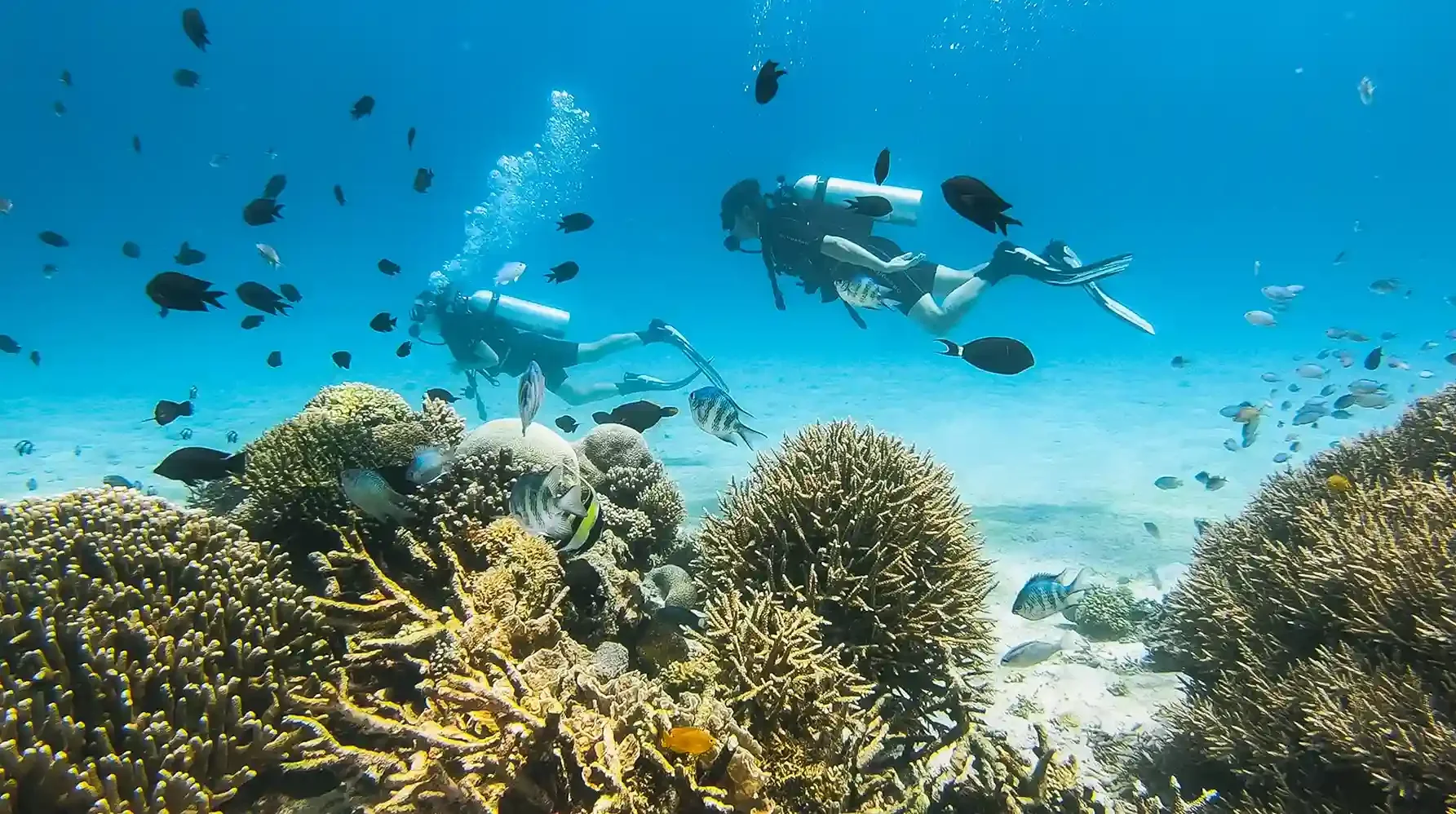
The nearest hyperbaric (recompression) treatment to Komodo National Park is in Bali, not Labuan Bajo — evacuation from a dive site typically means tender to the liveaboard, boat transfer to Labuan Bajo’s port, then a charter or scheduled flight to Denpasar. Every vessel we run carries onboard emergency oxygen, a stocked first-aid kit, and EFR-trained crew, and DAN dive-accident coverage is strongly required before boarding.
Why Medical Preparedness Isn’t Optional Out Here
Komodo Island Liveaboard is a specialist liveaboard operator in the Komodo Luxury network, based in Labuan Bajo, curating stay-aboard phinisi expeditions (1–11 nights) across Komodo National Park — world-class diving, snorkeling, Padar & Pink Beach, Komodo dragon trekking. That remoteness is exactly the point of a liveaboard, and exactly why medical readiness has to be designed in from the start rather than assumed away.
Komodo’s dive sites are not gentle. Sites like Castle Rock run strong, unpredictable currents that can push even experienced divers into a faster or deeper profile than planned, and the park’s distance from any hospital means decompression illness, marine-life injuries, and even routine seasickness dehydration all need a clear, pre-briefed response plan — not improvisation at sea. As part of the Komodo Luxury network (1,500+ verified guests across Google and TripAdvisor, TripAdvisor Travelers’ Choice 2025 and 2026 on the Komodo Luxury listing), we treat that plan as a documented operating standard, not a marketing line.
Where’s the Nearest Hyperbaric Chamber to Labuan Bajo?
As of 2027, Labuan Bajo has no operational hyperbaric chamber onsite. The nearest recompression facilities recognized by regional dive operators and DAN are in the Bali Denpasar/Sanur area, reached from Labuan Bajo by charter or scheduled flight — roughly 1 to 1.5 hours in the air, plus ground transfer on each end. Chamber staffing and equipment status can shift season to season, so we treat this as a working assumption to confirm at booking, not a fixed guarantee: always check current chamber operational status with DAN or your operator before you dive, rather than assuming immediate access exists.
This is the single biggest reason DAN coverage matters more in Komodo than it might on a reef dive close to a city hospital. A case that would be a same-day resolution in Bali becomes a multi-hour, multi-transport evacuation here.
Evacuation Timeline: From Dive Site to Treatment
Actual evacuation time depends heavily on where in the park you’re diving when an incident occurs, current sea state, and flight availability — treat the figures below as typical ranges, not guarantees.
| Stage | Typical mode | Estimated time |
|---|---|---|
| Dive site → liveaboard vessel | Tender / dinghy pickup | 5–15 minutes |
| Vessel → Labuan Bajo port | Liveaboard repositioning or ranger speedboat | 1–4 hours (North/Central sites are closer; South loop sites like Manta Alley or Cannibal Rock run longer) |
| Labuan Bajo → Denpasar | Charter medevac flight or nearest scheduled flight | ~1–1.5 hours flight + ground transfer both ends |
| Worst case (South loop, night incident) | Combined boat + port + flight | 4–8+ hours |
That range is why dive supervisors on a komodo liveaboard are trained to call an emergency ascent early rather than wait and see — the clock on decompression illness starts at the moment of onset, not at the moment you reach a hospital.
What Actually Happens During a Dive Emergency
The sequence below is the standard response chain our crew is briefed to follow the moment a diver signals distress or a guide flags a suspected DCI (decompression illness) case:
- Emergency ascent is called. The dive guide or buddy signals a controlled emergency ascent per DAN protocol, prioritizing safety over completing the dive plan.
- 100% oxygen starts immediately. Onboard emergency O2 — demand valve or non-rebreather mask — is administered the moment the diver is back aboard, not after reaching port.
- Symptom onset and dive profile are logged. The dive supervisor records depth, bottom time, and symptom timing — this data is what DAN’s medical team needs to advise on treatment.
- The captain radios ahead. Contact goes out to the nearest ranger post and Labuan Bajo harbor to prep for a fast port transfer, no waiting until arrival to raise the alarm.
- The vessel repositions toward the nearest safe evacuation point, balancing speed against sea conditions.
- DAN’s hotline is called. DAN TravelAssist (or the equivalent on your policy) coordinates evacuation authorization and case management — this step is why DAN coverage matters more than the premium cost suggests.
- Patient transfers to a faster vessel if available, typically a ranger or harbor speedboat, for the final leg into port.
- Onward transfer to Bali is arranged if hyperbaric evaluation is indicated, coordinated with the receiving facility before the diver lands.
DAN Insurance and Why It’s Effectively Mandatory
Park regulations don’t legally require dive-accident insurance to board a boat, but Komodo Island Liveaboard strongly requires proof of current DAN (or equivalent dive-accident) coverage before any diver joins one of our itineraries — alongside a certification card and logged dive count. The reasoning is practical, not bureaucratic: a Bali medevac and hyperbaric treatment can run into thousands of dollars paid upfront if you’re uninsured, and DAN’s coordination hotline is often the fastest way to get a case correctly triaged from a boat with limited connectivity. Check your policy covers the specific region and depth range you’ll be diving — Komodo’s currents mean deeper, more advanced profiles are common on South loop itineraries.
If you’re comparing what’s bundled into your trip cost versus what you need to arrange yourself, our Komodo liveaboard price guide breaks down what’s typically included and what stays the diver’s own responsibility — DAN coverage falls firmly in the second category on every reputable operator’s boat, including ours.
Onboard Emergency Oxygen & First-Response Equipment
Every vessel we operate carries a dedicated emergency oxygen unit sized for extended delivery, plus a stocked first-aid kit covering trauma, marine-life stings (lionfish, stonefish, jellyfish contact are the realistic risks here), and basic life support essentials. This isn’t a symbolic first-aid box bolted to a wall — it’s inventoried and checked before every departure, and our dive guides know exactly where it is and how to use it without hunting for it mid-crisis.
Oxygen administration starts within minutes of a diver signaling distress, because the response chain above is rehearsed, not improvised. That gap between “we have oxygen onboard” and “we can deploy it in under two minutes” is the actual safety margin that matters.
Crew Certifications: Who’s Responsible Onboard
Our Dive Operations Lead, Maria Ngganggus, holds PADI Divemaster, SSI Dive Guide, and EFR Instructor certifications and oversees first-aid readiness across the fleet. Dive guides carry current EFR (Emergency First Response) or equivalent certification, and our captains hold BNSP Yacht Captain and STCW credentials that include emergency-response protocols as part of the qualification, not an add-on course. Guide-to-guest ratios are kept tight enough that a certified first responder is always within reach of every diver, underwater and on deck — this, together with nearly four decades of combined team experience navigating Komodo’s currents and dive sites, is what a documented safety standard actually looks like in practice, rather than a claim on a brochure.
Diving with peace of mind matters as much as the itinerary. Our private charter itineraries are built around your certification level, DAN coverage, and comfort with current — with DAN-trained crew and full onboard emergency oxygen on every departure. WhatsApp +62 811 3823 875 or email [email protected] to walk through your diving itinerary before you book.
Booking a Shorter Trip? Safety Standards Don’t Change
Whether you’re joining a share-cabin open trip or a full private charter, the same emergency protocol applies — even on a compact 3D2N itinerary, oxygen, DAN coordination, and crew certification are non-negotiable, not scaled down because the trip is shorter. If you’re weighing which dive sites to prioritize against your certification level and risk comfort, our FAQ hub covers currents, minimum certification requirements, and seasickness alongside the medical-preparedness questions covered here.
Frequently Asked Questions
Where’s the nearest chamber?
As of 2027, Labuan Bajo has no operational hyperbaric chamber onsite. The nearest recompression facilities recognized by regional dive operators are in the Bali Denpasar/Sanur area, reached via charter or scheduled flight from Labuan Bajo (roughly 1–1.5 hours in the air, plus ground transfer). Chamber staffing and availability can shift season to season, so confirm current status with DAN or your liveaboard operator before departure rather than assuming immediate access.
Is DAN insurance required?
It isn’t mandated by park regulations, but Komodo Island Liveaboard strongly requires it before boarding any dive itinerary. Komodo’s remoteness means a Bali medevac can cost far more than a DAN membership, and DAN’s hotline coordinates evacuation logistics that a solo traveler or crew alone can’t arrange as quickly. We ask every diver to show proof of current DAN (or equivalent dive-accident) coverage at check-in, alongside certification card and logged dive count.
What’s onboard emergency O2?
Every vessel we operate carries a dedicated emergency oxygen unit — demand valve and non-rebreather mask, sized for extended delivery — plus a stocked first-aid kit covering trauma, marine-life stings, and basic life support. Our dive guides, trained to EFR standard, administer 100% oxygen immediately on any suspected decompression illness or near-drowning while the captain begins evacuation coordination — oxygen starts within minutes of a diver signaling distress, not after reaching port.
Evacuation time to hospital?
Timing depends heavily on where in the park you’re diving. From North or Central sites near Labuan Bajo, port transfer can take under two hours; from South loop sites like Manta Alley or Cannibal Rock, expect three to four hours by boat before any flight. Add roughly 1–1.5 hours for the Denpasar flight plus ground transfer. Treat these as typical ranges, not guarantees — weather, sea state, and flight availability all affect actual evacuation time.
Do crew have first-aid certs?
Yes. Our Dive Operations Lead, Maria Ngganggus, holds PADI Divemaster, SSI Dive Guide, and EFR Instructor certifications and oversees first-aid readiness fleet-wide. Dive guides carry current EFR or equivalent certification, and our captains hold BNSP Yacht Captain and STCW credentials that include emergency-response protocols. Guide-to-guest ratios stay tight enough that a certified first responder is always within reach of every diver, both underwater and on deck.
Ready to dive Komodo with the safety plan sorted first? Our private charter itineraries are shaped around your certification level, DAN coverage, and dive-site preferences — DAN-trained crew and full emergency oxygen on every komodo island liveaboard departure. WhatsApp +62 811 3823 875 or email [email protected].