
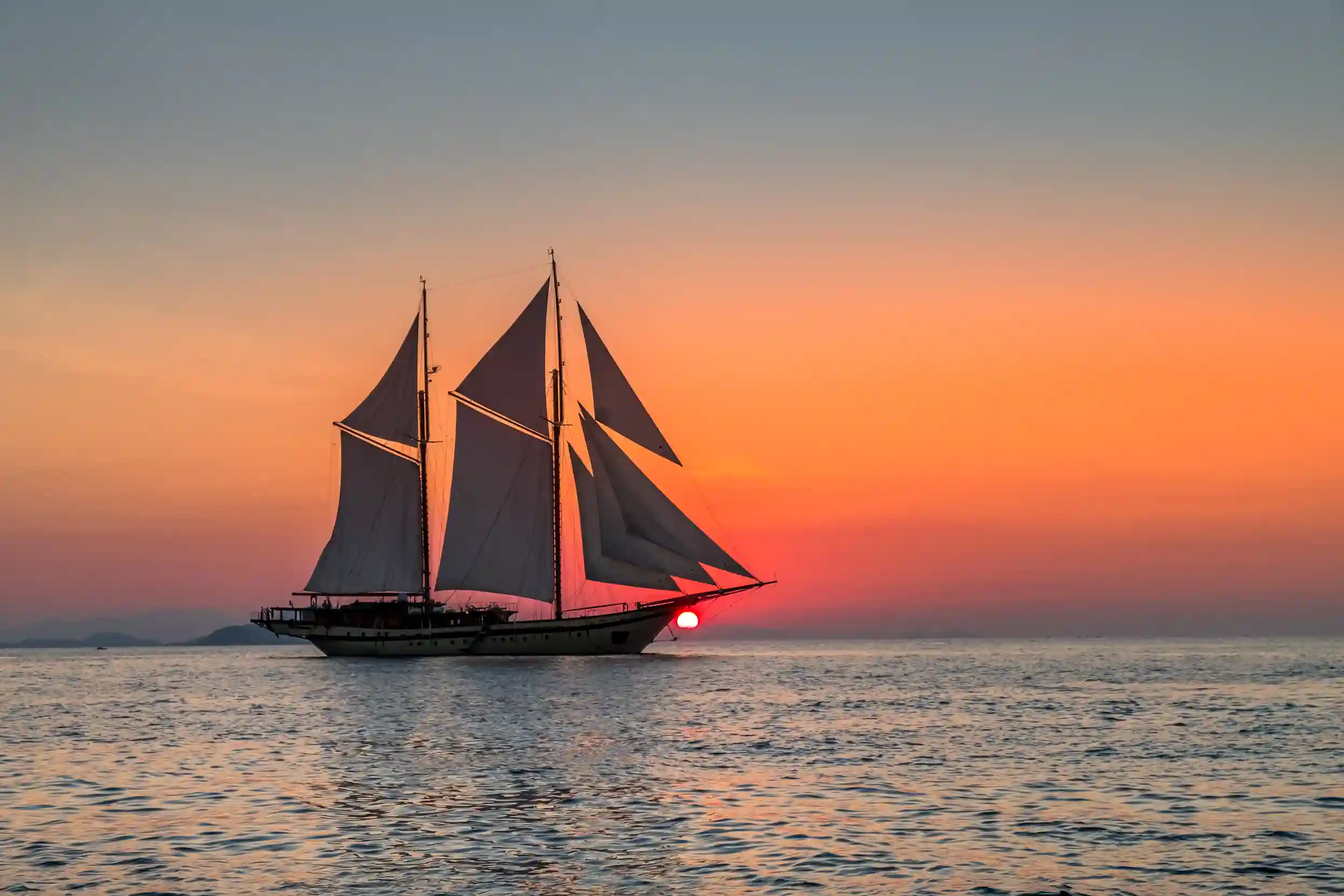
A Komodo north dive sites liveaboard focuses on high-current pinnacles like Castle Rock, Crystal Rock, Batu Bolong and The Cauldron (Shotgun), delivering warm 27-29°C water, schooling sharks and big pelagics. The south (Manta Alley, Cannibal Rock) runs cooler 20-24°C water for mantas and macro. Most 3-5 day routes combine both.
North vs South Komodo: The Short Answer
Komodo National Park splits into two distinct dive worlds, and choosing the right liveaboard route decides what you actually see underwater. The north is the adrenaline half: warm, clear, current-swept seamounts stacked with grey reef sharks, white-tips, trevally and dogtooth tuna. The south is the cool, nutrient-rich half: plankton-fed channels where reef mantas cruise and rare macro critters like frogfish, pygmy seahorses and Coleman shrimp hide in the rubble.
Since 2015 we have run specialist liveaboard itineraries across both zones as part of Komodo Luxury, and the honest answer for most divers is: you want both. A well-planned 3-5 day route lets you dive the north on the warmer, calmer tidal windows and drop south when conditions align. See how the zones compare on our Komodo Island liveaboard overview.
Komodo North Dive Sites (The Big-Fish Half)
The north sits closer to the Flores Sea, so it draws warm equatorial water. Visibility regularly hits 20-30 metres and temperatures stay a comfortable 27-29°C, but the currents are serious. These are the sites that put Komodo on the world map for advanced diving.
- Castle Rock – a submerged seamount topping out around 4m; hunting grey reef sharks, big-eye trevally tornadoes and giant trevally in the blue. Negative entry, reef hooks recommended.
- Crystal Rock – a pristine pinnacle beside Castle Rock, superb hard coral, schooling fusiliers and frequent sharks. Best on slack-to-incoming tide.
- Batu Bolong – a knife-edge ridge where you shelter on the current-protected side; arguably the richest coral wall in the park, wall-to-wall fish life.
- The Cauldron (Shotgun) & Gili Lawa – a channel dive where the flow fires you through a bowl past resident mantas and reef sharks; a rollercoaster on a running tide.
- Tatawa Besar & Tatawa Kecil – drift dives over orange soft-coral slopes; turtles, mantas and macro in the eddies.
Because of the current, we recommend divers hold Advanced Open Water plus 30+ logged dives for the northern seamounts. A reef hook and SMB are essential kit. New divers still enjoy the north on gentler sites like Batu Bolong’s lee side. Full site-by-site notes are on our Komodo dive sites guide.
South Komodo Dive Sites (Mantas & Macro)
Drop south and the water temperature falls sharply – expect 20-24°C, occasionally colder, driven by upwelling from the Indian Ocean. A 5mm wetsuit (or 7mm/hooded vest for the cold-sensitive) is non-negotiable. Visibility is often lower, but the trade-off is extraordinary biodiversity.
- Manta Alley – the park’s signature manta cleaning station and feeding channel; groups of reef mantas, occasionally 10+ on a good plankton day.
- Manta Point (Karang Makassar) – technically central, a rubble-bottom drift where mantas glide overhead year-round.
- Cannibal Rock & Yellow Wall (Horseshoe Bay) – world-class muck and critter diving: frogfish, pygmy seahorses, nudibranchs, Coleman shrimp on fire urchins.
- Makassar Reef & Siaba – gentle drifts and turtle-heavy reefs, ideal warm-up and check-out dives.
North vs South: Side-by-Side Comparison
| Factor | North Komodo | South Komodo |
|---|---|---|
| Water temp | 27-29°C (warm) | 20-24°C (cool) |
| Visibility | 20-30m | 8-15m |
| Signature life | Reef sharks, trevally, tuna | Mantas, frogfish, pygmy seahorse |
| Current | Strong to ripping | Moderate, surge in bays |
| Skill level | Advanced (AOW + 30 dives) | Open Water to Advanced |
| Wetsuit | 3mm shorty/full | 5-7mm + hood |
| Best for | Adrenaline, big fish, wide-angle | Mantas, macro, photography |
Which Route Should You Book?
Choose a north-focused liveaboard if…
You are an experienced diver chasing sharks and schooling pelagics, you prefer warm water, and you shoot wide-angle. A 3-day north-central loop from Labuan Bajo hits Batu Bolong, Castle Rock, Crystal Rock, The Cauldron and Manta Point – the classic highlight reel.
Choose a full north-plus-south route if…
You want the complete park. Our 4-5 day itineraries push down to Manta Alley and Horseshoe Bay, giving you cold-water macro and manta feeding alongside the northern seamounts. This is the route we recommend for first-time Komodo divers who want to see everything. Compare durations on our liveaboard itineraries page.
Best Time to Dive North vs South
Diving runs year-round, but the dry season, April to November, delivers the best conditions, with July to September the peak window. The north dives beautifully across the whole dry season. The south is at its best from July to October, when upwelling concentrates plankton and manta numbers at Manta Alley surge – the cold water is the price of the show.
Sample Rates & What’s Included
| Option | Duration | Price (per person) |
|---|---|---|
| Shared cabin, twin-share | 3 days / 2 nights | IDR 3,550,000 – 6,500,000 |
| Shared cabin, deluxe | 4 days / 3 nights | IDR 7,500,000 – 12,500,000 |
| Private charter (whole yacht) | 3 days / 2 nights | IDR 52,000,000 – 120,000,000 |
| Private charter, premium | 4-5 days | IDR 150,000,000 – 280,000,000 |
- Up to 3-4 guided dives daily with experienced local divemasters
- Full-board meals, cabin, tanks, weights and nitrox on request
- Airport (LBJ) transfers and dinghy support
Not included: Komodo National Park entry fee of IDR 650,000 per person (with a 1,000-visitor daily quota in force since April 2026 – early booking matters), equipment rental, and diving insurance. Fly into Labuan Bajo (LBJ); we handle everything from the pier.
Book Your Komodo Liveaboard
As a specialist Komodo operator since 2015, we build the route around the tides and your certification level – not a fixed template. Secure your dates with a 50% deposit; the balance is due 14 days before departure. Message us on WhatsApp with your dates, group size and dive experience for a same-day quote and availability check. Still deciding? Read our liveaboard FAQ for kit lists, cancellation terms and seasickness tips.