
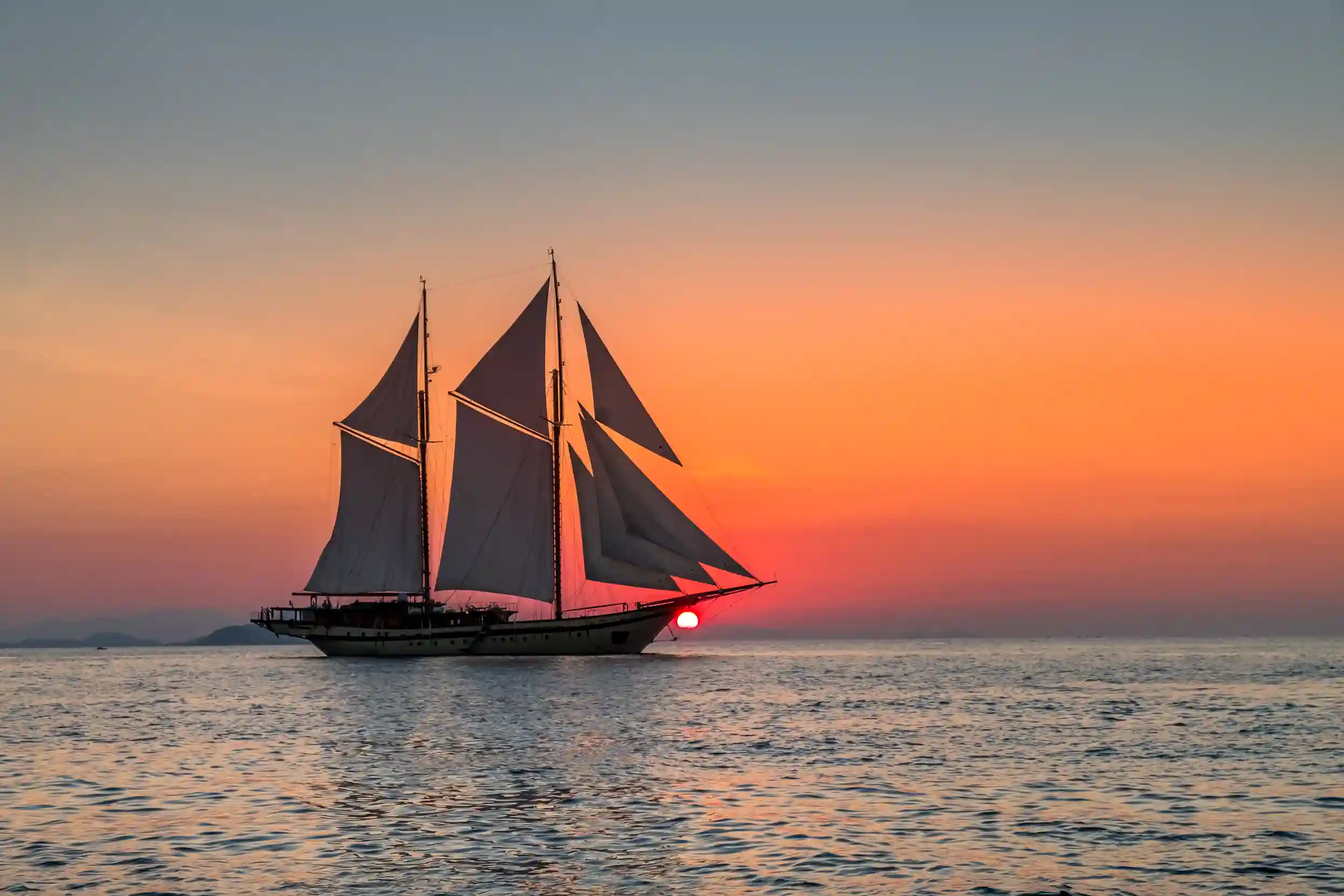
Bird watching on a Komodo liveaboard happens around the main itinerary, not instead of it — raptors circling the dry savanna above Rinca and Komodo Island, waders and kingfishers working the mangrove edges at low tide, and seabirds trailing the boat between anchorages. It’s a rewarding side layer for anyone with binoculars in their day bag, not a dedicated birding charter, and a local guide sharpens on-the-spot identification.
Why Birds Show Up on a Komodo Liveaboard Itinerary
Komodo National Park packs an unusual range of habitat into a small area, and that variety is exactly what draws birdlife. Dry monsoon savanna covers most of Rinca and Komodo Island, thick mangrove fringes the sheltered bays where boats tender guests ashore, rocky headlands catch onshore wind along the sailing routes, and the open channels between islands carry baitfish that seabirds follow. A komodo island liveaboard itinerary crosses all four of these habitats in the course of a normal multi-day route — which means birdwatching opportunities show up naturally during dragon treks, mangrove-edge landings, and open-deck transit, without needing a separate excursion.
None of this is marketed as a birding cruise, and it shouldn’t be treated as one. The daily rhythm is built around diving, snorkeling, and ranger-guided trekking — birdwatching is something guests layer on top of those activities, most successfully with a decent pair of binoculars, a long lens, and reasonable expectations about what a moving boat schedule can accommodate.
What You’ll Actually See — By Habitat
Rather than promise a checklist of named species, it’s more useful to know which general groups of birds inhabit which parts of the park, and when you’re likely to be standing (or sailing) in the right place to see them. The table below breaks it down by habitat type.
| Habitat | Typical bird groups | Where you’ll be on the itinerary | Best viewing window |
|---|---|---|---|
| Savanna & dry grassland (Rinca, Komodo Island) | Raptors and other birds of prey riding the morning thermals, plus ground-feeding species moving through the grass | During the ranger-guided Komodo dragon trek | Mid-morning, before the midday heat pushes activity into shade |
| Mangrove & tidal flats (sheltered bays, Loh Buaya area on Rinca) | Wading birds working the exposed mud, and kingfishers hunting the shallows from low perches | Short mangrove-edge stops on the tender or dinghy | Low tide, early morning light |
| Coastal cliffs & headlands | Seabirds roosting or nesting on exposed rock, occasional raptors using the cliff updrafts | Open-deck viewing while sailing between anchorages | Any daylight hours, calmer sea states |
| Open water & boat wake | Seabirds trailing the boat or working baitfish balls at the surface | From the sun deck during transit legs | Dawn and dusk transits, when surface feeding picks up |
Savanna Raptors on Rinca and Komodo Island
The same dry grassland that makes Komodo dragons visible from a distance also makes it good raptor country — open sightlines, thermals rising off sun-baked hillsides, and enough exposed perches that birds of prey are easy to spot even without binoculars. You’ll get your best window for this during the ranger-guided trek itself, since the trail moves slowly and the ranger is already scanning the terrain for wildlife. Keep your camera or binoculars accessible rather than packed away — sightings tend to be brief and the group generally keeps moving.
Mangrove and Shoreline Birds
Where the boat tenders guests into a sheltered bay, mangrove roots and exposed tidal mud create feeding ground for wading birds and kingfishers. These stops are usually short and functional — a landing point for a trek or a snorkel entry — so mangrove birdwatching tends to happen in the margins, five or ten minutes while the group organizes gear. Low tide exposes more mudflat and more feeding activity, so if birding matters to you, ask your guide which of the day’s stops falls closest to low water.
Seabirds Offshore
The most reliable birdwatching on a liveaboard often isn’t at a stop at all — it’s from the sun deck while the boat is under way. Seabirds regularly work the wake or dive on baitfish pushed to the surface by currents funneling between islands, and the wide-open sightlines of a moving boat make it easy to track a bird for longer than you could on land. Dawn and dusk transit legs tend to be the most active, both because surface feeding increases and because the light is easier on the eyes when you’re scanning open water.
Building Birdwatching Into Your Liveaboard Days
Because birdwatching isn’t the primary activity, the practical approach is to know where it naturally overlaps with the rest of the schedule, rather than asking the crew to build a separate excursion around it. A typical multi-day route creates these windows:
- Morning trek days (Rinca or Komodo Island): savanna raptor activity peaks in the hour or two after the ranger-guided walk starts, before the heat sets in.
- Mangrove or bay landings: a few minutes of shoreline birding is possible while the group assembles for a trek or snorkel entry — ask your guide if the stop coincides with low tide.
- Transit legs between anchorages: the sun deck is open the whole time the boat is moving, and this is genuinely the easiest birdwatching on the trip — no hiking, no schedule pressure, just binoculars and open water.
- Sunset at anchor: birds returning to roost near cliffs and headlands are often visible from the deck as the boat settles for the night, alongside the evening light that makes Komodo’s coastline worth photographing regardless of wildlife.
- Early departure mornings: the first hour of sailing, right after sunrise, tends to be the most active single window for seabirds trailing the boat.
Ready to sail? The 3D2N Komodo Liveaboard share-cabin open trip is bookable directly through Komodo Luxury Open Trip — live schedules and cabin availability. WhatsApp +62 811 3823 875 or email [email protected].
Why You Need a Local Guide for Species Identification
We’re intentionally not publishing a species checklist on this page. Reliable, verified species lists for Komodo National Park’s birdlife are harder to pin down than the park’s better-documented marine life, and we’d rather point you to a knowledgeable source than print names we can’t stand behind. That source is already on the boat: park rangers and dive guides work these islands daily, recognize calls and flight patterns long before a bird is visible to the naked eye, and can tell you what you’re actually looking at in real time — far more reliably than a guidebook photo taken in different light on a different continent.
If birdwatching is a real interest rather than a passing one, say so when you board. Guides who know a guest cares about it will often point out activity they’d otherwise let pass, and rangers on the Rinca Island trek in particular are used to slowing down for visitors who want a longer look. Bringing a general Southeast Asia bird field guide or app of your own is a reasonable way to cross-reference what your guide tells you, since connectivity onboard is limited and you won’t be able to look things up in real time.
What to Bring If Birdwatching Matters to You
- Compact binoculars — 8×42 or similar is a practical balance of magnification and stability on a moving boat
- A zoom or telephoto lens if photography matters more than casual viewing
- A general Southeast Asia bird field guide or offline app, since onboard connectivity is limited
- Neutral-colored clothing for savanna treks — bright colors and loud movement push wildlife away faster on foot than from the boat
- Patience with the schedule — birdwatching fits around diving, trekking, and sailing, not the other way around
Setting Expectations Against a Dedicated Birding Trip
If you’ve done a purpose-built birding tour elsewhere — with pre-dawn hides, playback calls, and a guide whose sole job is finding target species — a Komodo liveaboard will feel different, and it should. This is fundamentally a diving and island-exploration itinerary that happens to cross excellent bird habitat along the way. You’ll see genuine activity across savanna, mangrove, cliff, and open water without any extra planning, but you won’t get the dedicated stalking time a specialist trip provides. Most guests find that trade entirely worth it, since the same days deliver Komodo dragon trekking, some of Indonesia’s best reef diving, and stops at Rinca and Komodo Island that a birding-only itinerary would never include.
For travelers weighing how to spend limited days in the park, it’s worth checking the best time to visit guide before booking — dry-season months generally mean calmer seas for open-deck viewing and clearer savanna sightlines for the morning treks.
Frequently Asked Questions
Is Komodo National Park good for birdwatching?
Yes, as a complement to the park’s better-known marine life and dragon trekking. The mix of dry savanna, mangrove, coastal cliffs, and open water supports a genuine range of bird activity, and a multi-day liveaboard route naturally crosses all of it. It’s not marketed or run as a dedicated birding trip, so treat it as a strong bonus layer rather than the main draw.
Do I need to bring my own birding guide or checklist?
We recommend leaning on your onboard guide or park ranger for identification rather than relying solely on a printed checklist, since they know local calls, behavior, and flight patterns firsthand. A general Southeast Asia field guide or offline app is a useful cross-reference to bring along, particularly since onboard internet access is limited.
What time of day is best for spotting birds on a liveaboard?
Mid-morning during savanna treks, low tide for mangrove and shoreline stops, and dawn or dusk during transit legs between anchorages tend to be the most active windows. The sun deck during a moving transit is often the single easiest place to watch birds, since there’s no hiking involved and the sightlines are wide open.
Can I go birdwatching without joining the Komodo dragon trek?
Some birdwatching happens independently of the trek — from the sun deck during transit and at mangrove-edge landings before a snorkel stop — but the savanna trek itself is where raptor sightings are most likely, since it’s guided, slow-paced, and covers open grassland on foot. Skipping the trek entirely means missing that particular window.
Are there rare or endangered birds in Komodo National Park?
The park’s habitat diversity likely supports species of conservation interest, but we don’t publish a specific species list on this page because reliable, verified data for the park’s birdlife is harder to source than its marine-life documentation. Ask your ranger or dive guide onboard — they’re the most reliable source for what’s actually being seen in the park at the time of your visit.
Ready to book your Komodo liveaboard? The 3D2N share-cabin open trip is the fastest way to experience the park’s savanna, mangrove, and open-water habitat firsthand — bookable directly through Komodo Luxury Open Trip for live schedules and cabin availability. WhatsApp +62 811 3823 875 or email [email protected] — part of the Komodo Luxury network (1,500+ verified guests across Google and TripAdvisor, TripAdvisor Travelers’ Choice 2025 and 2026 on the Komodo Luxury listing), with nearly four decades of combined team experience running these waters. See the full Komodo liveaboard price guide or browse the FAQ hub for more booking details.