
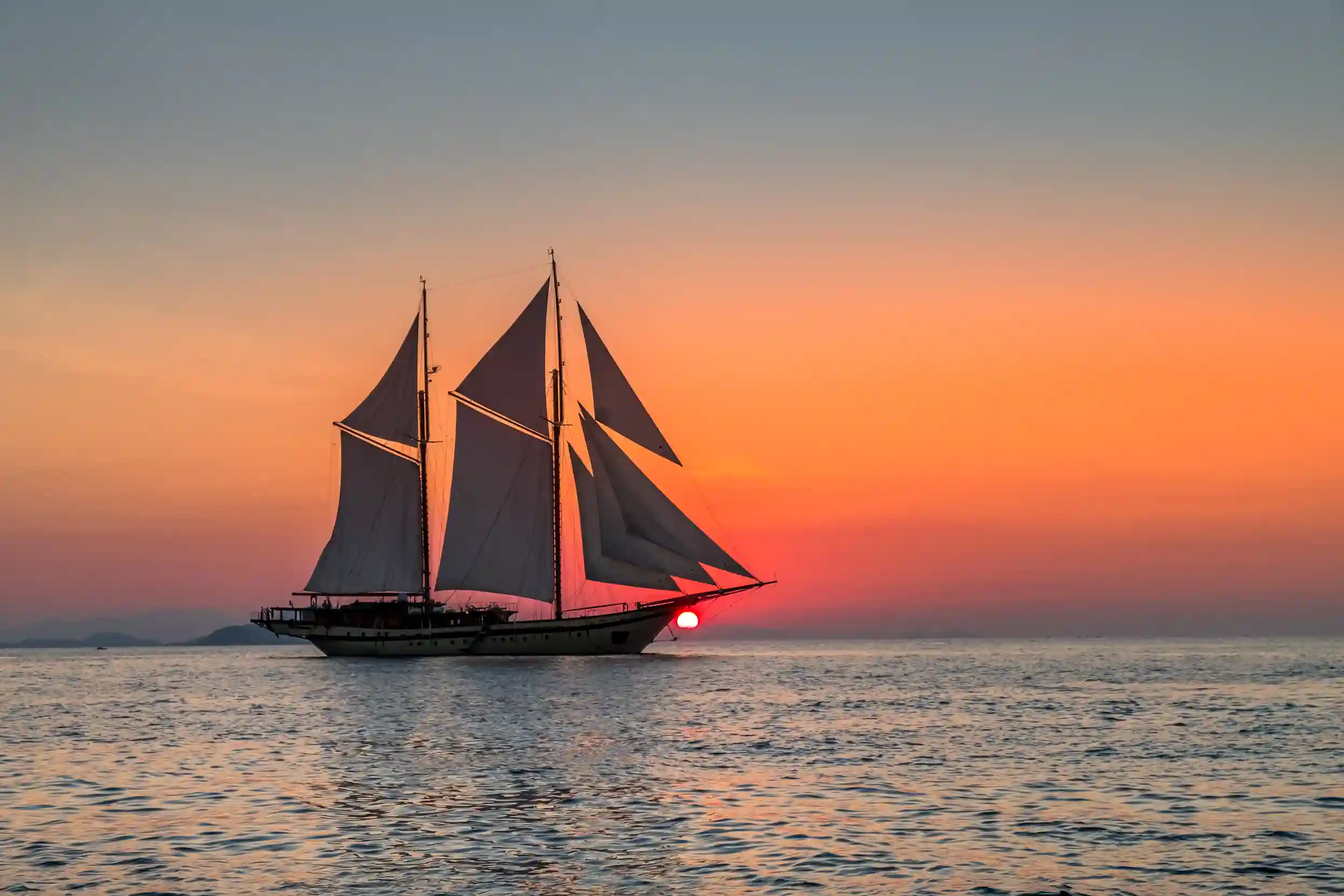
The best Komodo liveaboard diving season runs April to October, when visibility hits 20–30m and northern currents are stable. For manta rays, the prime window is December to March at Manta Alley in the south. April–May and September–October deliver the strongest all-round mix of clear water, calm seas and pelagic action.
Choosing the right month is the single biggest decision you’ll make when planning a Komodo liveaboard trip. The water here changes character across the year — from glassy 30-metre visibility in the dry season to plankton-rich manta gatherings in the wet. As an owner-operated fleet running these waters year-round, we’ve logged which sites fire in which months, and this guide gives you the month-by-month truth so you book the trip that matches what you actually want to see.
Komodo Liveaboard Diving Season at a Glance
Komodo National Park is diveable 12 months a year — there is no true “closed” season — but conditions shift meaningfully between the dry season (April–November) and the wet season (December–March). The dry season brings calm crossings, reliable visibility and predictable currents, ideal for first-time Komodo divers and pelagic hunters. The wet season trades some surface comfort for the year’s best manta encounters and quieter boats.
| Period | Visibility | Manta Odds | Sea State | Best For |
|---|---|---|---|---|
| Apr–Jun | Excellent (peak in May) | Moderate | Calm, improving | All-round diving, clear water |
| Jul–Aug | Very good (15–25m) | Moderate (south) | Windier, more current | Big pelagics, sharks, peak season |
| Sep–Nov | Very good, calmer | Good, returning | Calm seas return | Best value, fewer boats |
| Dec–Mar | Good, variable | Best of the year | Wetter, more variable | Manta-focused trips, quiet boats |
Month-by-Month Komodo Diving Breakdown
April–June: The All-Round Sweet Spot
These are our most-requested months, and for good reason. After the rains, the reefs are green and productive, water clarity climbs sharply, and May is often the single best visibility month of the year, regularly delivering 25–30m at northern pinnacles like Castle Rock and Crystal Rock. Surface conditions calm down through June, making the crossing to southern sites comfortable. Mantas are still around, and reef sharks, trevally schools and turtles are abundant. If you want one month that does everything well, book May.
July–August: Peak Season Pelagics
The high season. Visibility stays strong, and the cooler, nutrient-rich water pulls in serious pelagic action — grey reef sharks, giant trevally and the occasional mola mola at deeper sites. The trade-off is wind and current: July–August is the windiest window, southern sites get choppy, and Batu Bolong and Castle Rock run stronger drifts that reward good buoyancy. This is advanced-diver territory at its most exciting. Boats fill fastest now, so book early — see our best Komodo liveaboard picks to lock a berth.
September–November: The Value Window
Our insider pick. Seas calm right down, visibility holds at 20–25m, and the crowds of July–August thin out — meaning quieter dive sites and better boat availability. Mantas begin moving back through central and southern areas, so you get a genuine shot at the big animals alongside classic reef diving. October is one of the strongest shoulder-season months overall, blending calm conditions, good clarity and returning mantas.
December–March: Manta Season in the South
If mantas are your priority, this is when you come. The wet season pushes plankton into southern sites, and Manta Alley becomes one of the most reliable manta cleaning-and-feeding stations in Indonesia, with encounters of 5, 10, even 20+ animals on a single dive in a good year. February is frequently the standout manta month. Weather is more variable and the odd itinerary shifts to weather-protected sites, but boats are quieter and rates softer. This is a specialist season for divers who want the signature Komodo manta experience.
Manta Season: Where and When
Mantas are the animal most divers ask about, so here’s the straight answer. Komodo holds resident reef mantas year-round, but density and reliability move with the season and the site:
- December–March (peak): Manta Alley in the south fires as plankton concentrates. Highest numbers, best cleaning-station behaviour.
- October–February: Southern sites including Manta Alley and German Flag stay productive as water masses shift.
- April–September: Central sites like Karang Makassar (“Manta Point”) deliver drift dives alongside mantas — fewer guaranteed, but paired with superb reef diving.
A well-planned liveaboard is the only way to reliably reach Manta Alley in the far south — it’s too far for day boats from Labuan Bajo. That reach is exactly why season-matched liveaboard itineraries out-perform land-based diving for mantas.
Signature Dive Sites by Season
| Dive Site | Best Months | Highlight |
|---|---|---|
| Castle Rock | Apr–Oct | Grey reef sharks, trevally storms, adrenaline drift |
| Crystal Rock | Apr–Oct (dry season) | Peak visibility, healthy hard coral, pelagics |
| Batu Bolong | Sep–Nov & Apr–Nov | Most fish-dense pinnacle in the park |
| Manta Alley | Dec–Mar (Oct–Feb) | Reliable manta aggregations, southern gem |
| Karang Makassar | Apr–Sep | Central manta drift, sandy highway |
Komodo is a drift-diving destination — many of these sites carry strong current that channels the nutrients pelagics feed on. Good buoyancy and reef-hook competence matter more here than anywhere else in Indonesia. Our guides brief every dive to the day’s tide and match site order to conditions, which is where an experienced owner-operated crew earns its keep.
When to Book Your Komodo Liveaboard
Komodo liveaboards have real lead-time pressure — our data shows an average open-trip booking window of 89 days and charter bookings placed 143 days out. The best boats and cabins sell first. Use this as your booking calendar:
- July–August (peak): book 4–6+ months ahead. These trips sell out first.
- December–January & June (manta / holiday demand): book 2–3+ months ahead.
- April–May & October–November (shoulder): 6–8 weeks can work, but earlier secures the top vessels.
For a full breakdown of vessels, cabins and pricing by trip length, see our complete Komodo liveaboard guide, then compare our top-rated boats on the best Komodo liveaboard page.
2026 Rates & What’s Included
| Option | Price (2026) | Typical Trip |
|---|---|---|
| Shared cabin (per person) | IDR 3.55M – 12.5M | 3–4 day open trip |
| Private full charter | IDR 52M – 280M (avg ~133M) | 3–6 day exclusive |
| Superyacht charter | USD 4,500 – 9,000+/night | Bespoke luxury expedition |
Standard liveaboard packages include:
- All cabins, meals and filtered drinking water aboard
- 3–4 guided dives per full day, tanks, weights and guide
- Dinghy transfers to every dive site, including remote southern sites
- Airport transfers in Labuan Bajo
Not included: Komodo National Park entry (IDR 650,000 per person; the park now caps visitors at 1,000/day since April 2026), dive equipment rental, nitrox, and crew tips. We handle your park-permit booking so your quota slot is secured before you arrive.
How to Book
Reserve your season-matched Komodo liveaboard with a 50% deposit, with the balance due 14 days before departure. We accept international payment in IDR via Wise, Revolut and Alipay — the methods our guests across Western Europe and Asia use most. Message our team directly on WhatsApp with your preferred dates and priority (mantas, pelagics, or all-round reef) and we’ll match you to the right vessel and itinerary within the hour. As a TripAdvisor Travelers’ Choice, owner-operated fleet — including our flagship vessels Ayvara and Malca — you’re booking directly with the people who run these boats, not a reseller.
Ready to dive Komodo? WhatsApp us now to check live availability and secure your 2026 cabin with a 50% deposit.