
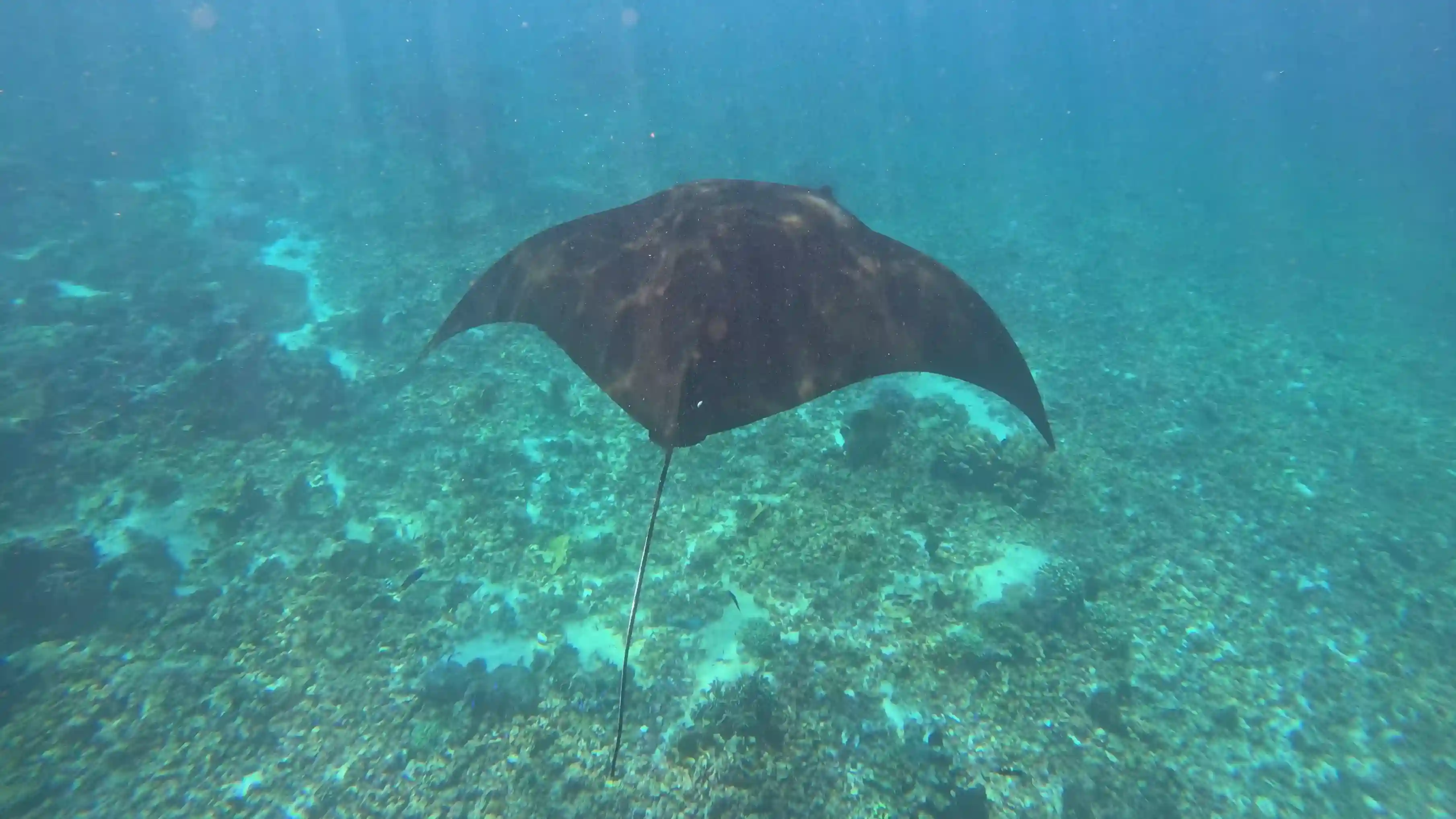
Quick Answer: Komodo’s manta rays thrive year-round with seasonal peaks: April-November (dry season) offers highest encounter reliability when consistent currents deliver nutrient-rich water attracting large manta aggregations. December-March encounters decline but remain possible during optimal lunar phases and current conditions. The iconic Manta Point in southern Komodo provides most accessible encounters, while northern sites like Manta Alley and Makassar Reef offer alternative locations. Understanding seasonal patterns, lunar cycles, and site-specific dynamics optimizes your manta encounters during diving and snorkeling.
Understanding Komodo’s Manta Ray Seasons
Manta rays, among Earth’s most elegant creatures, represent one of diving and snorkeling’s most profound marine encounters. These gentle giants, sometimes spanning seven meters, inspire awe through their combination of imposing size and graceful movement. Komodo National Park provides some of the world’s most reliable manta ray encounters, with specific seasonal windows maximizing encounter probability.
Unlike migration-based seasonal patterns, Komodo’s manta presence depends primarily on food availability. These rays consume massive quantities of plankton (microscopic organisms) requiring specific oceanographic conditions creating plankton blooms and concentrations. Understanding the relationship between current patterns, nutrient delivery, and plankton availability reveals when and where mantas congregate in greatest numbers.
The Komodo region’s position at the convergence of major ocean currents creates dramatic tidal movements delivering nutrient-rich deeper water to surface zones. These upwelling events, following predictable seasonal patterns, determine food availability and consequently manta movements and aggregation timing. Sophisticated travelers timing their Komodo liveaboards to align with manta season optimize encounter probability substantially.
Month-by-Month Manta Presence Breakdown
April-May: Early Dry Season Peak Season
April and May represent exceptional manta season months. The transition from wet to dry season initiates strong current patterns delivering nutrient-rich water to Komodo’s shallower zones. Plankton blooms intensify, attracting manta aggregations approaching or sometimes exceeding dozens of individuals at prime feeding locations.
Encounter probability reaches 80%+ at optimized sites during these months, making early dry season ideal for travelers prioritizing manta encounters. Weather remains generally favorable with occasional lingering wet-season storms diminishing rapidly as May progresses toward peak dry season. Liveaboards booking during these months report consistently exceptional manta encounters across repeated dive sites.
The abundance allows repeated manta encounters throughout trips. Rather than single spectacular manta sighting, multiple encounters during single dives occur regularly. This frequency builds familiarity with specific manta individuals (researchers recognize unique manta spot patterns like whale shark stripes), sometimes observing same individuals during sequential dives as they patrol familiar feeding territories.
June-August: Peak Dry Season
June through August represent peak dry season with strongest consistent currents and most reliable plankton delivery. These months offer optimal diving conditions—calm seas, excellent visibility, minimal rainfall, and powerful manta aggregations. Popular liveaboards frequently book entirely for July-August, making early booking essential for premium operator access.
However, peak season brings elevated prices (20-40% higher than shoulder seasons), crowded dive sites, and less peaceful experiences. Multiple liveaboards sometimes arrive simultaneously at popular manta sites, creating competitive diving environments rather than intimate wildlife encounters. Travelers seeking less-crowded experiences might sacrifice encounter probability for shoulder-season comfort and cost savings.
Manta encounters remain excellent despite crowds. The rays’ abundance during peak season compensates for site competition. Skilled dive masters coordinate multiple groups ensuring everyone achieves manta sightings even with numerous divers present. Peak-season trades solitude for reliability—virtually guaranteed manta encounters despite compromised exclusivity.
September-October: Shoulder Season Excellence
September-October offer ideal shoulder-season timing: strong dry-season conditions persist while prices decline and crowds diminish compared to July-August peaks. Currents remain robust, plankton delivery continues reliably, and manta encounters remain excellent (75%+ probability).
Many experienced travelers consider September-October superior to peak season. You’ll experience excellent manta encounters while enjoying more peaceful diving, better interactions with crew (reduced pressure from overcrowded schedules), superior underwater photography conditions (fewer competing divers), and cost savings (15-25% cheaper than July-August). Shoulder-season liveaboard bookings represent exceptional value for quality-focused travelers.
September transitions toward wetter conditions as dry season concludes, though Komodo’s “wet” season remains quite dry compared to many Indonesian regions. October maintains excellent conditions throughout the month. By late October, early wet-season weather systems occasionally develop, but most days remain ideal diving conditions.
November: Late Dry Season Transition
November represents late dry season with lingering strong conditions but occasional increasing cloud cover and wind. Manta encounters remain good (65-75% probability) through most of November, declining toward month’s end as currents weaken and plankton delivery diminishes. Early November maintains excellent conditions; late November shows declining reliability.
Weather increasingly becomes variable—occasional rough days appear interspersed among calm days. Liveaboards maintain flexibility regarding site selection, with experienced captains identifying best current conditions and manta probability daily. The variability, while occasionally inconvenient, creates less-crowded experiences and reduced pricing compared to peak-season months.
December-March: Wet Season
Wet season (December-March) presents challenging manta encounter conditions. Weakened currents reduce nutrient delivery and plankton concentrations. Cloud cover increases, reducing visibility. Occasional rough seas limit diving operations. Encounter probability drops to 30-50% depending on specific weeks and lunar alignment.
However, wet season shouldn’t be dismissed entirely. Specialized knowledge of favorable conditions within wet months reveals occasional excellent opportunities. New and full moon periods create stronger tidal forces occasionally generating conditions supporting plankton aggregations. Some wet months experience “false peaks”—brief periods of excellent conditions interspersed within generally challenging seasons.
Wet-season plankton blooms, while less consistent than dry-season patterns, sometimes create spectacular encounters when conditions align. Additionally, wet-season pricing drops dramatically (40-50% cheaper than peak season), appealing to budget-conscious travelers willing to accept lower encounter probability for cost savings.
Best Sites for Manta Ray Encounters
Manta Point: The Iconic Location
The Manta Point site represents Komodo’s most famous manta-encounter location. This southern-zone location features consistent upwelling creating reliable plankton delivery throughout seasons. The site’s reputation stems partly from excellent manta reliability but equally from accessibility—the site accommodates both divers and snorkelers, requires manageable dive certifications, and features reliable visibility.
Manta Point’s depth ranges (typically 8-18 meters) work equally for recreational divers and advanced snorkelers. Divers descend to reef zones observing feeding mantas from multiple angles; snorkelers observe silhouettes gliding beneath them. Both perspectives deliver magnificent experiences, expanding accessible audience far beyond diving-exclusive depths.
The site’s popularity has produced well-established protocols maximizing encounter probability while protecting ray populations from excessive disturbance. Operators follow strict guidelines—maintaining distance, avoiding direct chasing, and limiting group size at specific times. These protocols, born from years of observation and conservation focus, ensure sustainable manta viewing preserving population health for future generations.
Manta Alley: Alternative Northern Encounters
Manta Alley, located in Komodo’s northern zone, offers alternative manta encounters with potentially less competition than Manta Point. The site’s challenging conditions—stronger currents, deeper depths, more technical requirements—limit diver numbers compared to Manta Point, creating more peaceful wildlife encounters for experienced underwater travelers.
The site’s name derives from the concentration of mantas moving through this channel location during strong current periods. When conditions align, Manta Alley delivers spectacular multiple-manta encounters rivaling or exceeding Manta Point reliability. The challenge involves timing—the site functions optimally during specific tidal windows requiring precise navigation and current knowledge.
Manta Alley suits experienced divers comfortable with strong currents, deeper water, and technical diving requirements. Your liveaboard operator determines whether to visit Manta Alley based on diver experience and current conditions. The challenge, while somewhat restricting access, rewards those capable of managing it with potentially more dramatic encounters and peaceful diving environments.
Makassar Reef: Productive Alternative Location
Makassar Reef, another significant Komodo diving location, provides occasional productive manta encounters alongside other marine life diversity. The site doesn’t match Manta Point’s encounter reliability but offers excellent value through combination manta encounters plus diverse reef exploration.
Makassar Reef provides opportunity for flexible manta pursuit. Rather than site-specific manta focus, you explore comprehensive reef ecosystems occasionally rewarded with manta sightings. This approach suits divers interested in diverse marine life observation rather than manta-exclusive focus. The site’s accessibility accommodates recreational divers without limiting to specialized technical requirements.
Understanding Manta Behavior and Ecology
Feeding Behavior and Filter-Feeding Mechanics
Manta rays are filter feeders consuming microscopic plankton through specialized gill mechanisms. Rather than hunting prey, they actively feed on plankton-rich water columns, performing distinctive barrel-roll movements creating water vortices concentrating plankton into mouth openings. This feeding behavior, while invisible in detail, manifests as their graceful rolling movements through water—one of diving’s most enchanting wildlife observations.
Understanding manta feeding behavior contextualizes encounter significance. These gentle giants consume millions of plankton daily, playing essential roles in marine ecosystem regulation. Their massive size contrasts dramatically with their diet of microscopic organisms—a juxtaposition emphasizing their non-threatening nature and herbivorous lifestyle despite intimidating physical dimensions.
Seasonal plankton blooms concentrate mantas through abundance attraction rather than active migration. When plankton concentrations peak, mantas gather in specific locations. When food availability declines, mantas disperse seeking alternative feeding zones. This dynamic relationship explains seasonal encounter variation and site-specific reliability patterns across Komodo’s geography.
Manta Biology and Population Dynamics
Manta rays grow throughout lives, theoretically achieving seven-meter wingspans, though most observed individuals remain 4-5 meters. They produce small numbers of offspring (typically one pup per 2-3 years), making population growth slow. This reproductive inefficiency means manta populations are vulnerable to overfishing and environmental disruption—factors that conservation efforts throughout Komodo prioritize protecting.
Researchers identify individual mantas through unique spot patterns on their ventral (undersurface) areas—similar to fingerprints or whale shark patterns. Repeated observations of specific individuals reveal individual behaviors, migration patterns, and site preferences. Some mantas appear reliably at Manta Point seasonally; others demonstrate broader geographic ranges.
Population health monitoring occurs through ongoing research coordinated by conservation organizations and dive operators. When you encounter mantas, you’re participating in wildlife experiences supported by protective frameworks ensuring sustainable observation practices prioritizing animal welfare alongside human enjoyment. This conservation focus distinguishes responsible Komodo operations from less-scrupulous tourism that prioritizes profits over ecosystem protection.
Lunar Cycles and Tidal Influences on Manta Activity
Spring Tides and Manta Aggregation
Lunar phases dramatically influence Komodo’s tidal patterns and consequently manta activity. Spring tides (occurring during new and full moons) generate maximum current strengths creating optimal conditions for nutrient upwelling and plankton concentration. These lunar phases typically align with peak manta activity and encounter probability.
Dive operators maintain lunar calendars, scheduling high-priority manta dives during spring-tide windows. When planning your Komodo adventure, inquiring about lunar timing relative to your trip dates helps optimize manta encounter probability. Many travelers align Komodo booking specifically with new or full moon periods, accepting date inflexibility in exchange for maximized manta probability.
The relationship between lunar phases and manta aggregation works seasonally—spring tides during wet season produce weaker effects than spring tides during dry season. Maximum manta encounters occur when spring tides align with dry season conditions, combining tidal-force intensity with seasonal current strength. These rare alignments (specific new or full moons during April-November) represent absolute peak manta-encounter windows.
Neap Tides and Secondary Considerations
Neap tides (quarter moon periods) generate weakened current patterns with reduced nutrient upwelling. While not ideal manta seasons, neap tides produce calmer diving conditions benefiting less-experienced divers. Manta encounters decrease significantly during neap tides, but manageable current conditions sometimes make diving more accessible and comfortable for broader diver categories.
Many operators maintain flexible scheduling allowing pivot toward alternative activities during neap-tide periods. Rather than forcing manta dives in suboptimal conditions, operators visit snorkeling-friendly sites, dive alternative reef ecosystems, or emphasize terrestrial activities. This flexibility ensures quality experiences throughout your trip regardless of lunar alignment relative to your travel dates.
Snorkeling vs. Diving for Manta Encounters
Snorkeling Advantages and Experience Differences
Manta encounters work equally for snorkelers and divers. Snorkelers observe mantas from surface perspective, watching their silhouettes glide beneath the surface. The experience—floating above passing giants—combines awe with accessibility. Snorkelers breathing continuously from surface air can remain observing indefinitely, while divers limit bottom time through air consumption and nitrogen loading considerations.
The absence of technical equipment complexity makes snorkeling appealing for travelers nervous about diving or lacking certification. Many liveaboards accommodate non-divers enthusiastically, including multiple dedicated snorkeling sessions targeting manta sites. Families with young children often prioritize snorkeling manta encounters, providing memorable wildlife experiences accessible to broader age ranges than diving permits.
Snorkeling manta encounters sometimes exceed diving intensity through prolonged observation periods. Rather than 40-50 minute dives, snorkelers observe mantas for hours if willing, tracking individual animals across multiple surface intervals and documenting repeated behaviors. This extended observation builds profound understanding and connection to observed animals, sometimes surpassing quick diver encounters despite reduced depth perspective.
Diving Advantages and Technical Perspectives
Diving offers advantages through depth perspective and intimate proximity. Divers descend to deeper manta aggregation zones, observing feeding behavior from multiple angles and positioning. The three-dimensional underwater perspective reveals details invisible from surface observation—gill structure, fin movement subtleties, and interaction dynamics between multiple individuals feeding simultaneously.
Underwater photography from diving perspective captures dramatic angles often superior to snorkel-surface positioning. The ability to descend directly beneath passing mantas creates photographic opportunities impossible from surface perspective. Photography-focused travelers frequently prioritize diving manta encounters for their superior image opportunities and dramatic underwater perspectives.
The challenge involves balancing technical diving demands with encounter goals. You’ll spend time descending, maintaining depth, managing buoyancy, and ascending—activities limiting net observation time compared to snorkeling. However, the enhanced perspective during active observation often compensates for reduced total time. Your choice depends on personal priorities—longer surface observation versus enhanced underwater perspective.
Seasonal Site Selection Strategy
Dry Season Approach: Maximizing Famous Sites
During dry season (April-November), liveaboards prioritize famous manta sites including Manta Point and alternative locations. The reliable conditions and high encounter probability justify site concentration. Multiple visits to primary locations across different dives sometimes reveal same individual mantas repeatedly, building recognition and understanding of specific animal behaviors.
Dry-season strategy emphasizes quality over quantity—fewer total sites but deeper exploration of each. Your itinerary might include Manta Point visits across 2-3 separate days, observing site ecology development and individual animal recognition improving across visits. This approach, contrasting with wet-season adaptability, maximizes encounter probability through focused site concentration.
Wet Season Approach: Flexible Opportunism
During wet season, liveaboards maintain flexibility regarding site selection. Rather than committing to manta-exclusive sites, operators assess daily conditions—current strength, visibility, plankton observation—and adjust accordingly. Some wet-season days produce unexpected excellent manta conditions; others require alternative activity selection.
Wet-season strategy emphasizes opportunism—identifying favorable condition windows and capitalizing on them. Rather than guaranteed manta encounters, you’re pursuing possibility while exploring diverse reef ecosystems. This approach appeals to flexible travelers comfortable with outcome uncertainty, willing to sacrifice encounter reliability for cost savings, lower crowd density, and broader activity diversity.
Conservation Considerations and Responsible Manta Tourism
Sustainable Viewing Practices
Responsible manta tourism requires strict guidelines protecting ray populations from disturbance and harassment. These guidelines—established through research and conservation effort—permit sustainable wildlife viewing while preserving animal welfare. When selecting liveaboards, prioritize operators demonstrating conservation commitment through manta-viewing protocol adherence.
Ethical practices include maintaining appropriate distance (generally 3+ meters from feeding mantas), avoiding direct chasing or blocking animal movement, limiting group sizes in specific areas, and respecting seasonal closure periods if implemented. These guidelines protect mantas from feeding disruption and stress-induced behavior alterations while ensuring consistent positive human-wildlife interactions.
Your participation in responsible tourism directly contributes to conservation. Operators enforcing protective guidelines maintain Komodo’s manta sustainability, enabling future generations to experience these magnificent animals. Every ethically-conducted encounter reinforces economic value of conservation—demonstrating that living mantas are more valuable than any alternative resource use.
Population Monitoring and Research Participation
Many liveaboard operators participate in manta research programs, documenting individual animals through photography and reporting sightings to scientific researchers. Travelers sometimes contribute to this research, photographing identifying features or noting behavioral observations. This citizen-science participation transforms vacation experiences into conservation contribution.
The research, while requiring minimal participant effort, generates valuable population health data informing conservation priorities. Understanding manta population dynamics, individual movement patterns, and population viability requires extensive observation across years and locations. Your casual documentation—a good photograph or behavioral note—contributes to broader understanding supporting protective policy development.
Photography Tips for Manta Encounters
Capturing Magnificent Moments
Manta photographs achieve dramatic visual impact through appropriate technique and positioning. Shoot with broad composition capturing the manta’s full wingspan in frame—conveying the animals’ impressive size. Include environmental context (coral reef or blue water background) rather than tight cropping reducing sense of scale.
Lighting profoundly impacts underwater photography. Backlit subjects (manta positioned between photographer and light source) create dramatic silhouettes emphasizing wing shape. Side-lit subjects reveal fine detail and texture. Front-lit subjects risk glare and overexposure. Observe light angle relative to your subject, adjusting positioning to optimize lighting for your photographic goals.
Movement documentation captures feeding barrel-rolls and dynamic swimming. Rather than single static shots, capture photo sequences documenting movement progression. In-water video complements still photography, documenting behavioral sequences impossible to convey through single frames. Many photographers combine video and still images for comprehensive documentation.
Equipment Considerations
Underwater cameras suitable for manta photography range from simple compact models ($200-$500) to sophisticated DSLR systems with specialized housings ($2,000-$5,000+). Most travelers successfully document mantas with modest equipment—smartphone housings or basic underwater cameras create acceptable photographs. Equipment investment should match realistic usage and photographic goals.
Consider renting specialized equipment rather than purchasing expensive gear rarely used outside specific trips. Many operators provide equipment rental or recommend reputable rental services. Renting eliminates expensive equipment investment while ensuring access to current technology. Experienced underwater photographers often travel with personal equipment; beginners typically benefit from operator-provided rental options.
Planning Your Manta Encounter Trip
Booking Timing and Seasonal Strategy
Plan Komodo manta adventures 2-3 months in advance, allowing adequate booking time without last-minute premium pricing. Identify your seasonal preference—peak-season reliability versus shoulder-season value versus off-season adventure—and align booking timing accordingly.
If manta encounters represent your primary trip goal, book during dry season (April-November), specifically targeting April-May or September-October for optimal balance of reliability and crowd levels. If flexible regarding manta probability, shoulder or wet seasons offer cost savings and less-crowded experiences while maintaining reasonable encounter possibility.
Book your liveaboard directly with operators rather than through intermediaries when possible, allowing direct discussion of seasonal timing, manta probability expectations, and itinerary customization matching your specific interests and flexibility tolerance.
Realistic Expectations and Contingency Planning
Approach manta encounters with realistic expectations. Even peak season doesn’t guarantee encounters—occasional visits to prime sites produce no manta sightings despite optimal conditions. Approaching mantas as likely highlights rather than guaranteed achievements prevents disappointment while maximizing enjoyment of inevitable encounters.
Plan diversified activities ensuring trip satisfaction regardless of manta outcomes. Excellent diving, snorkeling, hiking, and cultural experiences occur independently of manta sightings. Travelers focused exclusively on mantas sometimes experience disappointment; those prioritizing comprehensive Komodo experiences discover mantas as wonderful bonuses complementing already-excellent adventures.
Frequently Asked Questions About Komodo Manta Rays
What’s the best month for virtually guaranteed manta encounters?
No month guarantees mantas, but April-May offer highest probability (80%+ at optimal sites). These months combine peak dry-season current strength with enthusiastic manta aggregations. September-October also offer excellent probability (75%+) with fewer crowds. July-August, while popular, don’t inherently offer superior encounter probability—they succeed through consistency rather than exceptional reliability. Book April-May for ultimate encounter confidence; September-October for optimal balance of reliability and experience quality.
Can I see mantas snorkeling or must I dive?
Snorkeling mantas is absolutely possible and equally spectacular. Manta Point accommodates snorkelers and divers equally. Many snorkelers consider surface observation of these gentle giants superior to diving perspectives. If you lack diving certification or prefer snorkeling, specifically book snorkeling-focused liveaboards accommodating non-divers. Your manta encounters won’t suffer from snorkeling rather than diving—both perspectives deliver magnificent experiences.
How close do mantas come to divers or snorkelers?
Mantas exhibit variable comfort with humans. Some approach within arm’s reach, seemingly unconcerned with observer presence. Others maintain greater distance, observing divers before departing. The variation depends on individual animal temperament, previous human interactions, and feeding focus intensity. Never approach mantas directly—permit them to control distance. When feeding intensely, mantas sometimes accept closer observer proximity than when approaching a dive site. Let animals determine encounter distance while you maintain appropriate spacing.
Are manta rays dangerous or aggressive toward divers?
Mantas are entirely non-aggressive toward humans. Despite their imposing size, they’re filter feeders consuming plankton rather than hunting prey. Their feeding behavior sometimes brings them close to divers, but never with aggressive intent. No documented attacks on divers occur—mantas treat humans with indifference to mild curiosity. Fear of manta encounters is unfounded; they represent some of diving’s safest and most peaceful wildlife encounters.
What causes manta seasonality and why do they vanish in wet season?
Manta seasonality correlates with plankton availability driven by ocean current patterns and nutrient upwelling. Dry season’s strong, consistent currents deliver nutrient-rich deeper water to surface zones, supporting plankton blooms. Wet season’s weakened currents reduce nutrient delivery and plankton concentration, causing mantas to disperse toward alternative feeding zones. Rather than migration, mantas follow food availability—when plankton abundance declines in Komodo, they seek feeding opportunities elsewhere.
How many mantas might I encounter during single dives?
Encounters range from zero to double-digit mantas. Peak-season peak-site dives sometimes feature 5-10+ manta sightings. Typical peak-season encounters average 2-5 individuals per dive. Shoulder-season encounters average 1-3 mantas. Wet-season dives yield 0-2 mantas on average. These are rough averages—individual variability is substantial. Occasionally, slow dive sites during poor conditions yield no mantas; occasionally, brief excursions during perfect conditions produce extraordinary numbers. Approach with flexible expectations maximizing enjoyment regardless of outcomes.
Should I prioritize Manta Point or explore alternative manta sites?
If manta encounters represent primary trip goals, Manta Point is your safest choice—it’s reliability is exceptional and accessibility broad. However, if diving experience and comfort encourage exploration, alternative sites (Manta Alley, Makassar Reef) offer rewarding possibilities with less crowding. Discuss site selection with your liveaboard operator—experienced captains assess daily conditions and recommend optimal sites. Most liveaboards visit multiple manta sites, providing location diversity while maximizing encounter probability through operator expertise.
What should I bring for photographing mantas?
Underwater cameras appropriate for manta documentation range from smartphone housings ($30-$100) to dedicated underwater cameras ($200-$500) to professional DSLR systems ($2,000+). Rent or borrow equipment matching your photographic experience and goals rather than investing heavily in unfamiliar gear. Ensure adequate battery capacity and memory storage—underwater photography depletes batteries rapidly and generates high file volumes. Discuss equipment options with your liveaboard operator—most provide recommendations and rental services.