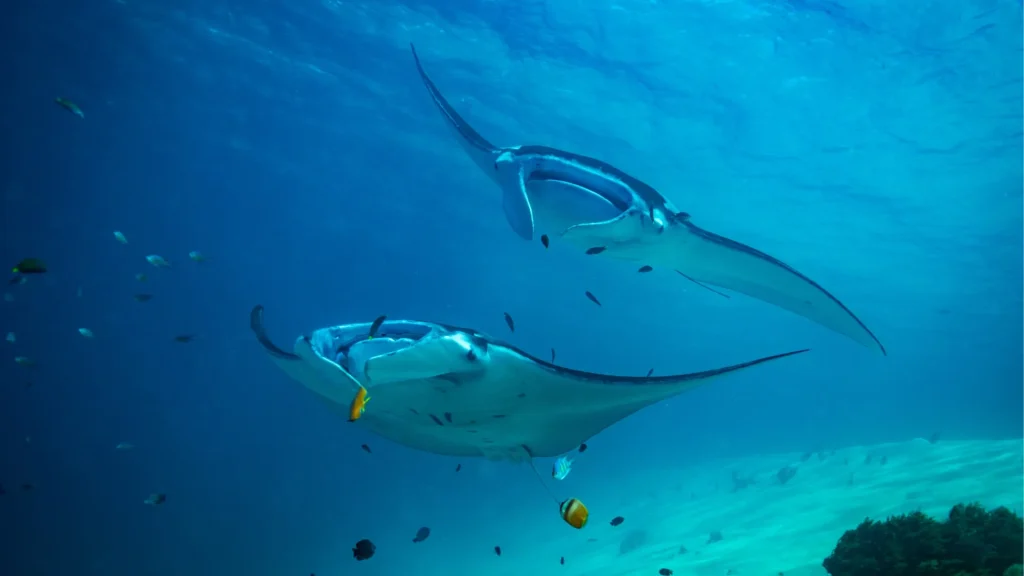
Near-Guaranteed Manta Encounters
Peak season (December–February) brings encounter rates above 90%, with experienced dive guides recognizing individual mantas by their markings and habits.
Explore Marine Life Guide
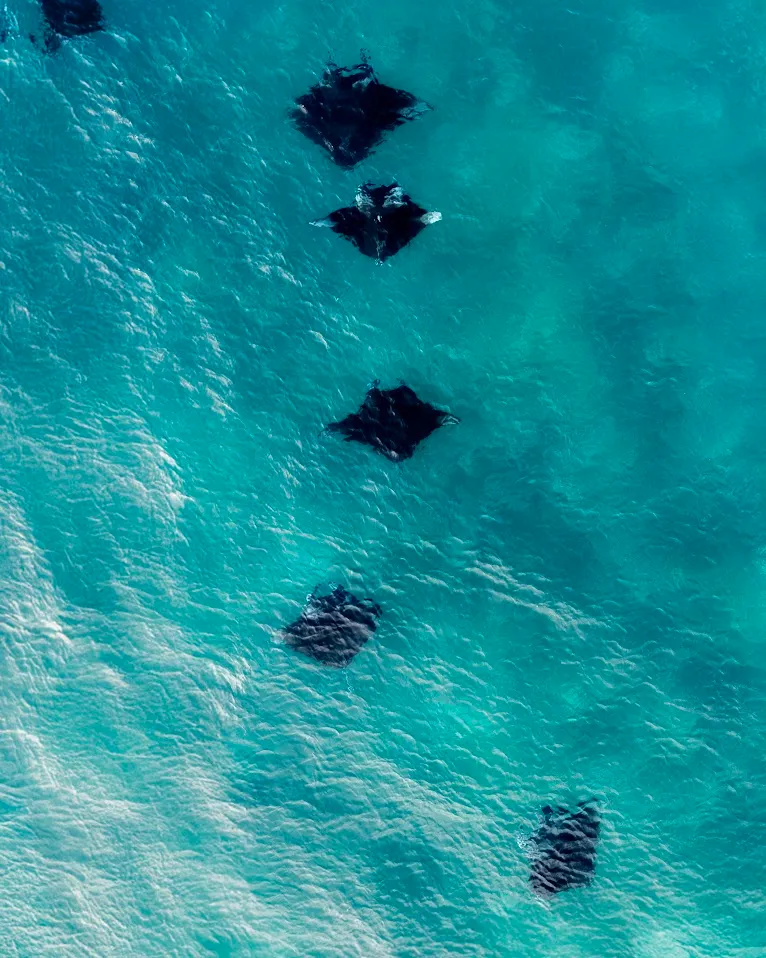
Quick Answer: Manta Alley is Komodo’s premier manta ray dive site, built around a natural cleaning station where mantas gather in number—especially December through February. A liveaboard trip gives you the timing and positioning that make these near-guaranteed encounters possible.
Manta Alley isn’t a single spot but a natural cleaning station where manta rays congregate with remarkable regularity, drawn by gentle topography, moderate currents, and abundant plankton.
The quality of encounters is what sets it apart: divers are often surrounded by multiple mantas performing barrel rolls and feeding in formation, visibly at ease with human observers.
Reef mantas here (Mobula alfredi) typically span 4–5.5 metres, occasionally more, using horn-like cephalic fins to funnel plankton-rich water into their mouths.
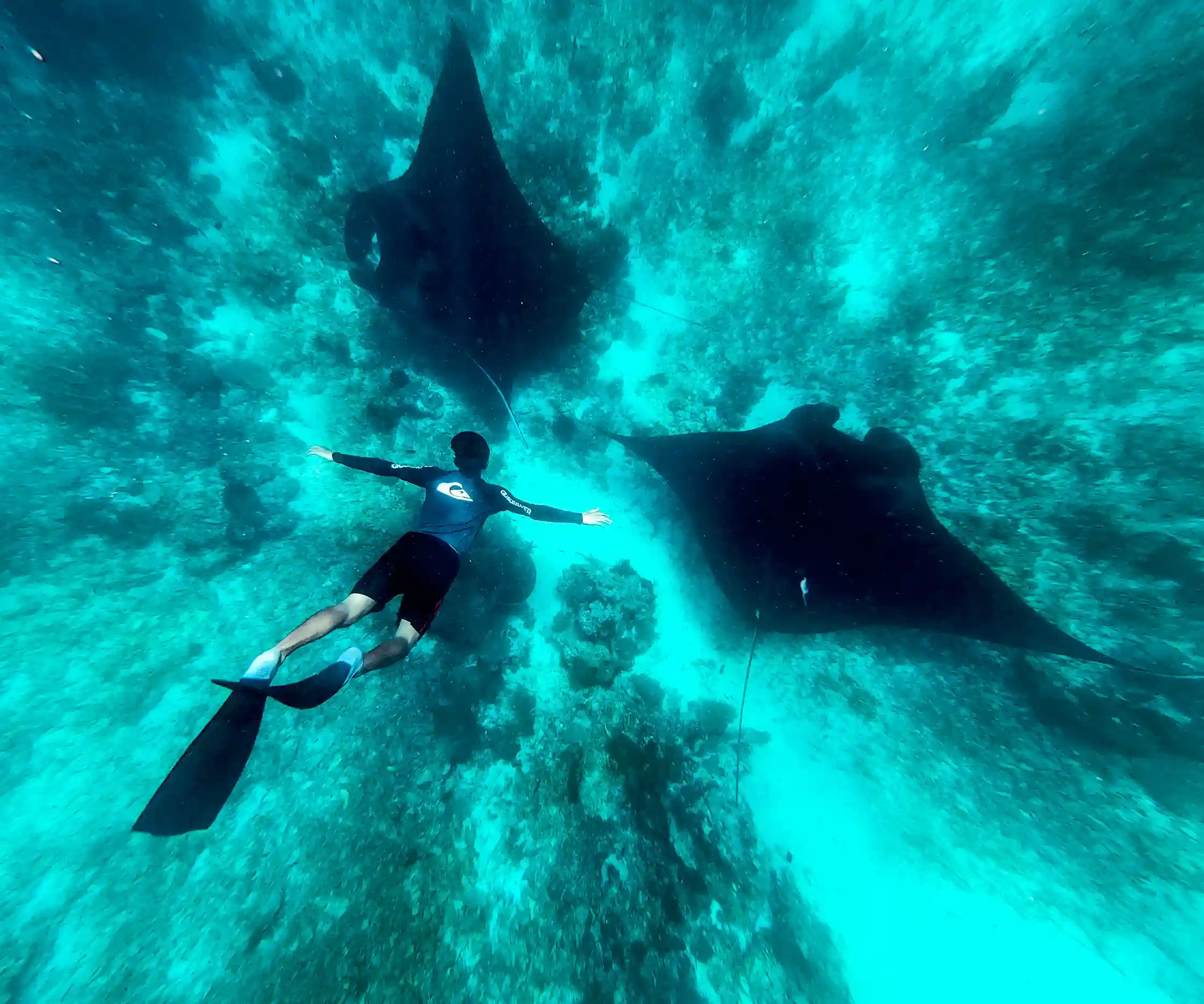
From near-guaranteed sightings to a symbiotic cleaning ritual playing out in real time, Manta Alley delivers Komodo’s most concentrated manta ray encounter.
Peak season (December–February) brings encounter rates above 90%, with experienced dive guides recognizing individual mantas by their markings and habits.
Explore Marine Life Guide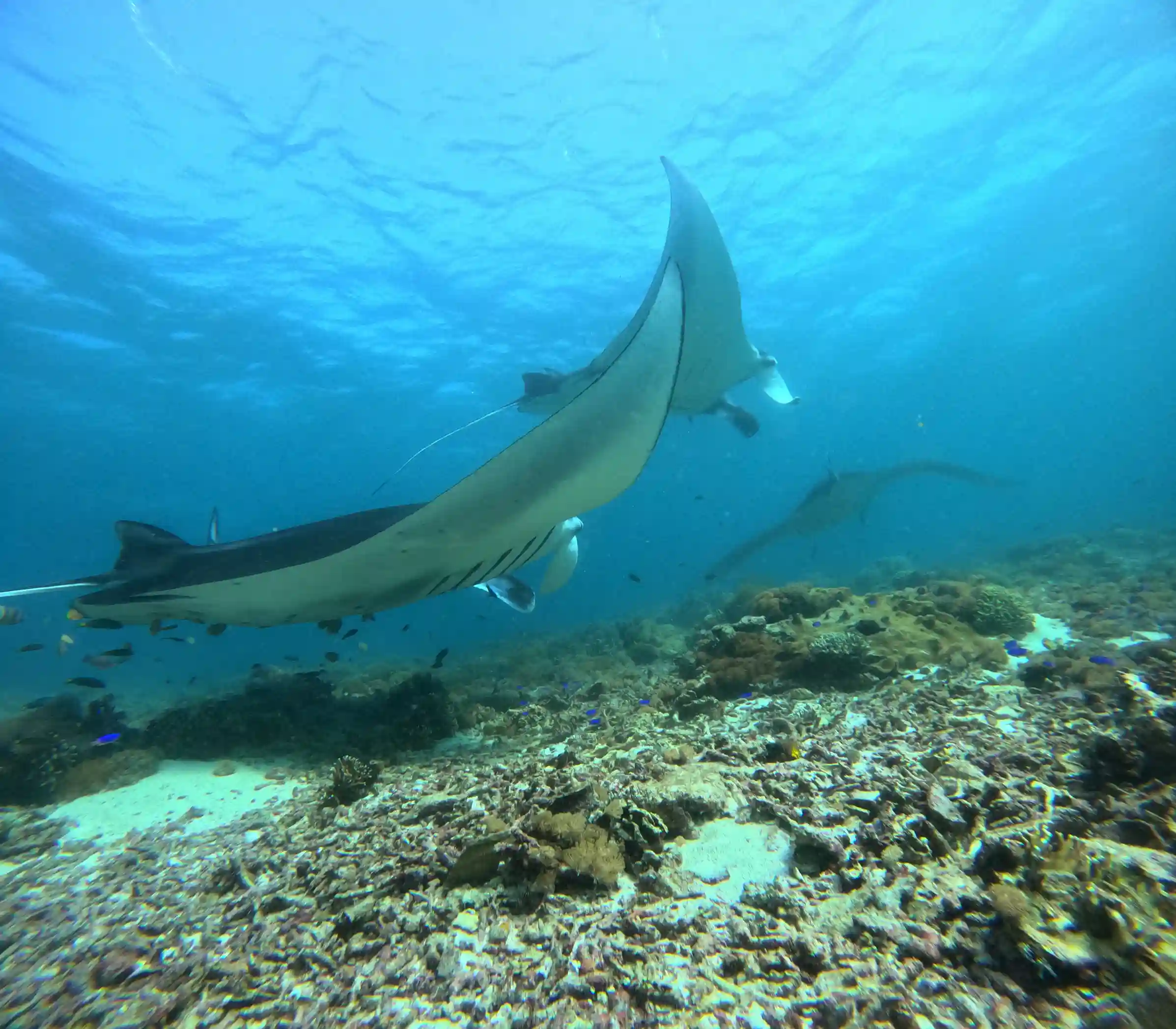
Wrasses and other cleaner fish pick parasites and dead skin from the mantas’ bodies—a symbiotic ritual mantas return to again and again.
Discover Dive Sites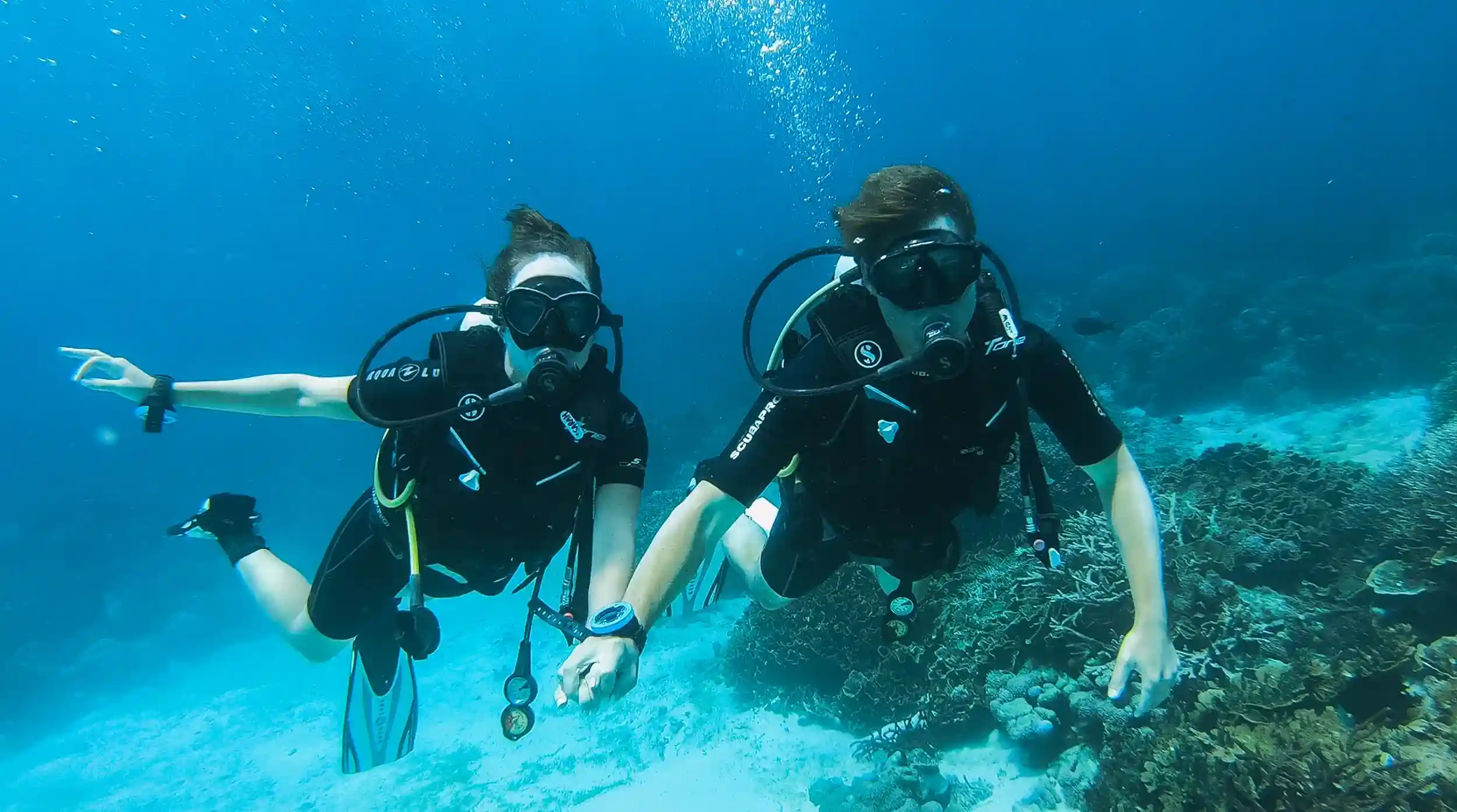
Snorkelers need no certification to watch mantas feed from the surface, while certified divers drop to 9–15 metres for a closer view of the cleaning station.
Explore Diving & Snorkeling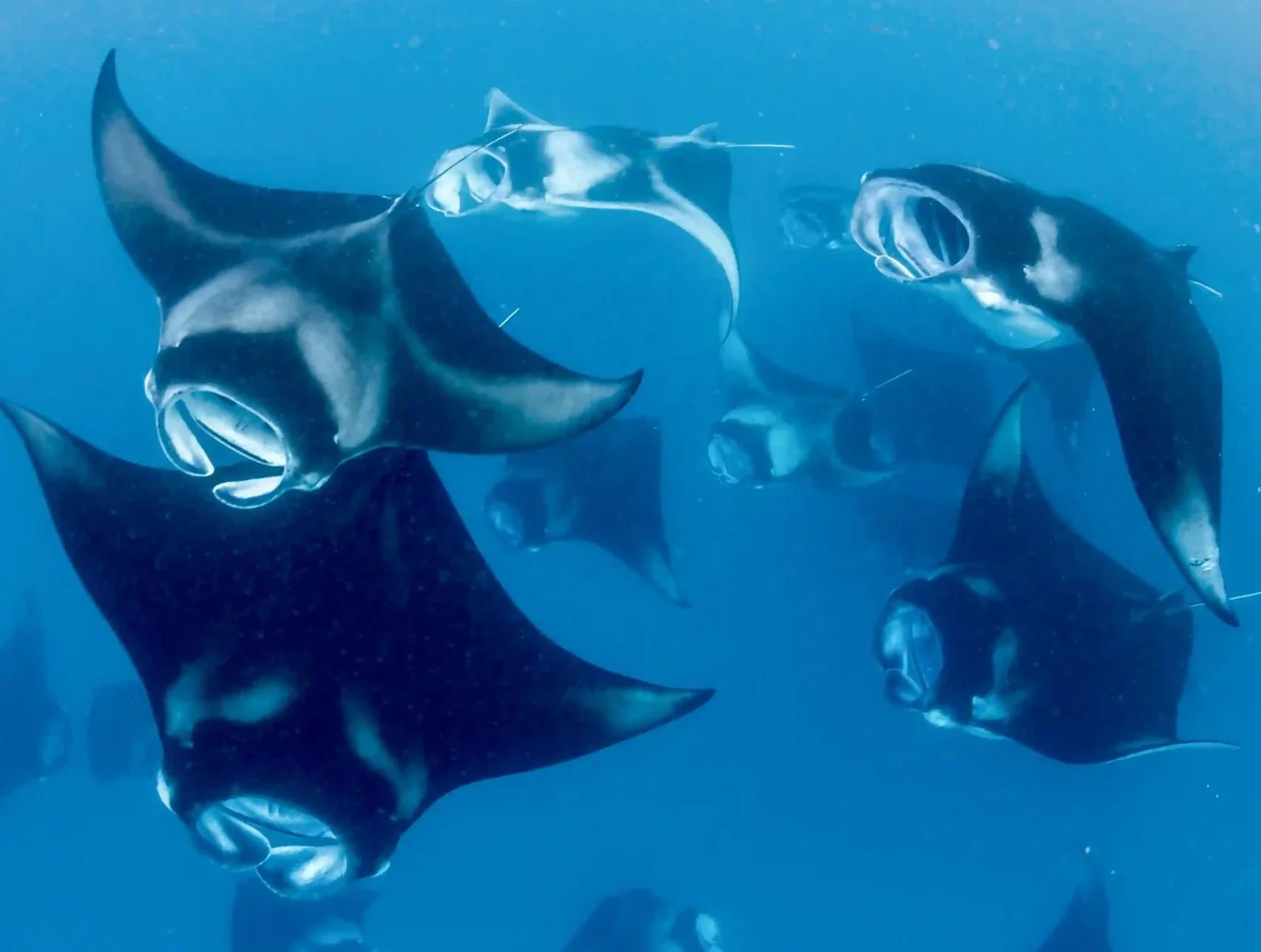
Wide-angle lenses (70–120°) suit the mantas’ size and typical approach distance, and Manta Alley’s clear water rewards even moderately experienced photographers.
Book Now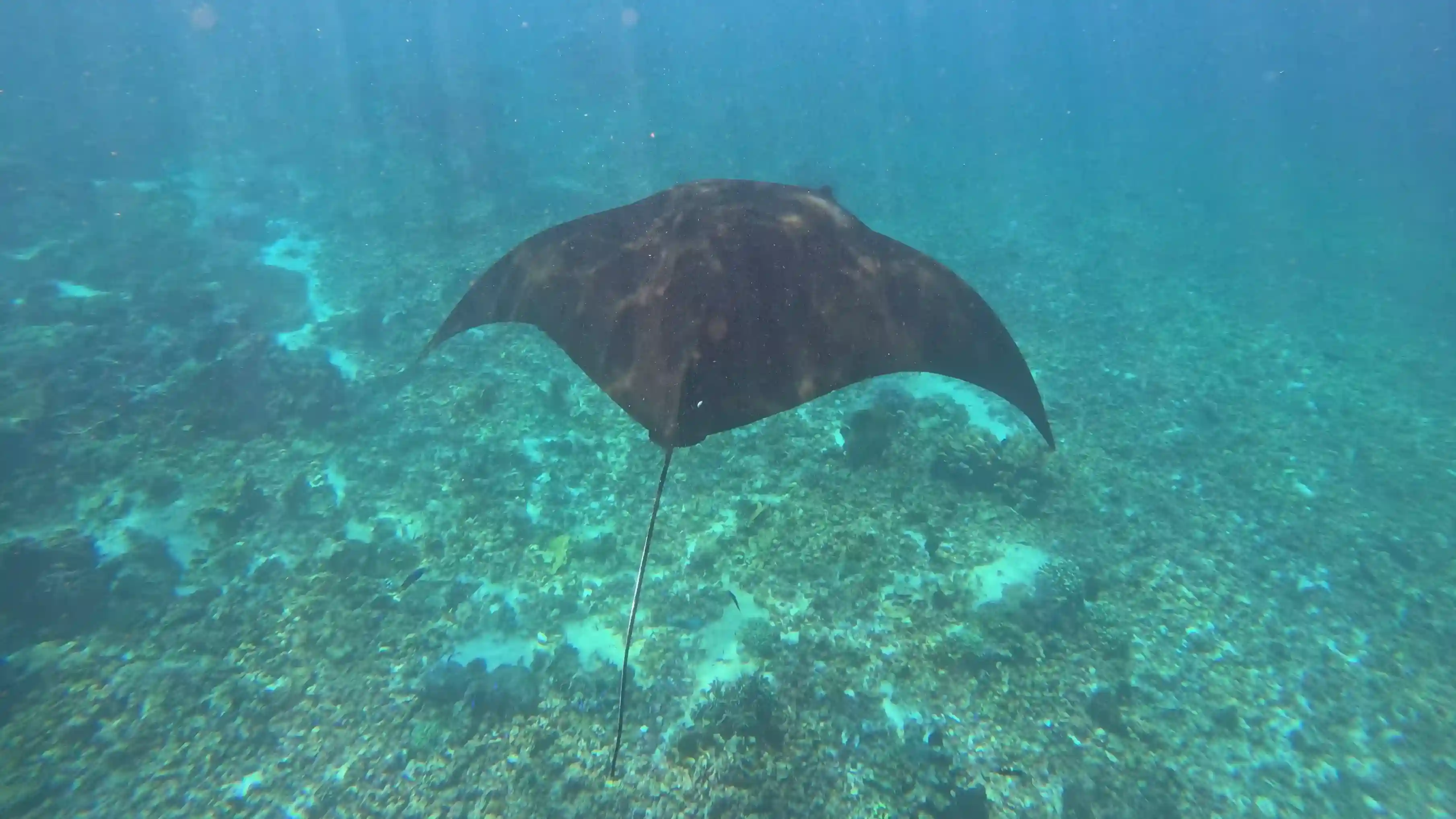
Liveaboard vessels anchor overnight near Manta Alley for predawn dives that beat the crowds and catch mantas at their most active—timing no shore-based day trip can match.
Manta Alley pairs naturally with nearby Manta Point and Makassar Reef on multi-day itineraries, alongside the full Komodo dive site directory.
Encounter rates exceed 90% during peak season (December–February) and stay above 80% through the shoulder months, based on data across multiple seasons and operators. Individual dives still vary, but the odds strongly favor a sighting.
Mantas often approach within 1.5–3 metres on their own during feeding, sometimes closer. Divers should hold back at least 4.5–6 metres and let the mantas set the distance.
Most operators require at least Open Water certification for dives at 9–15 metres in manageable currents; some prefer Advanced Open Water. Snorkeling needs no certification at all.
Peak season typically brings 12–18 metres of visibility, occasionally more. It can drop to 9–12 metres during heavy plankton blooms—which often means more manta activity, not less.
Years of calm, respectful diver behavior have made local mantas notably tolerant of human presence, though they’re never tame. Aggressive pursuit or contact still triggers an avoidance response, so passive observation keeps encounters positive.
Wide-angle lenses in the 70–120° range suit the mantas’ size and typical approach distance. Full-frame housings and strobes help, but good technique matters more than premium gear.
Gill-net fishing and fin harvesting historically hurt manta populations across Asian waters, though protections have since improved. Responsible dive tourism helps fund the research, patrols, and community programs that keep those protections working.
Liveaboards anchor overnight nearby, so guests catch predawn dives before the site gets busy and can shift timing to match real conditions. Day trips lose time to the boat transit and can’t offer that same flexibility.
Independent planning guides for Komodo National Park liveaboard trips, updated for the 2027 season.
Boats and departures are operated by Komodo Luxury — a registered Indonesian PT under Juara Holding Group Limited with 1,500+ verified guest reviews (4.9/5).