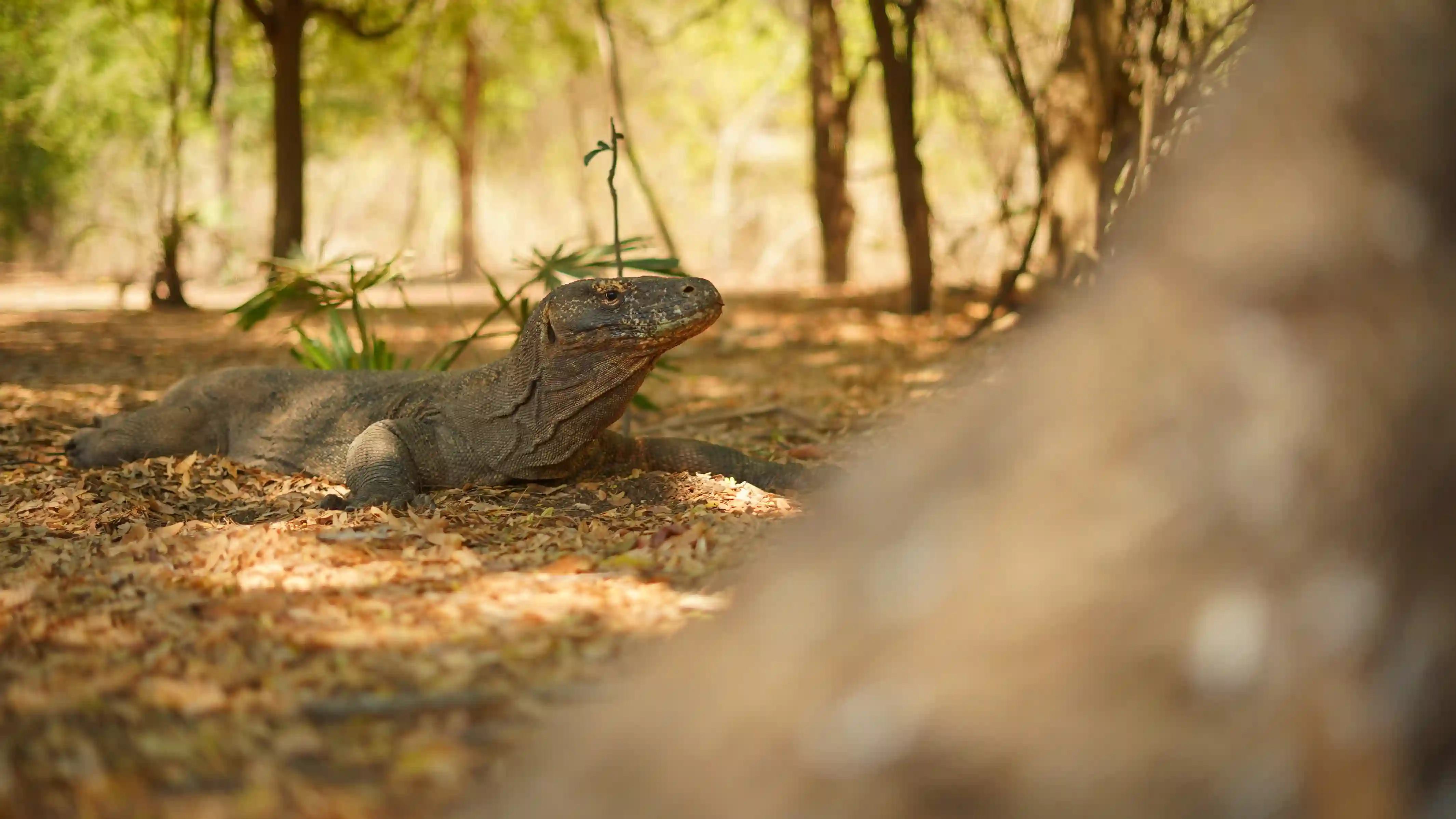
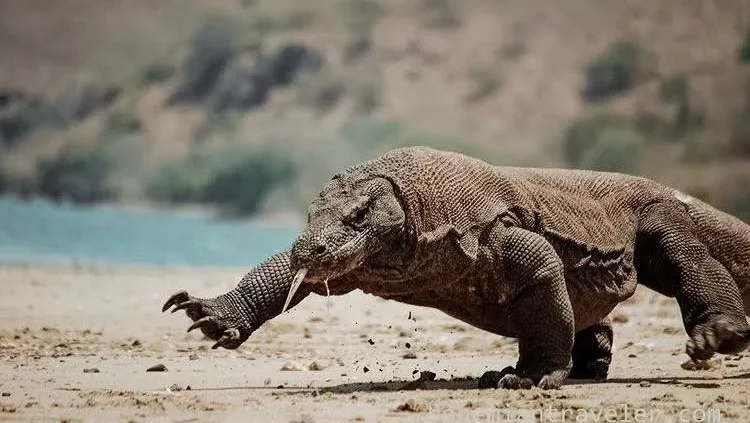
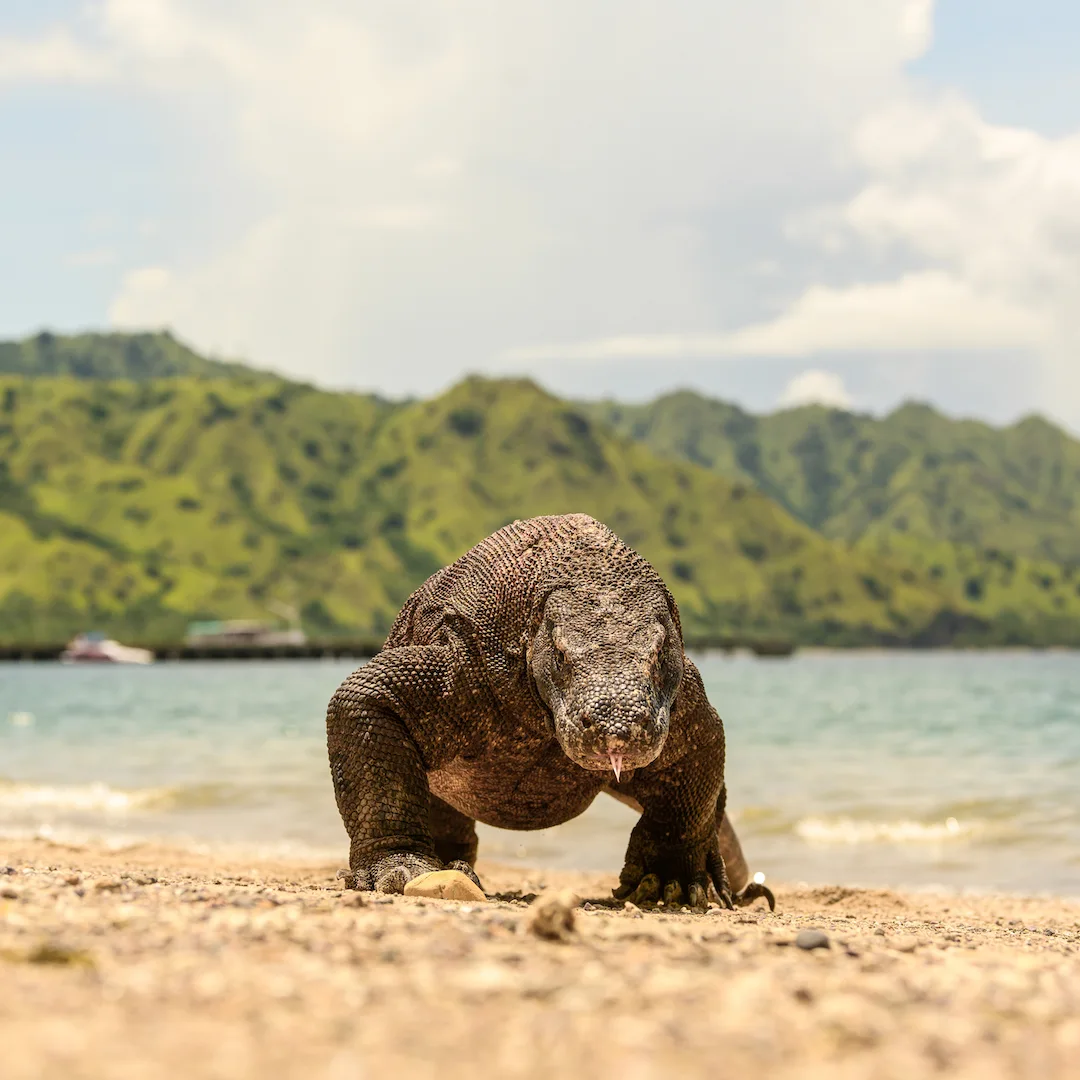
Wild Komodo dragon resting in dry forest in Komodo National Park
Wildlife

Komodo Dragon Facts: Species, Habitat & Trekking Rules

Quick Answer: Komodo dragons (Varanus komodoensis) are the world’s largest living lizards — up to 3 meters and 70+ kg — found only in Komodo National Park and a small pocket of western Flores. Wild dragons can only be seen on a ranger-guided trek, a highlight of any Komodo island liveaboard itinerary.

What Is a Komodo Dragon?

The Komodo dragon is a monitor lizard (family Varanidae) and the largest lizard alive today, a title held since Dutch official J.K.H. van Steyn first documented the species in 1910. Locals call it “ora” — an apex predator with armored, osteoderm-studded scales, a forked tongue for tracking scent, and serrated, blade-like teeth.

The species survives nowhere else on Earth outside Komodo National Park and a narrow strip of western Flores, which is exactly why every reputable Komodo liveaboard itinerary treats a ranger-led trek as a once-in-a-lifetime inclusion, not a side activity.

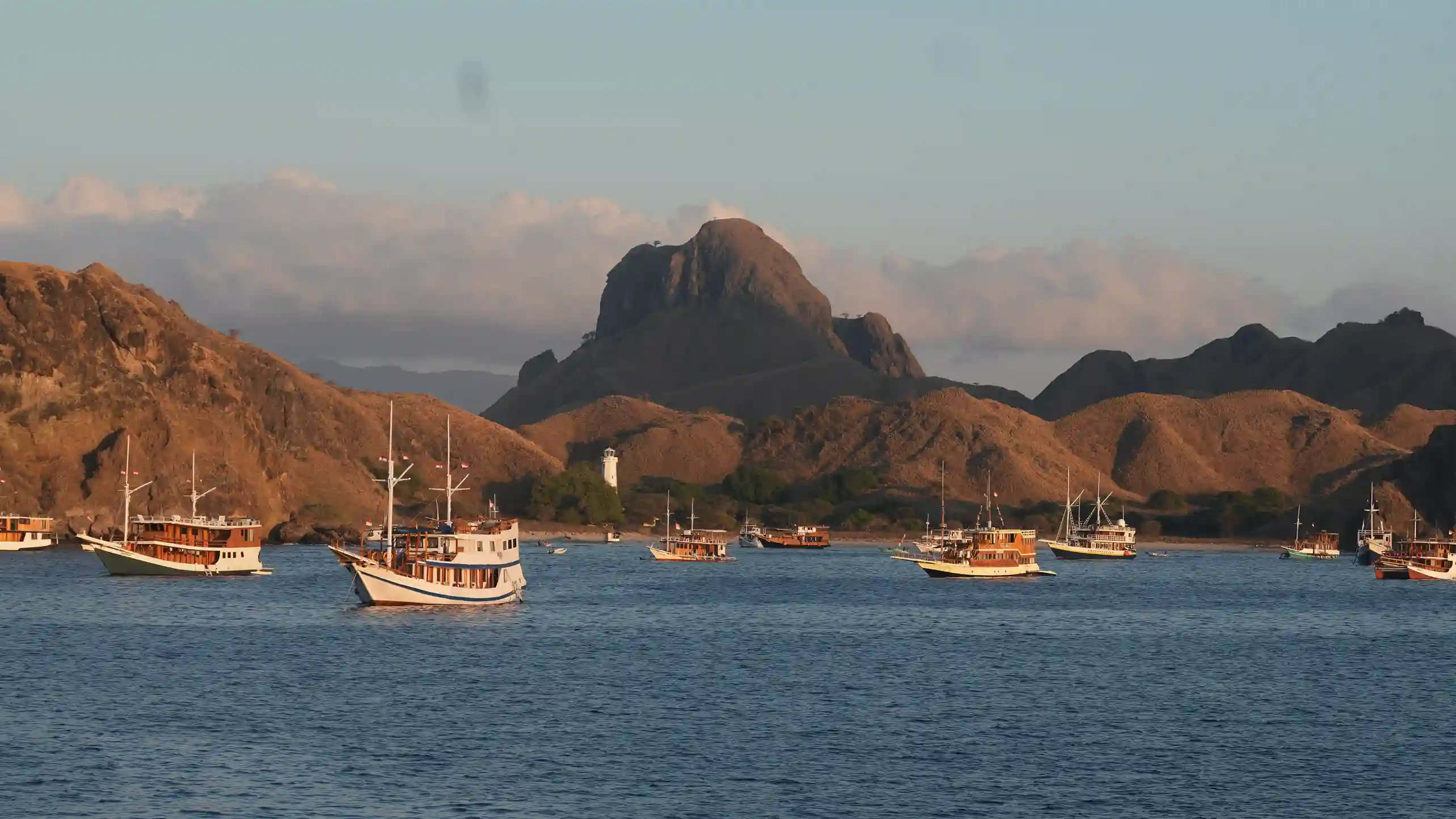
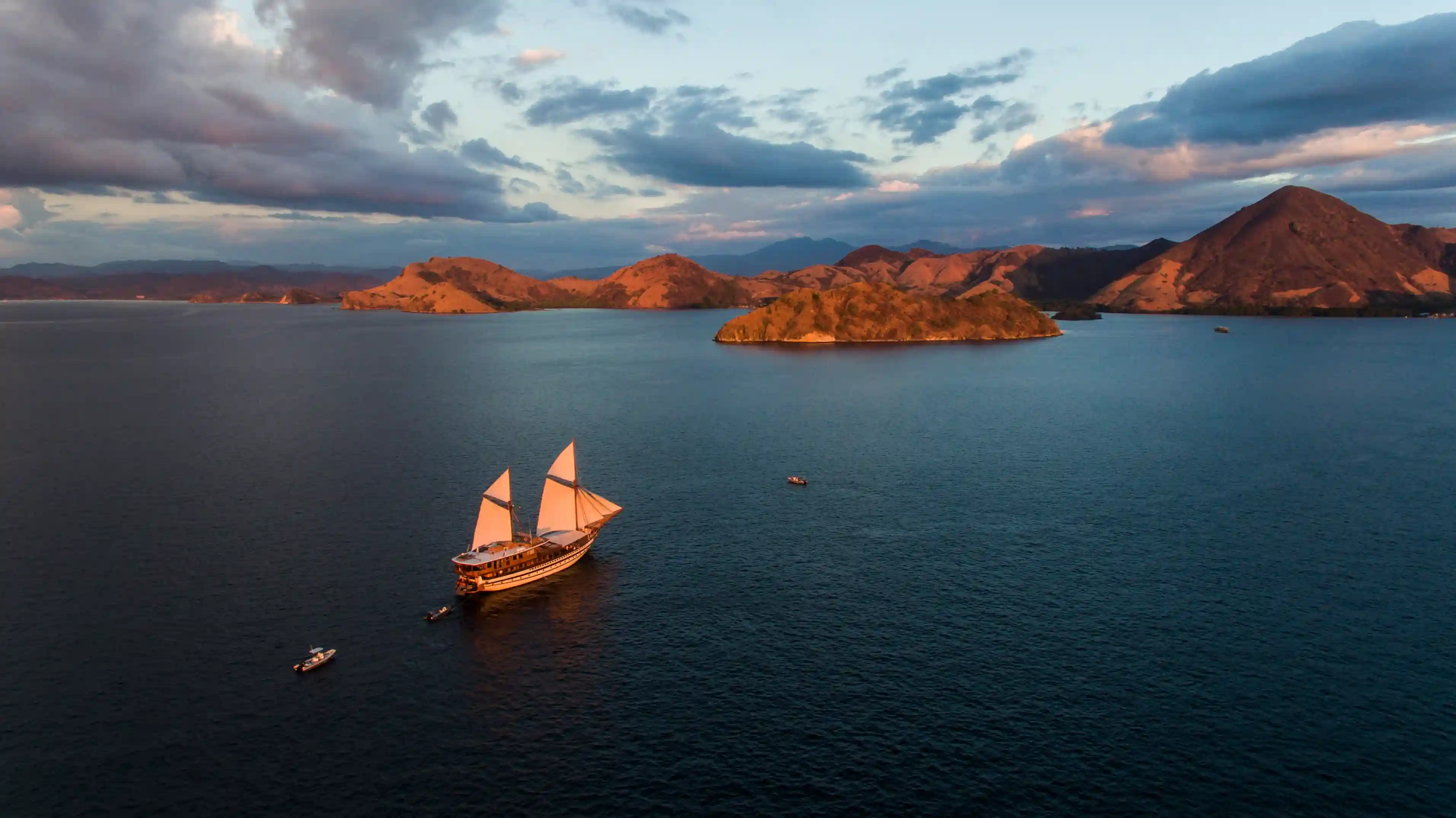
Boats anchored off the dry hills and coastline of Komodo National Park

Komodo Dragon Facts at a Glance

FactDetail
Scientific nameVaranus komodoensis
Local nameOra
FamilyVaranidae (monitor lizards)
Average lengthUp to 3 m (10 ft)
Average weightUp to 70–90 kg
Top speed (short burst)Up to 20 km/h
Lifespan in the wildAround 30 years
DietCarnivore — deer, wild boar, water buffalo, carrion
HabitatTropical savanna and monsoon forest
IUCN statusEndangered
Estimated wild populationRoughly 3,000–3,700 individuals
Where foundKomodo, Rinca, Gili Motang, Nusa Kode, western Flores

IUCN status was last updated in 2021; population and range figures are typical estimates and may shift slightly between sources.

The science of an apex predator

Biology, Habitat & Conservation

From the dry savanna where dragons hunt to the venom scientists only confirmed in 2009, here’s what makes the species remarkable — and increasingly vulnerable.

Komodo National Park Exploration | Komodo Island Liveaboard

Habitat & Range

Wild dragons roam dry savanna, lontar-palm groves, monsoon forest, and mangrove fringes across Komodo, Rinca, Gili Motang, and Nusa Kode, plus a separate population on western Flores that’s rarely visited. This tiny range is exactly why UNESCO named Komodo National Park a World Heritage Site.

Explore Komodo’s Destinations
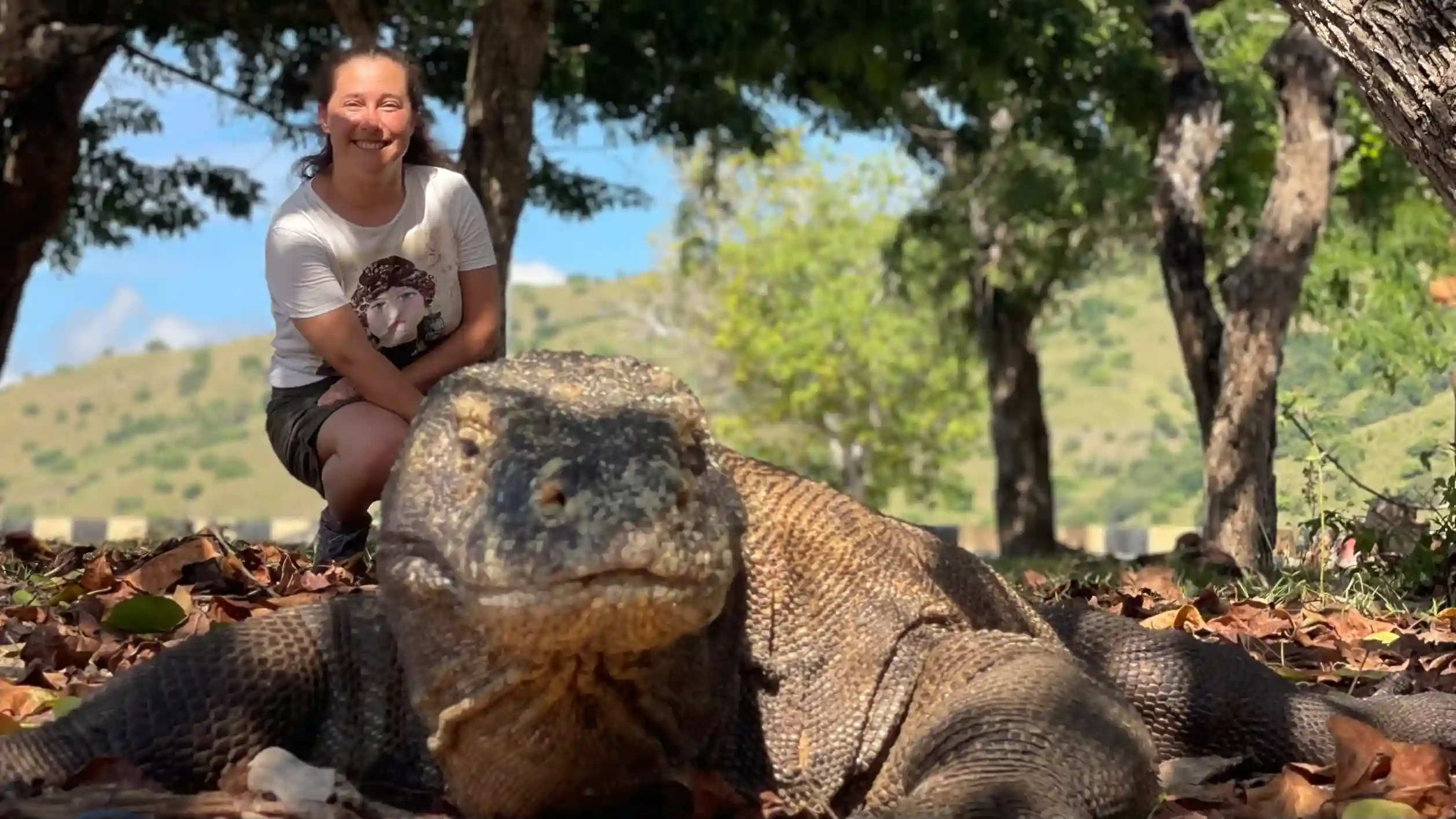
Komodo dragon in dry forest, the park's apex predator

Diet, Hunting & the Venom Discovery

Dragons ambush Timor deer, wild boar, and water buffalo in a short, explosive strike, then track wounded prey for hours or days by scent. Research led by biologist Bryan Fry in 2009 overturned the old “septic bacteria” myth, identifying venom glands that affect blood clotting and pressure alongside the bite’s serrated teeth.

See Komodo Island
Komodo dragon resting in its dry forest habitat

Reproduction, Lifecycle & Parthenogenesis

Females nest in reused scrubfowl mounds each dry season, laying roughly 20 eggs that incubate for seven to eight months before hatchlings retreat into the tree canopy for two to three years to avoid adult cannibalism. Remarkably, captive females have produced viable eggs without ever mating — a rare trait called parthenogenesis, first documented in UK zoos in the mid-2000s.

See Rinca Island
Phinisi liveaboard sailing at sunset near Komodo National Park's protected islands

Conservation Status

The IUCN reclassified the Komodo dragon from Vulnerable to Endangered in 2021, citing rising sea levels and human pressure on its already narrow range. Every liveaboard that runs trips into the park — ranger access included — is operating inside an active conservation zone, where trekking rules protect the species as much as the visitor.

View Liveaboard Options
Travelers on the bow of a liveaboard looking toward Komodo's islands
by Komodo Island Liveaboard

Ranger-Guided Trekking Is Mandatory

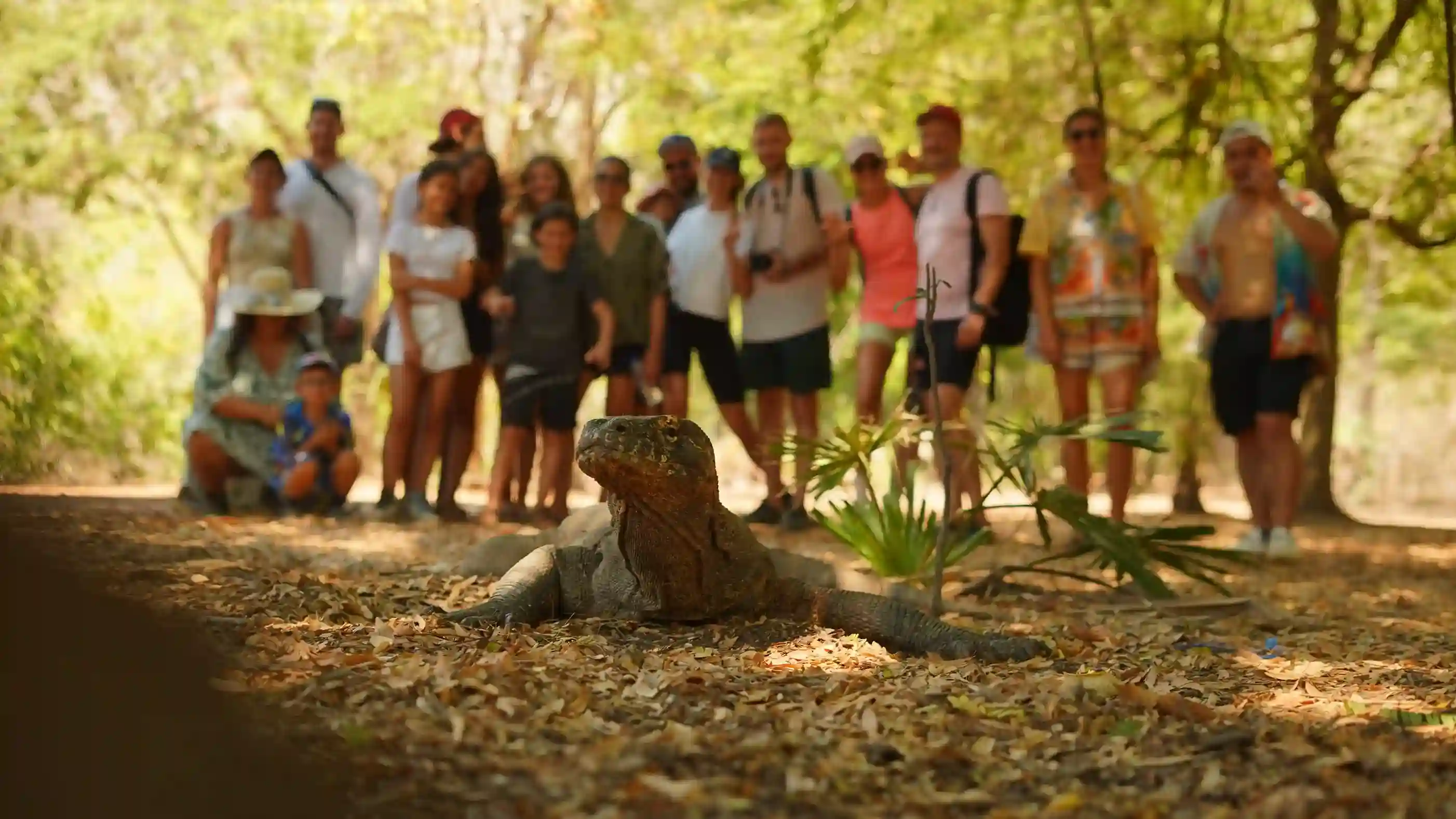
Wild Komodo dragons can only be viewed on foot, accompanied by an official park ranger — independent trekking isn’t permitted anywhere in the park, on Komodo or Rinca alike. Your boat crew coordinates with the ranger station on landing, and no group sets out without an assigned ranger carrying the traditional forked stick used to redirect dragons at a safe distance.

Groups stay small for safety, with roughly one ranger for every five visitors — dragons are wild, unpredictable predators, not zoo animals behind a fence. See our full FAQ hub for more first-timer trekking questions.

Planning a Dragon Trek

What Happens on the Trail

  • Your tender lands at Loh Liang (Komodo) or Loh Buaya (Rinca) for a ranger safety briefing, then splits into small groups of about five guests per ranger
  • The ranger picks a short, medium, or long loop based on fitness and recent dragon activity, leading a slow walk past nesting mounds and waterholes
  • Beyond dragons, expect Timor deer and wild boar on the savanna trail, with ranger-approved photos back at the visitor center

Best Island for Sightings

  • Komodo Island’s Loh Liang trail has the larger network and strongest historical sighting record; Rinca’s Loh Buaya trail is shorter and pairs well with a same-day stop at Padar Island or Pink Beach
  • Gili Motang and Nusa Kode hold wild populations too, but access is limited to specialist trips — whichever island your itinerary lands on first is the right call, since sightings vary daily regardless of location

Booking Requirements: Online Permits

  • As of 2026, all park entry — including dragon trekking permits — must be booked online through the official SiORA system; walk-in registration is no longer accepted
  • Most travelers never touch SiORA directly, since a liveaboard operator books permits, marine park fees, and ranger arrangements as part of the cruise package — see our Komodo liveaboard price guide for what's typically included

Frequently Asked Questions About Komodo Dragons

Wild Komodo dragon resting in dry forest in Komodo National Park

See a wild Komodo dragon for yourself on a ranger-guided trek.