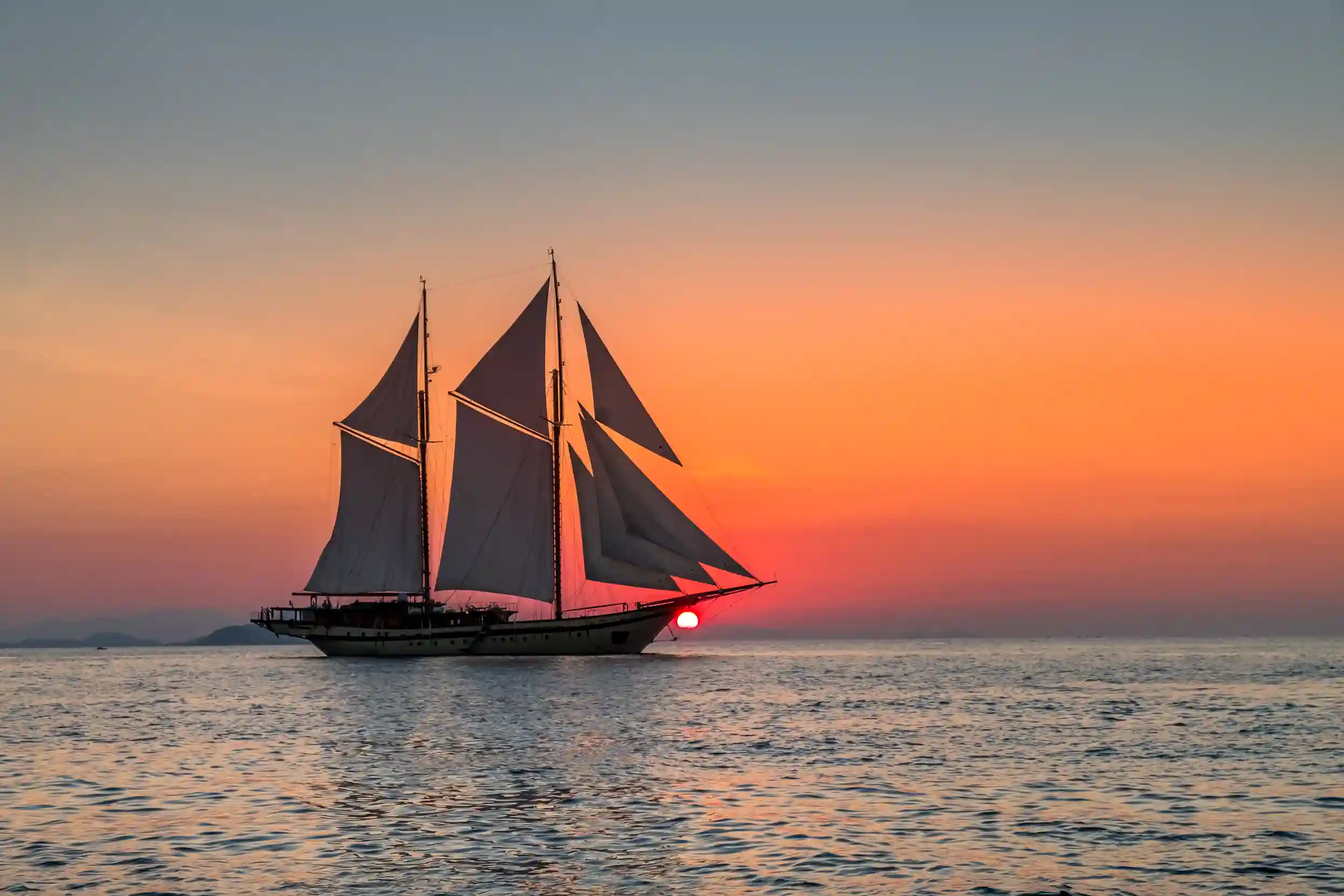
Silhouette of a phinisi liveaboard sailing at sunset in Komodo National Park
Guides

What Is a Komodo Liveaboard?

Quick Answer: A Komodo liveaboard is a multi-day boat trip where you sleep aboard a phinisi for one to eleven nights while it sails through Komodo National Park, stopping at a different dive site, snorkel spot, or island each day. Instead of a hotel, the boat itself is your accommodation, restaurant, and transport.

The Boat Is Your Hotel, Restaurant, and Transport

“Liveaboard” simply means you live aboard the vessel for the length of the trip rather than day-tripping from a land base. A Komodo liveaboard is almost always a traditional two-masted phinisi, rebuilt for tourism with cabins, a dining saloon, sun deck, and a dive platform at the stern.

Trips typically run 3 to 11 nights, covering ground a day-tripper simply cannot reach—Komodo National Park stretches roughly 40km north to south, from the calm coral channels around Gili Lawa to the nutrient-rich currents of Manta Alley and Cannibal Rock in the south.

Komodo Island Liveaboard, part of the Komodo Luxury network based in Labuan Bajo, curates these stay-aboard expeditions around a fixed daily rhythm—dive, eat, sail, repeat—with the crew handling navigation, permits, and logistics.

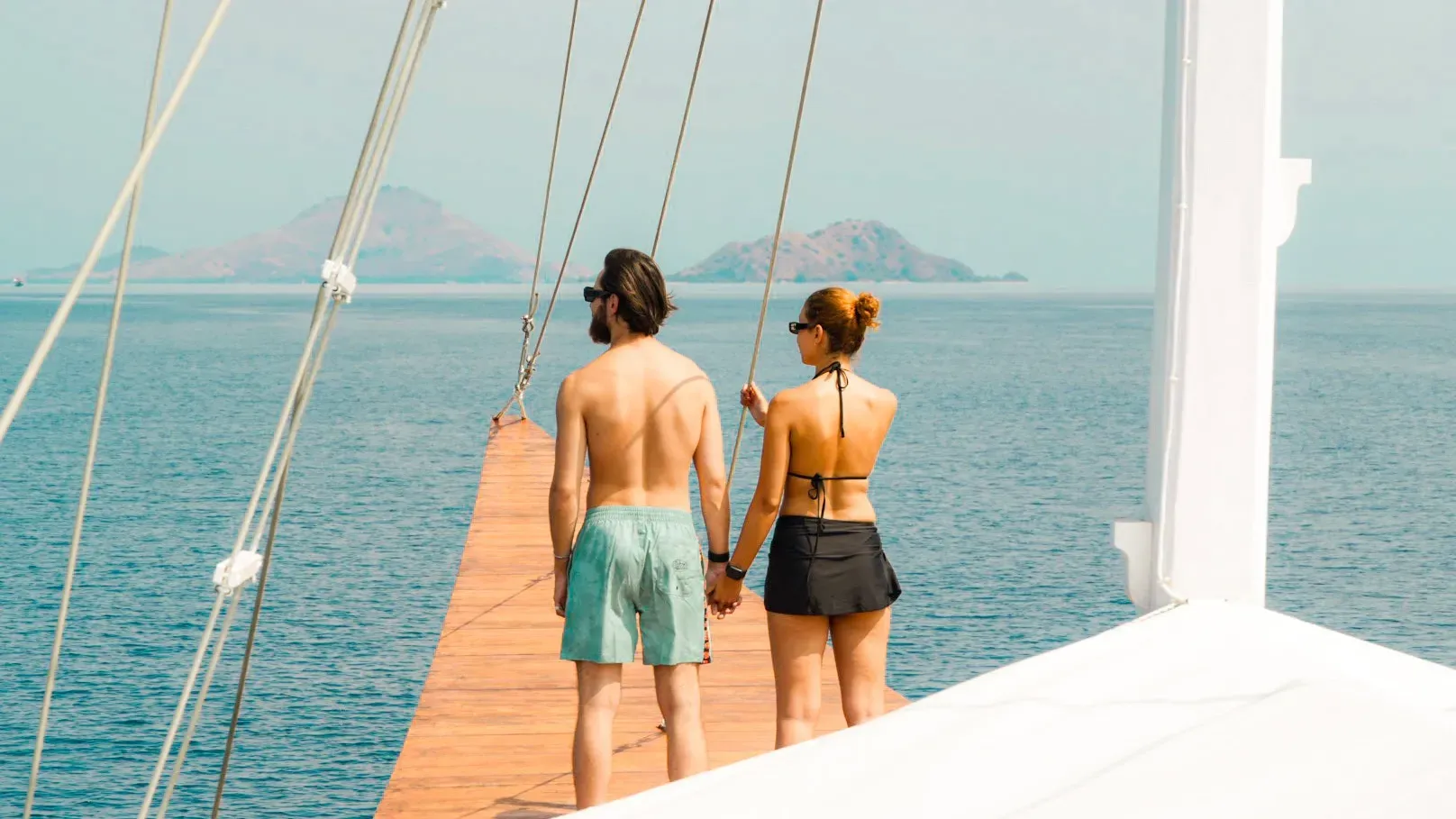
Two guests standing on the bowsprit looking out at Komodo's islands
The daily rhythm

How a Komodo Liveaboard Actually Works

  1. Day 1

    Boarding in Labuan Bajo

    Guests board at the harbor, usually late morning, get a cabin and safety briefing, and the boat departs toward the first anchorage—the first dive or snorkel session usually happens that same afternoon.

  2. Days 2+

    Dives, Treks, and Sailing

    A full day typically includes an early dive before breakfast, a mid-morning dive, and an afternoon dive or snorkel—sometimes with a sunset or night dive—interspersed with meals and transit between sites.

    Most itineraries also fit in a ranger-guided Komodo dragon trek on Rinca or Komodo Island, plus a hike up Padar Island for its panoramic three-bay view.

  3. Every Evening

    At Anchor

    The boat typically anchors in a sheltered bay overnight rather than sailing after dark, so nights stay calm—dinner on deck, stargazing, and an early night before the next 6am wake-up call.

  4. Final Day

    Disembarkation in Labuan Bajo

    The boat sails back to port, usually arriving by mid-morning so guests can connect to onward flights the same day.

Life Onboard, Crew, and What's Included

Meals & Cabins

  • Meals are cooked onboard by a dedicated galley crew and served family-style—usually a mix of Indonesian and Western dishes, with fresh seafood featuring heavily
  • Cabins range from shared bunk-style rooms on budget open-trip boats to private ensuite cabins with air-conditioning on premium phinisi—fresh water for showers can be rationed on smaller boats, so confirm this if it matters to you

Who Runs the Boat

  • A typical crew includes a captain, one or more dive guides, a cook, and deckhands—usually five to twelve people depending on boat size
  • Trekking on Komodo or Rinca Island is only permitted with a licensed park ranger, assigned at roughly one ranger per five visitors—your operator arranges this and the park permit as part of the itinerary

What's Included (and What's Not)

  • Cabin accommodation, all meals and drinking water, guided dives or snorkel sessions, ranger-guided dragon trekking, and the Padar Island hike and Pink Beach stop are standard
  • Usually excluded: alcoholic drinks, gear rental beyond the basics, nitrox, and the park entrance fee—collected separately, so confirm current pricing at the time of booking

Komodo Liveaboard vs Other Ways to See the Park

FormatNights on the WaterDive Sites ReachedBest For
Komodo liveaboard1–11 nights aboard a phinisiNorth, Central, and South zones—including Manta Alley and Cannibal Rock, too far for a single-day tripDivers, snorkelers, and travelers who want the full park without repeated speedboat transfers
Day trip from Labuan Bajo0 (return to hotel each night)1–3 sites in the Central/North zone, weather-dependentTravelers with 1–2 days, non-divers wanting a taste of Padar and Pink Beach
Land-based diving + hotel0 (day boats from a resort)Sites within speedboat range of the resort, rarely the far South zoneDivers who prefer a hotel bed and shorter, single-tank outings

A day trip is cheaper and needs no commitment, but it can't reach the southern sites—the transit to Manta Alley alone runs close to four hours each way. A Komodo liveaboard absorbs that transit overnight, so the boat is already positioned at the next site when you wake up.

Types of Komodo Liveaboard Trips by Duration

DurationZones Typically CoveredBest For
3D2NCentral zone (Padar, Pink Beach, 3–5 dive sites)First-timers, short-notice bookings, share-cabin open trips
4D3NCentral + partial North zoneDivers wanting a couple of extra sites without a long commitment
5D4NCentral + North zone (Gili Lawa, Castle Rock)Divers targeting a specific site cluster like Crystal Rock and Castle Rock
7D6NCentral + North + South zoneSerious divers wanting Manta Alley and Cannibal Rock without rushing
8–11 nightsFull park, repeat dives at signature sitesUnderwater photographers, dive clubs, repeat visitors

Every itinerary revisits the same named dive sites and destinations—duration determines how many you reach, and how much time is left for relaxing versus transiting between anchorages.

Who a Komodo Liveaboard Fits

  • Divers chasing manta rays at specific sites, or wanting repeat access to the same reef at different tide states
  • Honeymooners and couples wanting isolated anchorages instead of crowded day-boat piers
  • Anyone who'd rather wake up already anchored at a dive site than catch a 5am hotel pickup
  • Non-divers and snorkelers, who are welcome on most trips and never required to dive

When to Choose a Day Trip Instead

  • Prone to seasickness and haven't tested calmer waters first
  • Under 48 hours in Flores, with no room for a multi-night itinerary
  • Not comfortable on open water for multiple days at a time, including non-swimmers
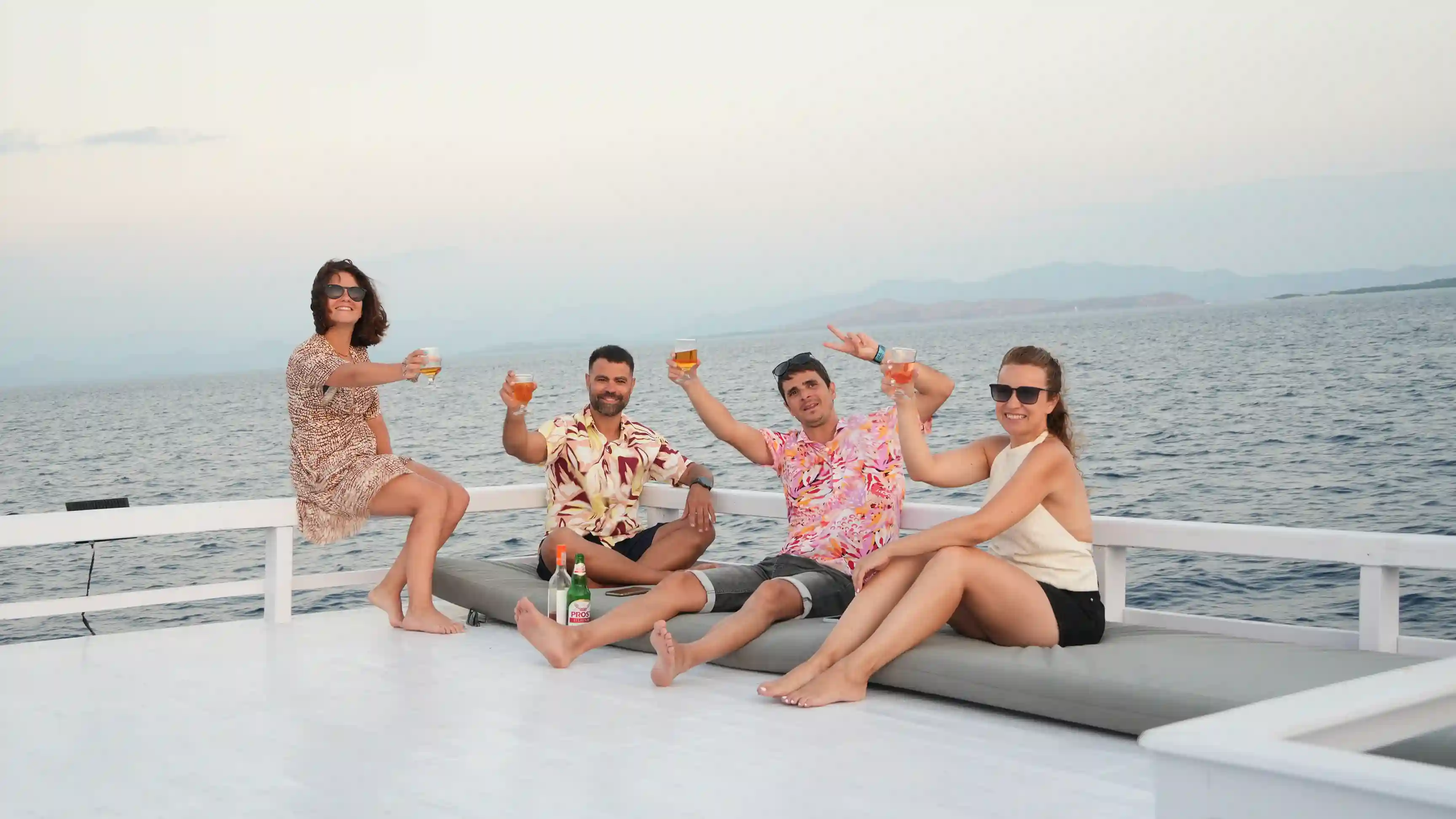
Guests toasting on the bow of a liveaboard at dusk
by Komodo Island Liveaboard

What You Need Before You Book

You don't need a diving certification to join—non-divers and snorkelers make up a meaningful share of guests on most boats. If you do want to dive, Open Water certification covers most sites, though the stronger currents at southern sites like Cannibal Rock and Torpedo Alley suit Advanced-certified or drift-experienced divers better.

Booking must go through a licensed operator: as of 2026, all Komodo National Park visits require online booking through the SiORA reservation system, and walk-in entry is no longer accepted at the gates. Your operator handles this and the ranger permits as part of the package.

Season matters too—the North and Central zones dive best April to October, while the southern sites flip the calendar, peaking October to December when nutrient-rich water draws in mantas and macro life. Only a 7D6N-or-longer trip booked in that window realistically combines both seasons in one voyage.

Frequently Asked Questions

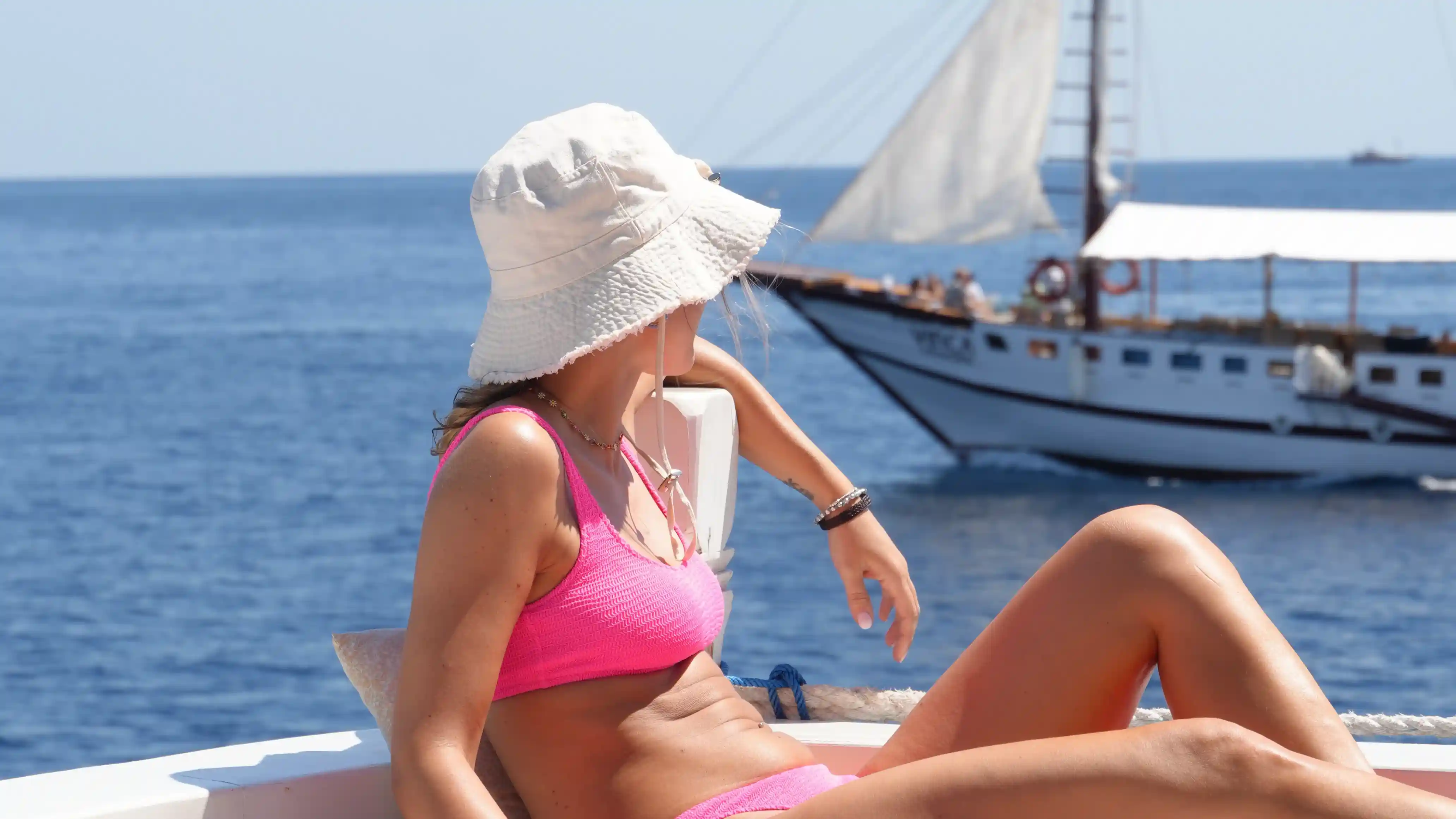
Guest relaxing on deck with another phinisi liveaboard in the background

Now that you know what a Komodo liveaboard is, see if one fits your trip.