Pink Beach
A shallow fringing reef sits right off the sand, no boat needed for the inner flat — reef fish schools, soft coral gardens, and occasional reef sharks farther out.
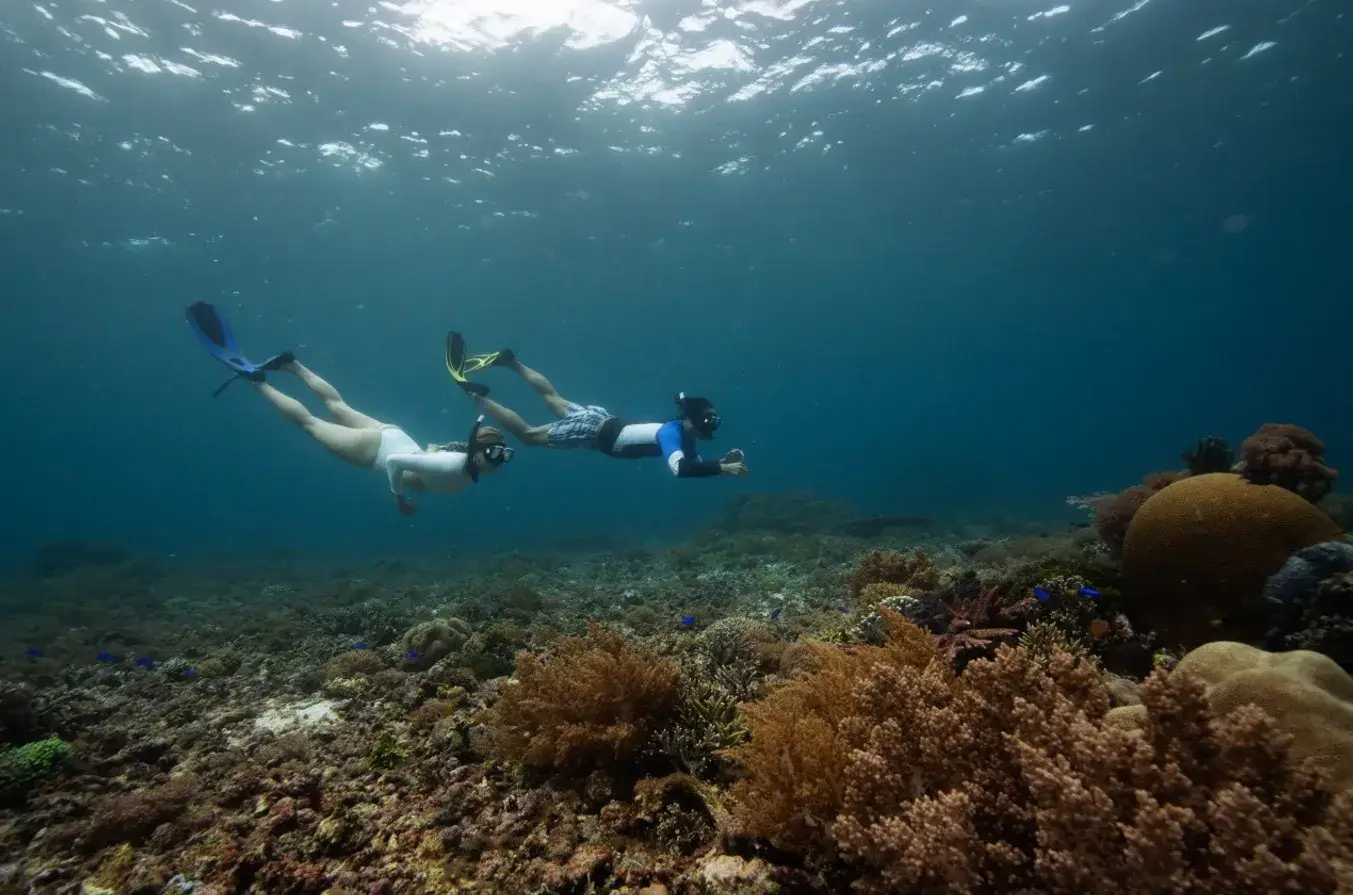
Quick Answer: Non-divers are welcome on every Komodo liveaboard — roughly a third of guests on a typical departure snorkel rather than dive. You join the same boat, itinerary, and sunrise stops, staying on the surface while the dive group descends. Open-trip cabins start from USD 300 per person (weekday departures from USD 220); private charters from USD 5,300 per night.
A liveaboard runs on one shared itinerary, whether the group aboard is all certified divers or a mix of divers, snorkelers, and sightseers. What changes for a snorkeler is depth and pacing, not access — you won’t drop to 18-30 meters at Castle Rock, but you’ll float directly above it, and the shallow reef top is often the better show.
Komodo rewards snorkelers especially well: shallow coral plateaus sit at 1-5 meters on almost every site, reef mantas often cruise the top 1-3 meters, and land excursions — dragon trekking on Rinca, the Padar hike, the Kalong sunset — need no water skills at all.
Honestly: you’ll miss the deep macro life at sites like Cannibal Rock and the drift-dive adrenaline of the Cauldron. You won’t miss the manta encounters, the land excursions, or the reef-fish density in the top 5 meters of nearly every site.
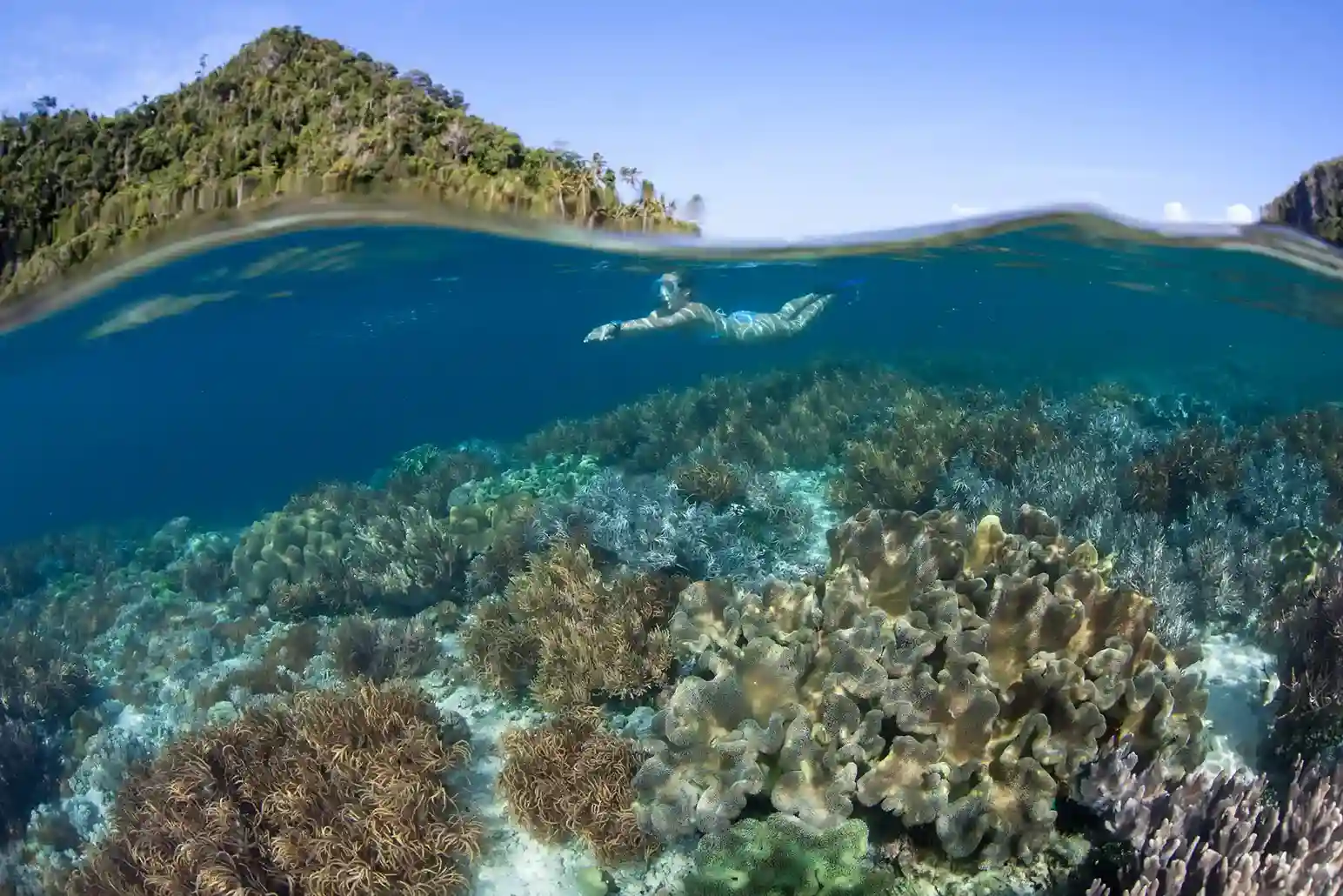
A shallow fringing reef sits right off the sand, no boat needed for the inner flat — reef fish schools, soft coral gardens, and occasional reef sharks farther out.
Cleaning stations here sit in the top 1-3 meters of the water column, often with several reef mantas circling at once.
The upper wall and pinnacle top run snorkel-depth in calm conditions — dense reef fish and strong color close to the surface.
Sheltered, calm, and gently sloped — often the trip’s designated easy day, with turtles, garden eels, and healthy hard coral.
Flat, shallow, and nearly current-free — a beginner-friendly spot for clownfish, anemones, and juvenile reef fish.
Sunrise coffee on deck, then a morning briefing that marks the snorkel zone separately from the dive plan. Snorkelers enter from the swim platform with a dedicated guide while the dive group descends.
The second stop of the day is often the easy one — shallow bommies or a manta cleaning station — followed by lunch and a land excursion window for the Padar hike or dragon trekking.
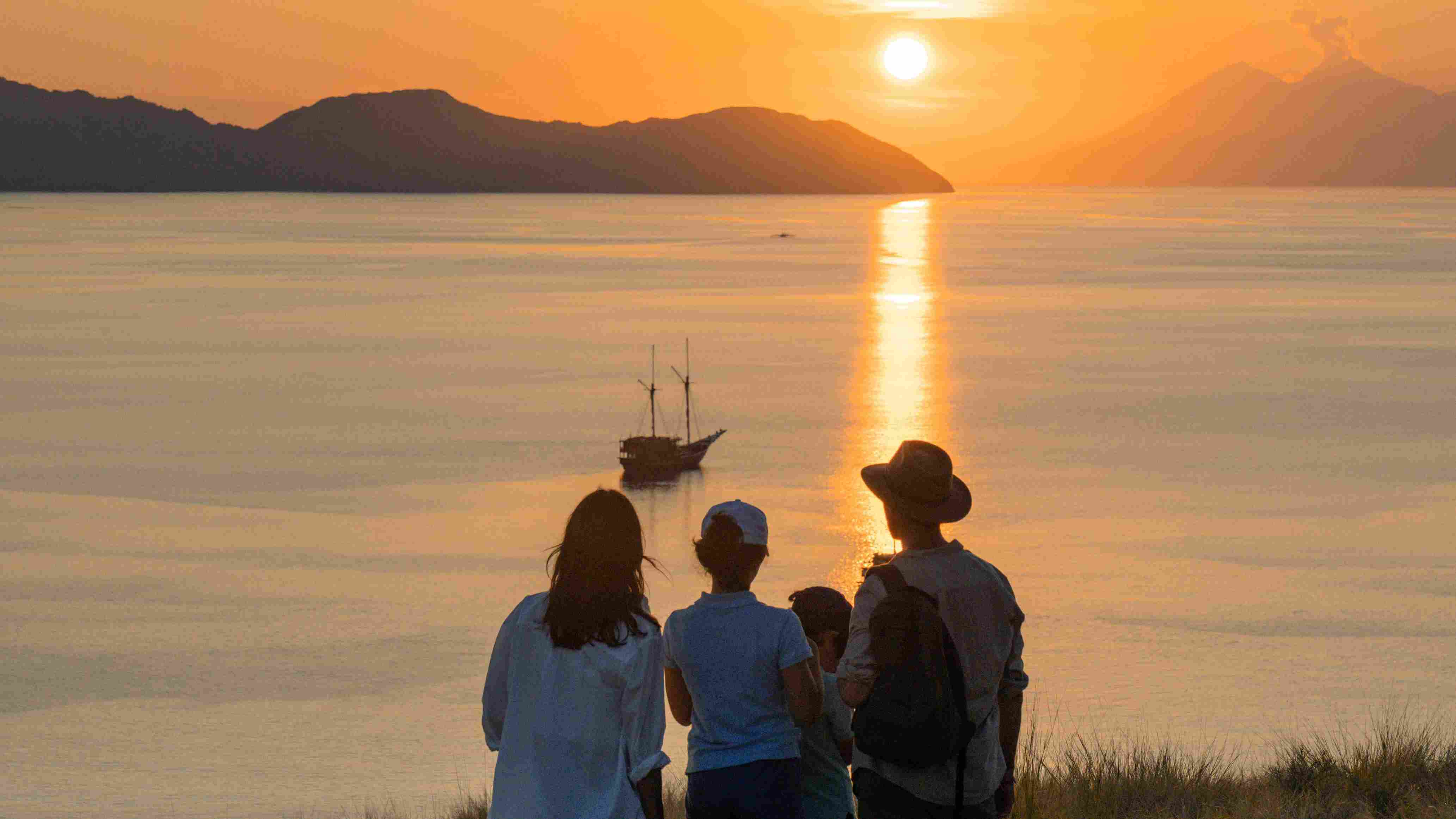
Afternoons bring a second shallow session or a free-swim off the anchored boat, then a sunset spot like the Kalong bat flight before dinner and the next day’s briefing.
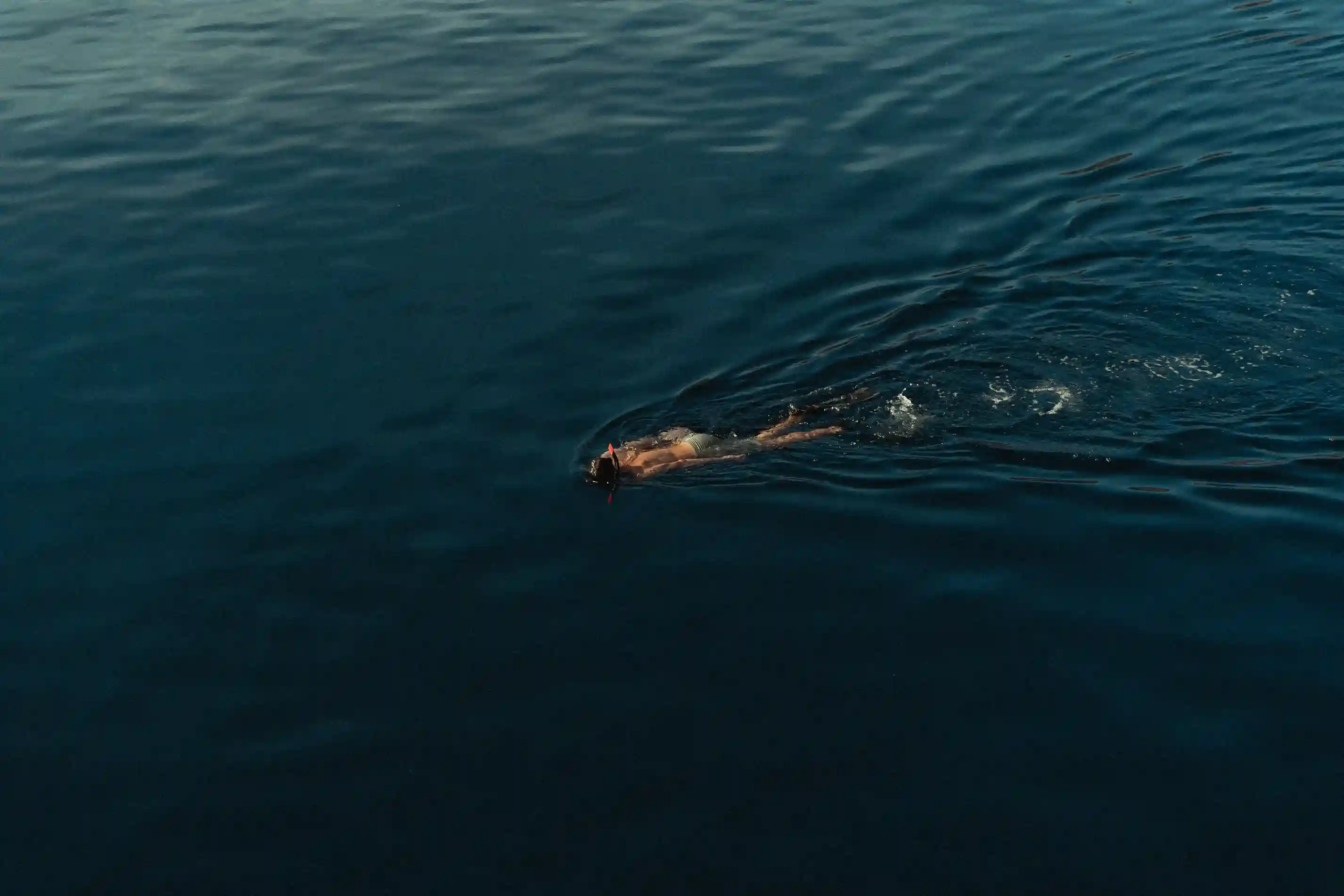
Divers often book longer trips (5D4N-7D6N) to reach far-flung South Komodo sites like Manta Alley. Snorkelers don’t need that extra range — a 3D2N-4D3N trip already covers the highest-yield stops: Pink Beach, the Kanawa reefs, and a Central-loop manta site.
A longer 4D3N or 5D4N trip still adds value: more relaxed pacing, extra free-swim time, and a better shot at the South Komodo manta sites when weather cooperates.
Mixed-ability groups are the norm — couples and families split by activity each session and share the same cabin (see our family-friendly guide). If snorkeling is a stepping stone, ask your guide about a supervised Discover Scuba session mid-trip.
Yes — non-divers and snorkelers join the same itinerary, cabins, meals, and land excursions as certified divers. At each stop you snorkel the surface with a dedicated guide while the dive group descends, then reunite for the next activity.
Basic swimming comfort is expected, though you don’t need to be a strong swimmer — flotation vests are available and guides stay close during water sessions. If you’re not confident in open water, the land excursions alone make the trip worthwhile.
Very likely. Reef mantas at Komodo’s cleaning stations frequently circle in the top 1-3 meters — well within snorkel range. Many guests say their best manta encounter happened while snorkeling, not diving.
Cabin fare is typically the same for divers and snorkelers, since you’re paying for the shared boat, crew, and itinerary. The savings come from skipping dive-specific add-ons like tank rental and nitrox — see our price guide for the current breakdown.
A rash guard or light wetsuit top for sun and sting protection, reef-safe sunscreen, and your own mask if you have a preferred fit — boats supply mask, snorkel, and fins. Motion-sickness tablets are worth packing too, since crossings can get choppy.
Independent planning guides for Komodo National Park liveaboard trips, updated for the 2027 season.
Boats and departures are operated by Komodo Luxury — a registered Indonesian PT under Juara Holding Group Limited with 1,500+ verified guest reviews (4.9/5).