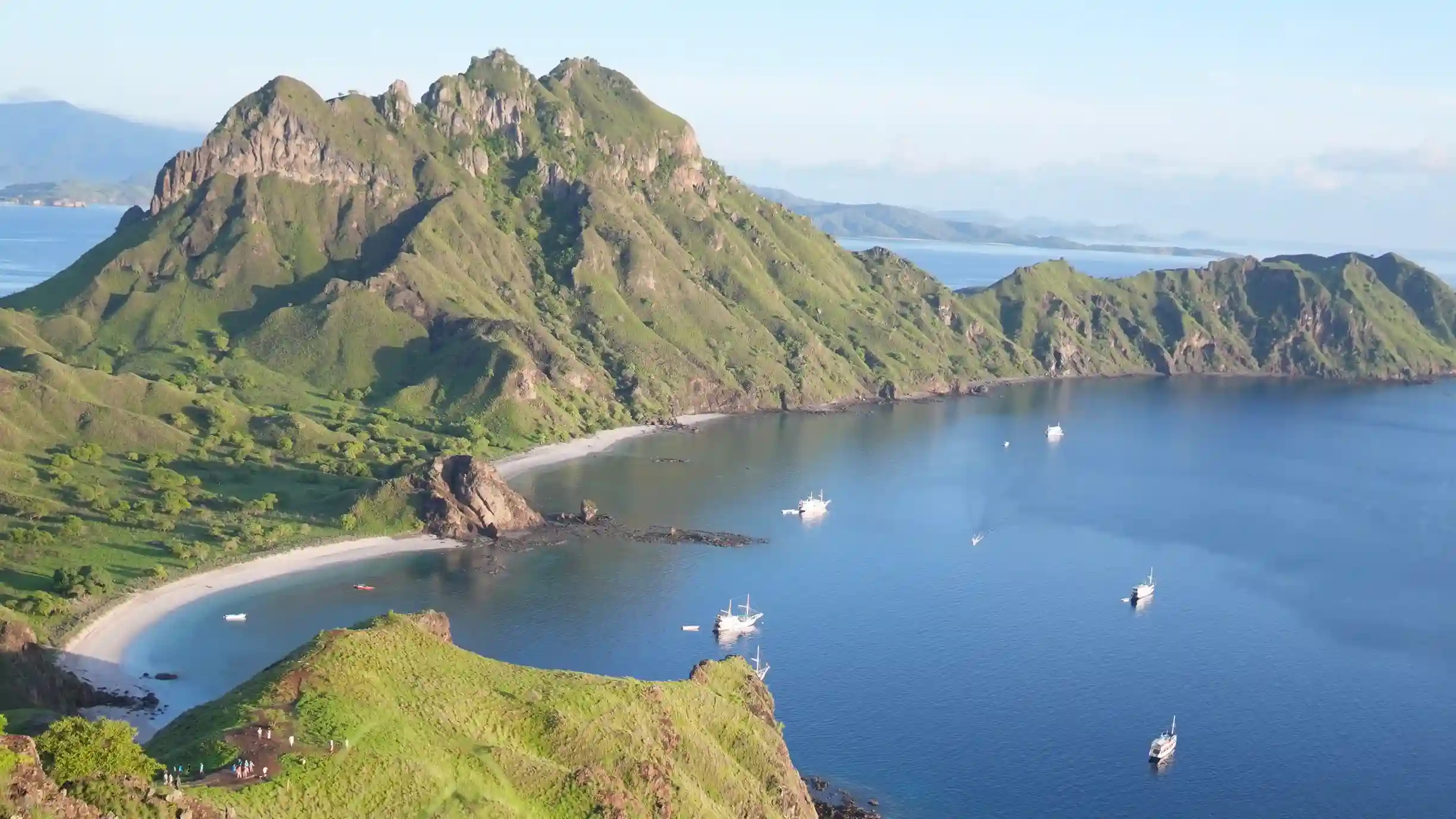
Dramatic Savannah Terrain
Komodo Island runs roughly 35 kilometers end to end, its steep savannah hills split by narrow, current-swept straits; Padar’s ridgeline viewpoint over three curved bays is the park’s postcard.
Explore the Islands
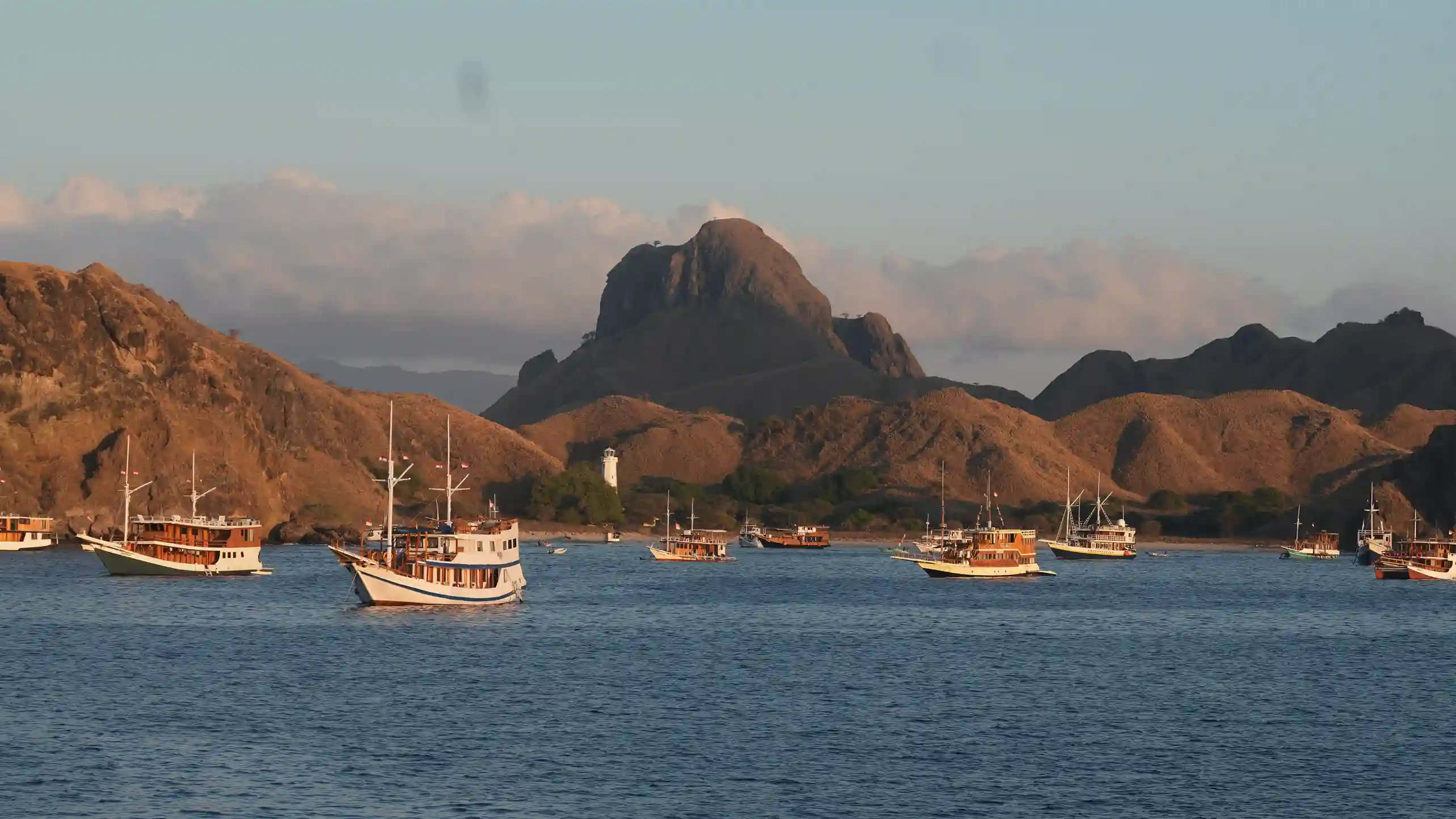
Quick Answer: Komodo National Park is a UNESCO World Heritage Site in eastern Indonesia protecting the world’s only wild Komodo dragons and some of the richest reef systems in the Coral Triangle, across Komodo, Rinca, and Padar islands. Every visit starts from Labuan Bajo, and pairing dragon treks with top-tier diving is best done by liveaboard.
Established in 1980 to protect the dragon, the park covers more than 1,700 square kilometers of land and sea between Sumbawa and Flores, later listed by UNESCO for both its terrestrial and marine value.
The Indonesian Throughflow—Pacific water squeezing between the islands toward the Indian Ocean—carries nutrients that feed everything from coral polyps to manta rays.
The pairing is what makes it unusual: dry, savannah-covered dragon habitat above the waterline, and one of the Coral Triangle’s richest marine ecosystems below it.
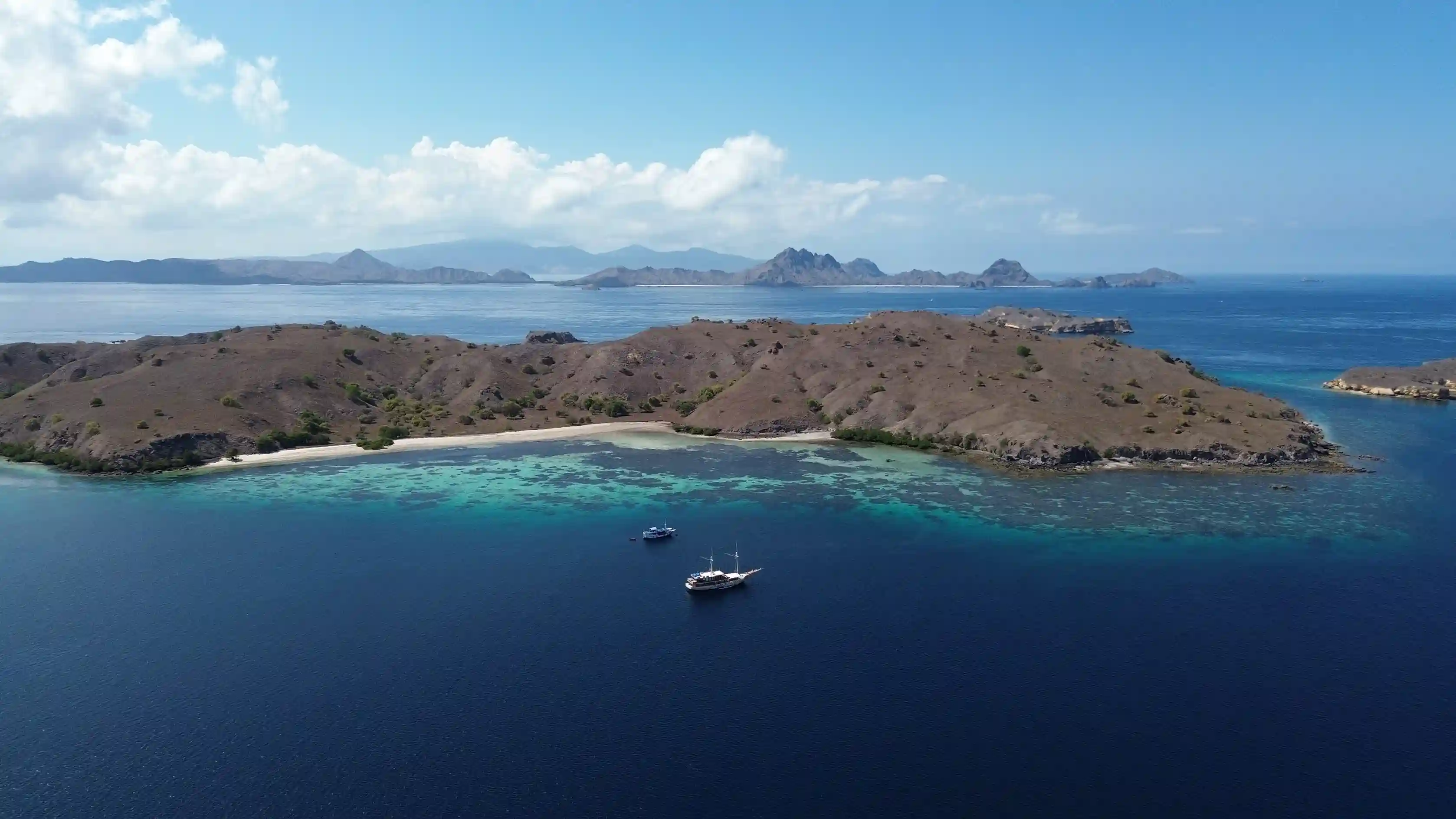
From savannah ridgelines to current-swept straits, the park's terrain, marine life, and wildlife each shape a different part of the visit.
Komodo Island runs roughly 35 kilometers end to end, its steep savannah hills split by narrow, current-swept straits; Padar’s ridgeline viewpoint over three curved bays is the park’s postcard.
Explore the IslandsThroughflow currents draw sharks, sea turtles, and schooling fish to the northern seamounts, while reef manta rays gather to feed and be cleaned on the Karang Makassar drift.
Explore Diving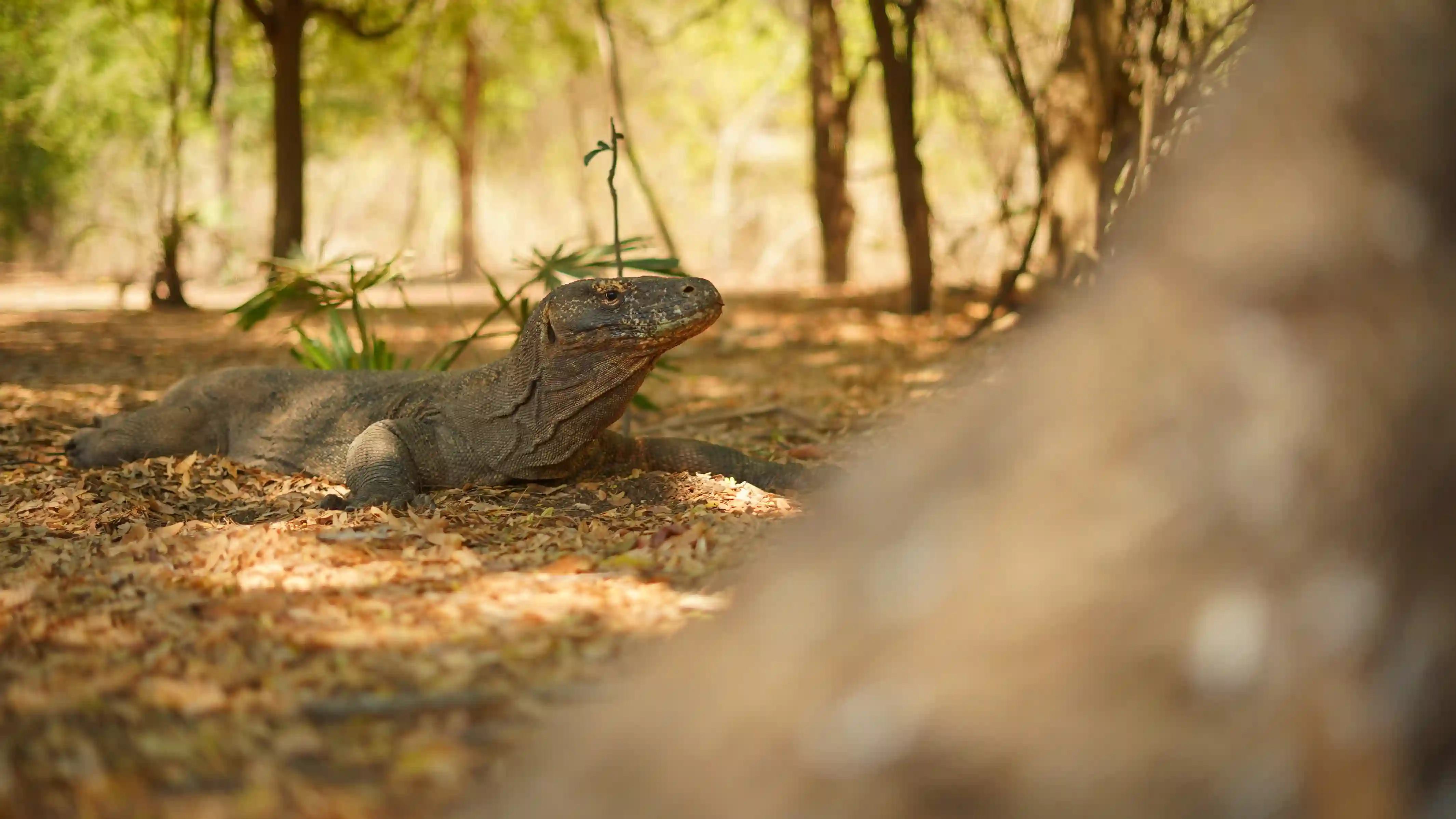
Around 3,000 Komodo dragons survive in the wild, nearly all inside this park—ambush predators reaching about 3 meters and 70–90 kg, sharing the islands with Timor deer and wild boar.
Meet the Dragons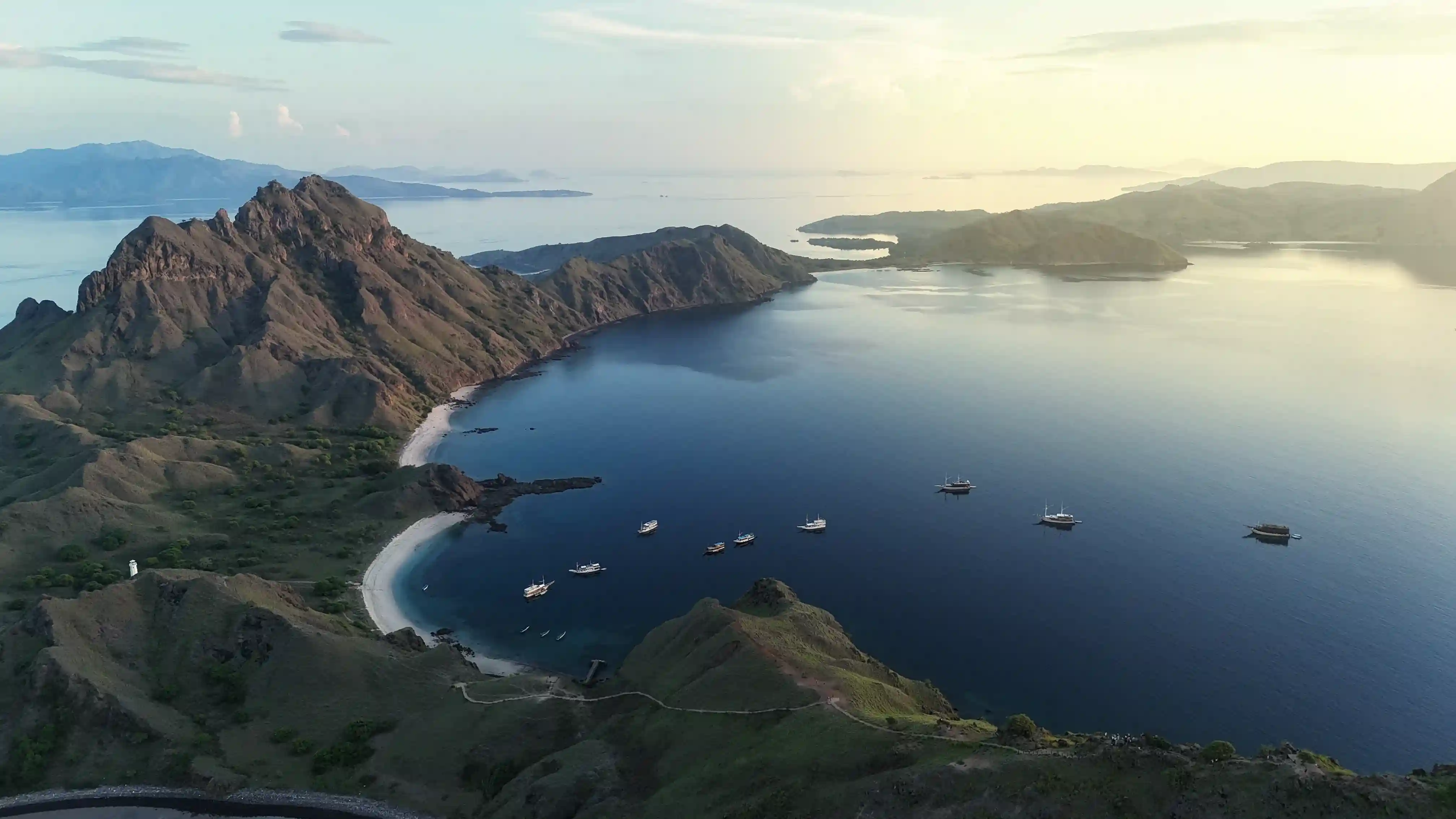
Komodo holds the big wilderness treks and famous reefs; Rinca’s dense dragon population makes sightings statistically reliable; Padar is prized for its sunrise viewpoint.
Explore Rinca Island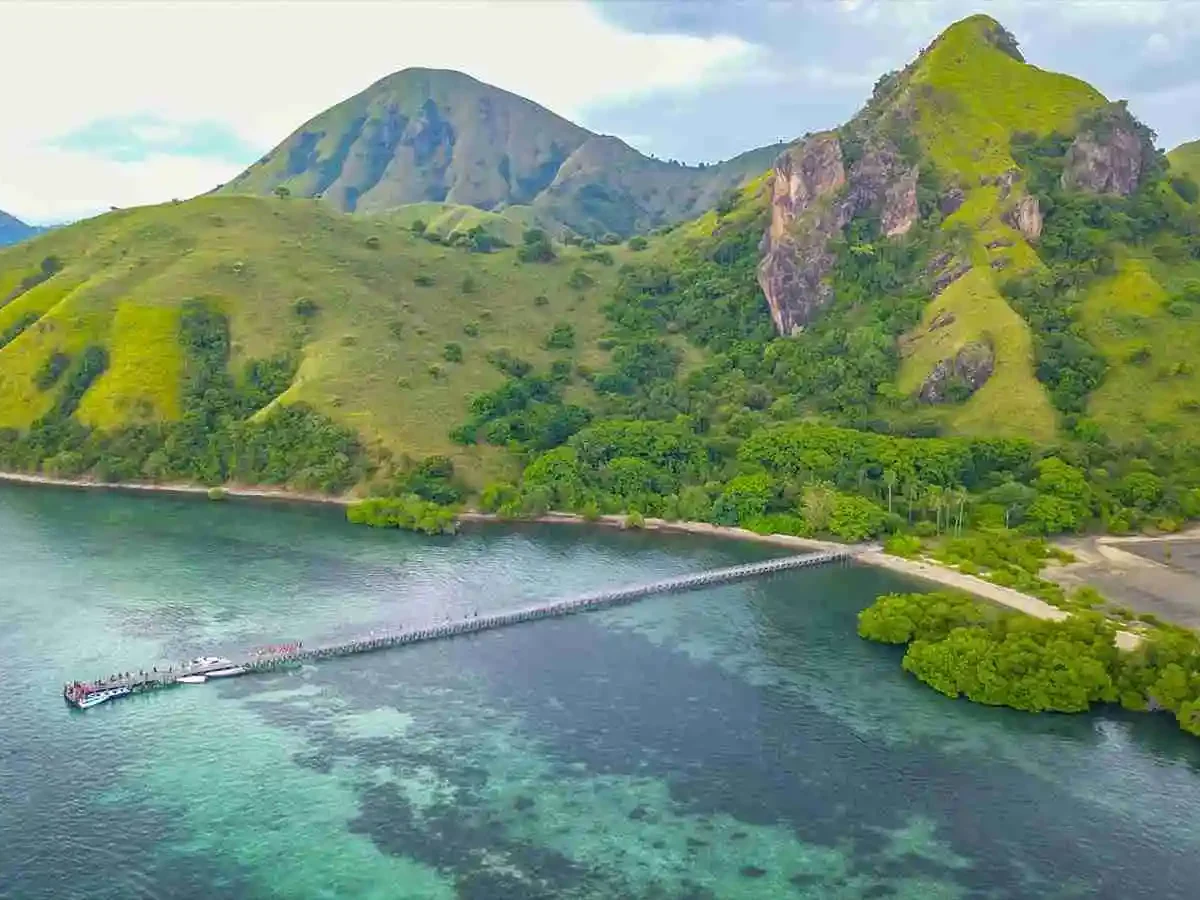
The park’s best sites are spread across 60-plus kilometers of islands and straits. Day boats from Labuan Bajo spend two to four hours commuting each way for two or three central sites; a liveaboard sleeps inside the park and starts each morning already at the target—Padar ridge at sunrise, before the day-trip fleet arrives.
This desk is operated by Komodo Luxury, running Komodo departures since 2015 with 9 owned phinisi and 200+ vetted partner yachts—and our crews follow the park’s enforced rules on every departure, from ranger-led walks to no-touch reef protocols.
The dry season (roughly April–November) offers calm seas and the classic golden-savannah landscape. The January–February monsoon brings rougher water and some rescheduled sails, but also green hills, fewer crowds, and the central plankton bloom that feeds manta activity. There is no wrong season, only different parks.
Central-zone sites suit newer divers and snorkelers on the right tide; the northern seamounts and southern upwelling sites demand current experience. Tell us your certification and comfort level and we tailor itineraries around it.
Sightings are common on the standard ranger-led trails, especially in the cooler morning hours when dragons are active, but they are wild animals and no honest operator guarantees them. Itineraries that include both Komodo and Rinca roughly double your odds.
Reef fish and sea turtles appear on nearly every dive, white-tip and grey reef sharks hold position at the northern seamounts, and reef manta rays gather to feed and be cleaned at Karang Makassar, better known as Manta Point.
No—the park is entirely islands, so every visit involves a vessel. The real choice is between a day boat (long commutes, two to three central sites) and a liveaboard that sleeps inside the park and covers all three islands plus the reefs between them.
Ranger-led dragon treks, the Padar sunrise hike, Pink Beach, snorkeling shallow enough to watch mantas from the surface, and the dusk flying-fox exodus at Kalong Island—thousands of bats streaming toward Flores—all combine naturally into one sailing.
On our departures, park fees—estimated at USD 40 per international guest and confirmed at booking—are itemized on your quote and handled by the desk. Nothing is collected in cash at a ranger station on the day.
Fly DPS to Labuan Bajo (LBJ), about 1h15m, typically USD 40–80 one way, with multiple airlines daily. Every liveaboard boards in Labuan Bajo—there is no boarding from Benoa, Serangan, or any Bali port.
Independent planning guides for Komodo National Park liveaboard trips, updated for the 2027 season.
Boats and departures are operated by Komodo Luxury — a registered Indonesian PT under Juara Holding Group Limited with 1,500+ verified guest reviews (4.9/5).