Castle Rock — Shark-Filled Seamount Adventure

Quick Answer: Castle Rock is Komodo’s most dramatic diving experience, a submerged seamount with virtually vertical walls rising from 60+ meters that attracts massive schools of grey reef sharks, giant trevally tornadoes, and schooling fish aggregations. Requiring advanced diving skills and comfort with strong currents and limited visibility, Castle Rock is best dived during optimal season (May-November) via liveaboard operations that position divers for dramatic wildlife encounters in one of the world’s most intense diving experiences.

Castle Rock: Komodo’s Most Intense Underwater Experience

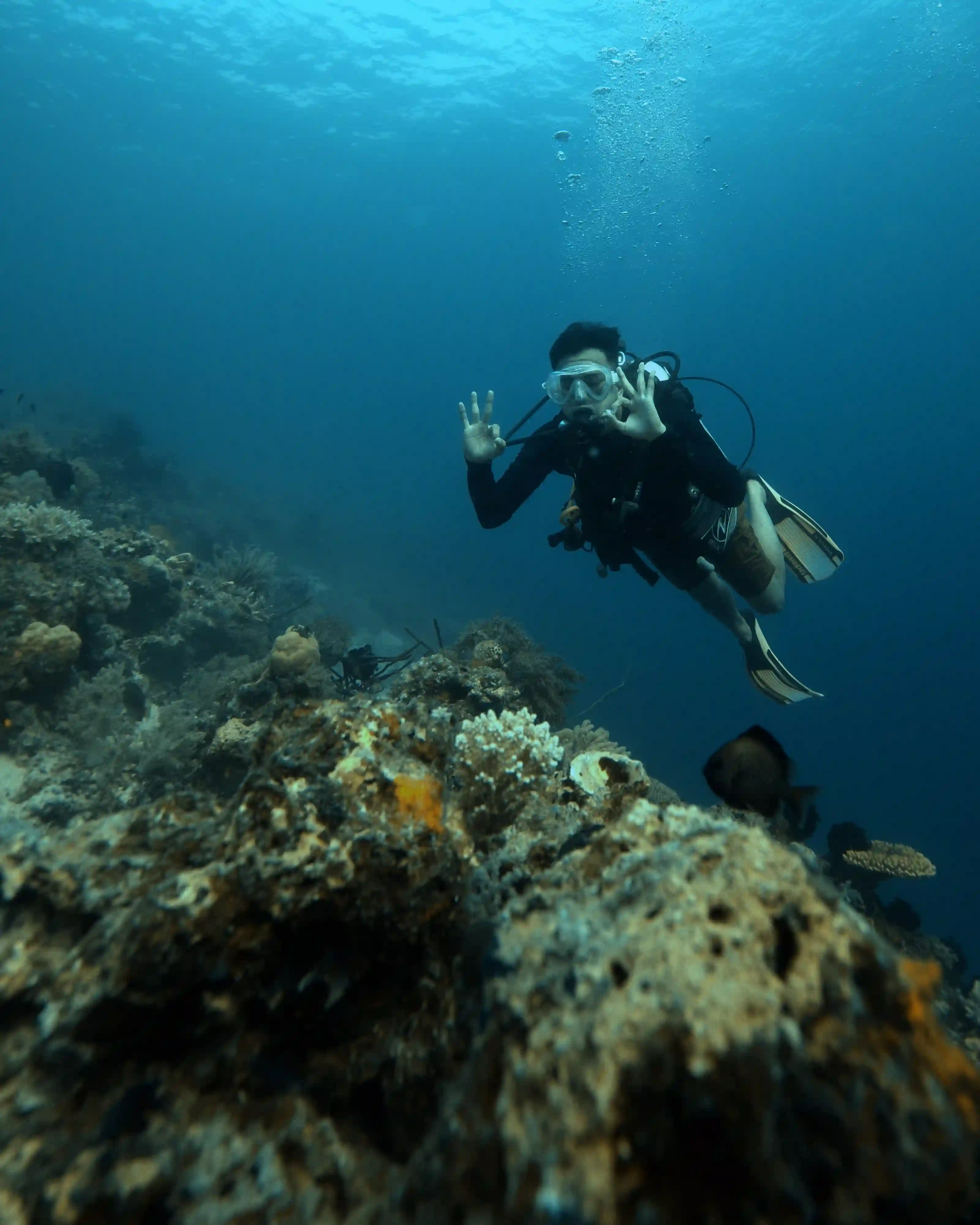
Castle Rock stands apart from every other dive site in Komodo, distinguished not merely by difficulty but by the sheer intensity of the marine life encounters it delivers. Where other world-class dive sites offer excellent chances of seeing reef sharks and schooling fish, Castle Rock virtually guarantees encounters with large predator aggregations and dynamic hunting behavior that create visceral, unforgettable moments. The site’s name references its distinctive underwater topography—a dramatic vertical seamount that rises sharply from abyssal depths, creating an extreme environment where powerful currents compress vast populations of marine life into a confined space. This is diving at nature’s most primal and uncompromising, an experience that separates serious technical divers from casual recreational enthusiasts.

Castle Rock is not a site to approach casually. The combination of technical challenge, extreme current conditions, limited visibility windows, and the necessity of managing encounters with multiple large shark species simultaneously requires preparation, experience, and genuine respect for the ocean’s raw power. Yet for divers who meet these prerequisites, Castle Rock delivers moments of absolute clarity—instances when the barrier between human observer and marine ecosystem becomes transparent, when the diver transitions from tourist to temporary resident of the underwater world. Castle Rock represents the apotheosis of diving in Komodo, the culmination of experience and preparation that transforms diving from sport into genuine adventure. Explore our full directory of dive sites to understand how Castle Rock fits within Komodo’s broader diving landscape and why serious divers specifically seek it out.

The Submerged Seamount: Extreme Topography and Geology

Castle Rock’s defining feature is its geological structure—a submerged seamount with walls of such steepness that they approach vertical for extended sections. The seamount rises from depths exceeding 60 meters, with its apex reaching approximately 5 meters below the surface. This extreme vertical relief creates a unique hydrodynamic environment where current flow becomes concentrated and accelerated, generating the conditions that attract and concentrate enormous quantities of pelagic fish. The seamount’s exposed rock faces, covered by sparse coral and algae growth adapted to extreme current conditions, provide minimal shelter but maximal exposure to the open water.

The distinctive “castle” appearance that gives the site its name results from the way the seamount’s jagged peaks and vertical channels create a silhouette resembling fortified castle walls. Approaching Castle Rock from the water surface reveals a dramatic rocky protrusion barely above water level—an insignificant-appearing stack of stone that conceals the extraordinary underwater drama unfolding immediately below. The seamount’s geological composition reflects ancient volcanic activity, with exposed basalt faces providing the dark backdrop against which schools of silver fish create brilliant visual contrasts. When diving these extreme environments, understanding the geological forces that created Castle Rock enhances appreciation for the dynamic natural processes that drive marine ecosystems.

Grey Reef Sharks and Predator Density

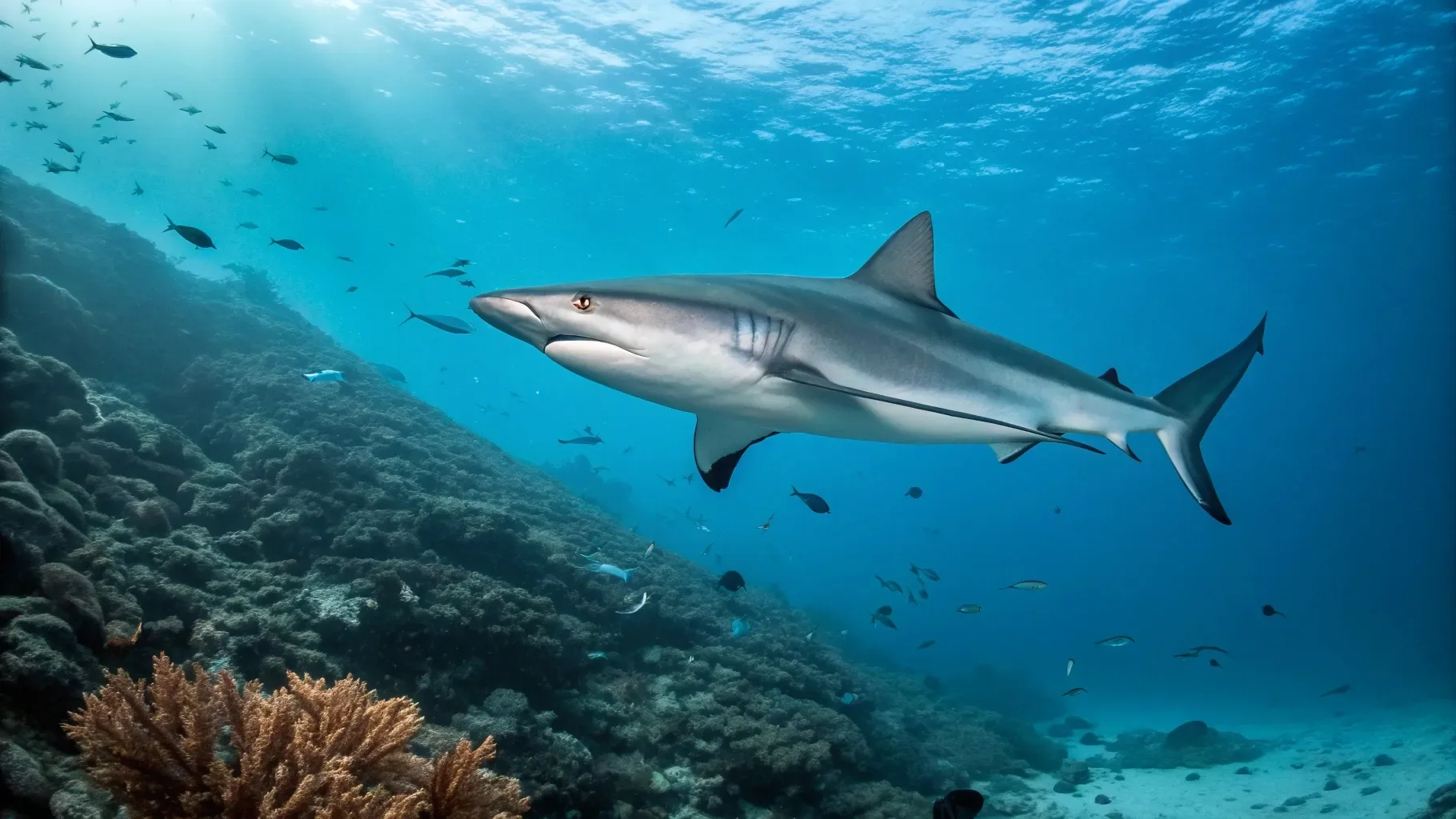
Grey reef sharks are the dominant large predator at Castle Rock, and their behavior here differs markedly from typical reef shark conduct elsewhere. At most dive sites, grey reef sharks maintain distance from divers, investigating with curiosity but maintaining what observers interpret as wariness or indifference. At Castle Rock, grey reef sharks operate in such high concentrations and with such aggressive hunting focus that they frequently approach divers directly, sometimes within meters. These remarkable sharks reach lengths exceeding two meters, with powerful bodies and distinctive white-tipped dorsal fins that become visible as the sharks circle through the water column.

The abundance of grey reef sharks at Castle Rock relates directly to the seamount’s role as a major hunting ground. The concentrated fish schools that gather in response to current-driven upwelling create prey densities elsewhere unattainable. Grey reef sharks converge on Castle Rock specifically to exploit these abundant food sources, resulting in shark densities that observers describe as extraordinary. Divers who have experienced other world-class shark-diving destinations—South Africa’s False Bay, the Bahamas’ shark-feeding operations, the Red Sea’s pelagic shark zones—frequently describe Castle Rock as matching or exceeding these legendary locations for intensity of shark encounters. The natural, unmanipulated nature of Castle Rock’s shark encounters, entirely unrelated to feeding programs or artificial concentration techniques, lends them authenticity and visceral power that even more famous shark-diving sites sometimes lack.

Schooling Fish Tornadoes and Predator-Prey Dynamics

The term “tornado” describes the frenzied, rotating mass formations that schooling fish create when responding to predator pressure at Castle Rock. These spectacular aggregations form when large schools of fusiliers, jacks, trevally, or other fast-moving fish respond to predator threats by forming tight, synchronized groups that create maneuvering advantages unavailable to individual fish. Observed from above or to the side, these rotating schools resemble tornadoes or underwater cyclones, with hundreds of fish bodies moving as a unified organism. Giant trevally and other large predators deliberately drive these schools, attempting to break them apart and isolate vulnerable individuals for capture.

Witnessing predator-prey dynamics at Castle Rock provides understanding of marine ecosystems’ fundamental principles. The fish tornadoes represent evolved behavioral strategies for group survival—safety through numbers, confusion-based defense mechanisms, and coordinated evasion tactics. The giant trevally, operating with apparent individual hunting strategies, use speed, power, and coordinated attack patterns to overcome group defenses. The drama that unfolds regularly at Castle Rock illuminates evolutionary arms races between predator and prey species, providing visceral understanding of natural selection’s consequences in real-time.

Strong Currents and Advanced Diving Requirements

Castle Rock’s currents exceed even those at Batu Bolong in both strength and variability. Current speeds regularly reach 2-3 knots, with observations of 4+ knot currents during peak spring tides. More challenging than current strength is directional unpredictability—Castle Rock’s extreme topography creates eddy formations, upwelling columns, and circulation patterns that can vary dramatically within seconds. Divers occasionally experience current reversals as they navigate different sections of the seamount, requiring continuous adjustment and reactive positioning.

These extreme conditions mandate advanced diving skills that transcend standard recreational training. Rescue Diver certification represents a minimum practical requirement, though Divemaster or technical diving experience proves far more appropriate. Divers must demonstrate absolute mastery of buoyancy control—the ability to maintain specific depths with precision and respond instantly to buoyancy changes induced by current shifts or altitude changes. Air management becomes critical, as the physical exertion required to position oneself in extreme currents accelerates air consumption beyond normal rates. Maximum depth limits typically restrict dives to 35-40 meters, requiring discipline to avoid exceeding depth parameters in the excitement of encountering large marine life.

Castle Rock is not recommended as a training site or as an experience for divers seeking to expand their skill boundaries. Rather, it is a site exclusively appropriate for divers who have already developed mastery-level skills through hundreds of logged dives in varied conditions. The ocean at Castle Rock provides minimal margin for error, minimal tolerance for hesitation or uncertainty. Professional guides at reputable liveaboard operations rigorously pre-screen divers, sometimes declining to permit specific divers to participate in Castle Rock dives based on observed skills or discomfort indicators. This careful gatekeeping protects both diver safety and the site’s integrity, ensuring that only properly prepared divers experience Castle Rock’s challenges and rewards.

Best Season and Seasonal Variations

Castle Rock’s optimal diving season extends from May through November, with June, September, and October consistently providing the best combinations of strong (but manageable) currents, good visibility, and abundant marine life activity. During these months, currents usually remain within 1.5-2.5 knot ranges, visibility exceeds 20 meters, and pelagic fish activity reaches peak levels. Water temperatures range from 26-28°C during peak season, providing comfortable conditions in standard wetsuits.

The April-May transitional period occasionally offers exceptional conditions with particularly intense shark and large fish activity, though currents can be variable and unpredictable. This period appeals to experienced divers seeking maximum intensity, though weather unpredictability and occasional rougher seas increase logistical complexity. The July-August window sometimes experiences reduced visibility due to seasonal upwelling patterns, though the cooler water temperatures (24-26°C) that accompany upwelling correlate with excellent pelagic activity.

The wet season (December-April) brings occasional rough seas and reduced visibility, making Castle Rock diving less consistent during this period. However, brief windows of exceptional conditions occasionally occur between storm systems, and some divers specifically seek wet season Castle Rock diving because diminished visibility concentrates fish activity even further. Wet season water temperatures reach 28-30°C, requiring minimal thermal protection. When planning Castle Rock dive experiences, professional operators coordinate timing with seasonal patterns to match diver skills and experience with prevailing conditions.

Visibility Challenges and Adaptation Strategies

Unlike clearer dive sites where visibility regularly exceeds 30-40 meters, Castle Rock frequently experiences reduced visibility ranging from 8-20 meters. This characteristic reflects the seamount’s role in upwelling dynamics—the nutrient-rich water that attracts fish also carries suspended plankton and sediment particles that reduce light penetration. Rather than representing a disadvantage, reduced visibility at Castle Rock often correlates with the most intense marine life activity, as the nutrient-rich conditions concentrate prey species and attract predators.

Reduced visibility requires adaptation in diving techniques and expectations. Rather than seeking distant visual encounters with sharks and large fish, divers at Castle Rock often experience unexpectedly close encounters as marine life suddenly emerges from reduced visibility zones. The compressed visual space creates a more intimate but also more intense environment. Flash photography becomes more effective in reduced visibility, creating opportunities for dramatic wildlife images impossible in clearer conditions. Divers must adjust their psychological expectations—accepting that less-than-perfect visibility at Castle Rock often delivers superior marine life encounters compared to clearer visibility conditions at less-productive sites.

Technical Diving and Exploration Beyond Recreational Limits

Castle Rock attracts technical divers and diving instructors specifically because its extreme environment provides legitimate justification for technical training and equipment. Advanced technical diving allows deeper exploration of the seamount’s walls, better understanding of the abyssal transitions beyond recreational depth limits, and extended bottom times that facilitate richer marine life observation. Technical diving at Castle Rock requires sophisticated equipment configurations, advanced training from qualified technical instructors, and careful planning that exceeds standard recreational protocols.

The technical diving community recognizes Castle Rock as one of the world’s most compelling extreme diving environments. Technical divers traveling specifically to Komodo often structure entire trips around Castle Rock technical diving, conducting multiple dives with varying depth profiles and technical objectives. When exploring Castle Rock’s deeper sections through technical diving, divers encounter marine life and geological features entirely different from recreational-depth zones, expanding understanding of the seamount’s complete ecological expression. Explore the broader Komodo region to understand how technical diving fits within the complete Komodo diving experience.

The Liveaboard Advantage: Essential for Castle Rock Diving

Castle Rock is fundamentally a liveaboard dive site. The strong currents, extreme conditions, and dynamic marine life encounters require multiple positioning attempts and flexible scheduling coordinated with actual conditions. Liveaboard vessels position overnight near Castle Rock, enabling rapid dive launch based on current predictions and visual conditions assessment. The ability to conduct dives at optimized times, repositioning if conditions prove unfavorable, allows for dramatically safer and more successful Castle Rock experiences than day-trip operations could provide.

Liveaboard crews develop extensive experience reading Castle Rock’s variable conditions. Professional captains and guides understand how seasonal wind patterns, tidal cycles, and seamount topography interact to generate current patterns. They recognize subtle visual indicators—water color, surface texture, bird behavior—that correlate with optimal conditions below. This accumulated expertise allows liveaboard operations to position divers when encounters are most probable while declining dives when conditions exceed safe parameters. Specialized liveaboard itineraries that include Castle Rock typically limit Castle Rock diving to one or two attempts per voyage, respecting the site’s extreme nature and the physical and psychological demands of diving there.

Frequently Asked Questions About Castle Rock Diving

What minimum experience is required for Castle Rock diving?

Castle Rock requires Rescue Diver certification at minimum, though Divemaster or technical diving training is far more appropriate. Divers must demonstrate exceptional buoyancy control, excellent air management, and genuine comfort with strong current conditions through hundreds of logged dives. Many professional operators require documentation of previous diving experience at challenging sites before permitting Castle Rock participation. Some divers with advanced credentials are declined participation if guides assess that skill levels are insufficient for the extreme conditions encountered.

How different is Castle Rock from Batu Bolong?

Both sites feature strong currents and abundant large marine life, but Castle Rock’s extreme vertical topography, higher current speeds, less reliable visibility, and dramatically higher shark density create a significantly more intense experience. Batu Bolong is often more suitable for intermediate-advanced divers, while Castle Rock specifically attracts advanced and technical divers. Many experienced divers dive Batu Bolong multiple times before attempting Castle Rock, as the sites serve different experience levels and psychological preparation needs.

How many sharks can I expect to see at Castle Rock?

Grey reef shark encounters are virtually guaranteed at Castle Rock, with multiple sharks typically visible throughout any dive. Observations commonly include five to twenty individual grey reef sharks at various depths simultaneously, with some dives featuring far more. Shark encounters at Castle Rock are rarely fleeting—the abundance and hunting focus of sharks means they frequently approach divers directly. Conservative estimates suggest that Castle Rock provides the highest grey reef shark encounter probability of any recreational diving destination globally.

What are the actual depth limits at Castle Rock?

Recreational diving typically operates between 25-40 meters depth, with guides carefully monitoring bottom times to ensure safe air and nitrogen loading limits. The seamount’s apex reaches approximately 5 meters below the surface, while abyssal depths exceed 60 meters beyond the seamount’s base. Technical diving extends to deeper sections, though recreational divers observe strict depth restrictions. Your dive guide will establish specific depth parameters during pre-dive briefing, with firm turnaround points established to ensure safety margins for ascent.

Is Castle Rock suitable for underwater photography?

Castle Rock provides exceptional photography opportunities despite visibility challenges. The abundance of sharks and schooling fish, combined with dramatic topography, creates dynamic compositional possibilities. Wide-angle photography captures the scale of shark aggregations and schooling formations. Macro photography opportunities exist for smaller species. The often-reduced visibility at Castle Rock actually enhances flash photography, with suspended particles scattering light and creating dramatic atmospheric effects. However, the extreme diving conditions require solid photography skills and comfort managing camera equipment in challenging circumstances.

Can I dive Castle Rock if I’ve never dived Komodo before?

While technically possible with appropriate credentials, diving Castle Rock as an initial Komodo experience is neither recommended nor typical. Most professional operators suggest that divers complete multiple dives at moderate-difficulty Komodo sites before attempting Castle Rock. This approach allows adaptation to Komodo’s distinctive current patterns, temperature variations, and general diving conditions before attempting a site as extreme as Castle Rock. Liveaboard itineraries typically sequence dives to progress from moderate sites toward Castle Rock rather than positioning Castle Rock as an initial experience.

What is the actual current speed at Castle Rock?

Current speeds at Castle Rock typically range from 1.5-2.5 knots during optimal season, with 2-3 knot currents common during stronger periods. Spring tides produce currents exceeding 3-4 knots, creating conditions that even advanced divers find challenging. Rather than fighting currents, successful Castle Rock diving involves using currents strategically to position yourself where marine life encounters are most probable. Understanding current direction during the pre-dive briefing and positioning yourself accordingly allows excellent diving despite strong conditions.

How does Castle Rock compare to shark-diving destinations like South Africa or the Bahamas?

Castle Rock differs fundamentally from traditional shark-diving destinations in that shark aggregations occur naturally in response to prey availability rather than artificial feeding programs. This produces authentic shark behavior and encounters unmanipulated by human intervention. The high shark density and hunting activity at Castle Rock rivals or exceeds famous shark destinations, though in a fundamentally different context. The combination of strong currents, technical diving requirements, and uncontrolled environmental conditions makes Castle Rock more challenging than managed shark-diving operations, but also more genuinely reflective of natural shark behavior in their authentic ecological context.

Planning Your Castle Rock Experience

Castle Rock demands respect, preparation, and realistic self-assessment regarding your diving skills and psychological comfort with extreme conditions. This is not a site to prove capability but rather a site to experience the results of capabilities already proven through extensive experience. Professional liveaboard operators throughout Komodo offer Castle Rock diving, but reputable operators carefully screen participants and are willing to decline participation by divers who appear unprepared.

Your Castle Rock preparation should include honest evaluation of your skills, discussion with professional dive guides about whether you are genuinely ready, and genuine willingness to accept a guide’s decision to decline your participation if they assess conditions exceed your capabilities. The ultimate luxury of diving at Castle Rock is not merely the experience itself but the confidence that comes from facing extreme conditions and successfully navigating them through skill, preparation, and respect for the ocean’s power.

Ready to Explore Komodo?

Start planning your luxury liveaboard adventure through Komodo National Park. Our team is ready to craft your perfect voyage.

WhatsApp Bali Medical Concierge